The Month in Food: September 2026
September ran on the election: a first organic pledge, two parties that answered none of seven questions, and a bacon label the government won't fix. Plus who owns the biggest organic dairy farm, why McDonald's wants our beef, and a hot sauce that says organic.

Twenty-six pieces, and the month the election arrived.
September ran on the election. One party made the first organic pledge, two parties left seven questions unanswered, and the government said no to fixing the bacon label. Everything published, grouped by theme, all the links in one place.
The election, and the rules underneath it
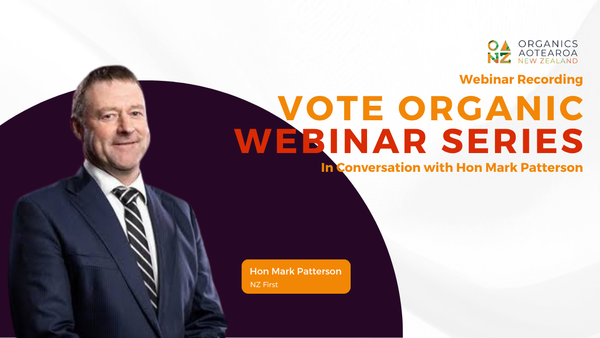
In August the organic sector told every party that none of them had a policy for it. Then NZ First wrote one in. It is point 15 of a 15-point health plan, next to vitamins, metabolic health and GP workload. There is no number, no named barrier and no date yet.
OANZ's scorecard followed. ACT and Te Pāti Māori didn't answer any of the seven questions. National answered, and its answer to whether it has a specific policy for growing organics was no. ACT's Andrew Hoggard called the survey "a request for a cheque".
When the gene-edited food labelling rule was loosened in 2025, Hoggard told anyone worried about it to just buy organic. New Zealand has tried leaving a label to industry before, with pregnancy warnings on alcohol. That voluntary scheme ran nine years, and 94% of the warning graphics were smaller than a pea.
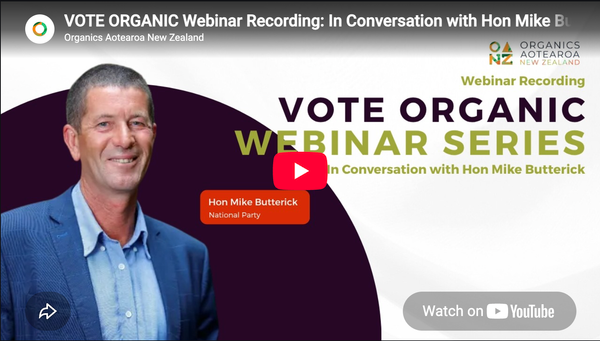
The bacon label went the same way. In 2023 a parliamentary committee found that "made in New Zealand" on the front, with the real countries in small print on the back, could mislead. On 9 September the government confirmed nothing will change. NZ Pork's Brent Kleiss said he had just been through a Christchurch Pak'nSave and found no New Zealand bred and processed pork on the shelf at all.
MPI's consultation on the organic regulations closed on 22 September, the night before Europe's Organic Day. Brussels marked the day with an awards ceremony and a commissioner handing out trophies. Ours closed through a SurveyMonkey link. So here is a proposal: our own Organic Day, on 21 March.
And a Herald column used Sri Lanka to warn New Zealand off organic farming. The World Bank document it quotes on Sri Lankan poverty doesn't mention the fertiliser ban anywhere. Its author sits on the boards of Ravensdown and DairyNZ.
Who sits in the chain
The government owns New Zealand's biggest organic dairy operation, and almost nobody here can buy the milk. Pāmu earned $31 million from carbon credits in the year to June 2026. Its organic certificates are written for overseas markets, down to dairy cull cows certified for the American organic beef programme.
McDonald's spent $580 million on New Zealand ingredients in 2025, and the beef is wanted for its lean, not its ethics. Over 85% of what New Zealand exports to the US is lean trim, there to be blended with American fat. McDonald's put its beef exports at around 10% of the national total. Against the Meat Industry Association's 2025 figures, they work out nearer 6.3%.
Two of the country's three big produce wholesalers want to merge. The Turner family sold its majority stake in Turners & Growers in the 1990s, and its own company is now buying the wholesale business back. Some growers told the Commerce Commission they sell to both firms at once, to play one off against the other. That option goes if there is only one.
When National promised to break up Foodstuffs, vegetable growers pointed one step further back. In its submission on the merger, the Vegetable Council describes one grower's below-expected sale becoming that week's market rate for everyone selling the same crop.
The seed rack looks like a dozen companies. Four of the brands contract through one family business in New Plymouth. Its owner told 1News about an orange petunia from Japan that turned out to be a prohibited GMO, after it had been sold from Cape Reinga to Invercargill.
Read the label, then check it
There is certified organic beef at Woolworths under the Harmony name, and non-organic Harmony beef in the same chiller. Two of its sirloin listings run to fourteen words each, one word different. About 112 farms hold organic certification covering cattle. Five companies are certified to turn those animals into meat you can buy.
A sign in an organic shop said imported fruit is often fumigated, so I read the banana rules. The treatment schedule does list hydrogen cyanide for bananas. The required treatment for an Ecuadorean banana is picking it green.
A Nelson hot sauce says ORGANIC on the bottle. It isn't listed on any of the three certifier registers I could search. The shelf tag at Commonsense says "contains organic ingredients", which is a more careful claim. The thickener on the label is made by a bacterium that causes black rot in broccoli.
Farmers Weekly said consumers are warming to gene editing. The story named no survey. A New Zealand milk study called its gene-edited product "climate-smart milk", and at equal prices standard milk still came out on top: 52% against 27%, with organic on 21%.
Who buys, and what the evidence says
I went looking for what has actually been measured on organic food and health. In the one randomised trial, switching from a Western diet to a healthier Mediterranean one made with conventional food pushed insecticide in urine up, from 7 to 25 micrograms a day. On cancer, a French study found lower risk and a British study nine times its size found none.
Most frequent organic buyers here earn under $100,000. And 48% of people who already buy organic say they often or always wait for a special.
Which led to the piece about time. In 1899 Thorstein Veblen listed the knowledge only leisure could buy: dead languages, correct spelling, fancy-bred dogs and racehorses. Knowing what a certification excludes is the modern version, minus the snobbery.
Trust fell, and some people stopped relying on the shelf. In 2023 New Zealand imported about 28 kg per person of industrial food inputs: sweeteners, modified oils, flavourings, emulsifiers and thickeners. Nobody eats 28 kg of emulsifier.
The world's organic farmland would cover New Zealand three and a half times, and it stopped growing in 2024. India has 2.36 million organic farmers. In 2020 its people spent about six cents a head a year on organic food.
Growers, places and seed
The South Island's biggest organic market garden sat below the monument to the man who started New Zealand's frozen meat trade. Three owners worked it, and grower Nigel Clark stayed through all of them. Whether that ground is still certified is not a matter of public record.
Most seed sold here wasn't grown here. Kings Seeds, the biggest certified organic supplier, says about 10% of its range is produced in New Zealand. If you want to spend nothing, the Heritage Food Crops Research Trust in Whanganui posts tomato seed for a stamped envelope.
Organic asparagus is in for about 100 days. On residue, conventional asparagus already tests clean, so the stronger case for organic is in the soil. Bill Cummings of Greenfern said in 2020 that the Waikato had gone from about 150 asparagus growers to about ten in thirty years.
Underground Festival moves to the Waikato for 10 and 11 March 2027, onto Tom and Carrie Andrews' farm near Cambridge. When the Ruakura abattoir was sold and their animals faced the trip to Auckland, they built their own. Wholly Cow isn't certified organic. Its paddock, kill room and shop are still the one unbroken chain that certified organic beef so rarely gets.
And Lincoln's Biological Husbandry Unit turns 50. Bob Crowder, a lecturer whose research used herbicides, started it in 1976 and borrowed a British name because "organic" drew too much derision. Penny Platt studied there in 2010, now co-owns Untamed Earth, and chairs the BHU's trust.
Where to go next
You can now get one email a week instead of one per post. If you are new here, Start Here is the shortest route in. The Guides collects the topic hubs, What To Buy is the practical version, and the Map has the shops and growers.
Three dates coming up: the BHU's free 50th in Lincoln on Friday 30 October, the Commerce Commission's decision on the wholesaler merger due by 5 November, and the election on 7 November.
Every edition of The Month in Food is here.
Before you go
If you want these in your inbox, sign up free. If the work is useful and you would rather not sign up for anything, you can leave a tip.