
About Organic Food Together
Organic Food Together investigates where real food in New Zealand comes from — organic, spray-free, regenerative, and biodynamic producers, alongside an honest look at what the mainstream food system is actually doing.
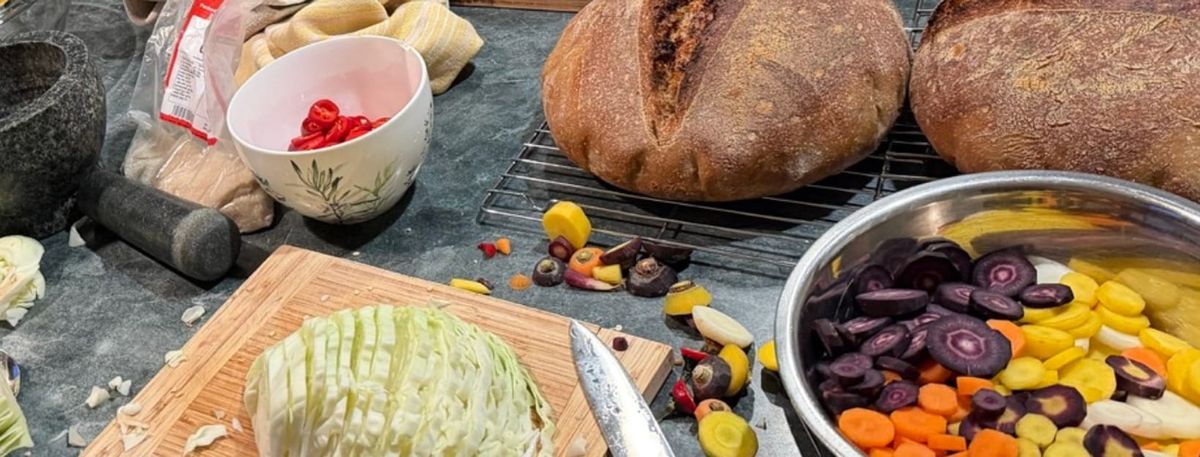
This site started with a strawberry.
An organic one, grown by a small producer in Te Horo, eaten at Christmas. It was the best piece of fruit I'd had in years. That led to a question I couldn't shake: why does food grown this way taste so different? Where does it actually come from? And why is it so hard to find?
That question is still unfolding. Organic Food Together is what I built to chase it.
How it started
It didn't begin as a food site. It began as a series of small irritations.
The smell of tap water at certain times of year. The government mandating folic acid in all bread with almost no public debate. The discovery that if you want bread without additives, fortification, or synthetic inputs, your options in Auckland narrow down to a handful of bakeries, and even those are inconsistent.
So I started making sourdough. Organic flour, filtered water, Celtic salt, a starter. Once I was doing that, I needed organic flour. Once I was sourcing organic flour, I started thinking about glyphosate. Once I started thinking about glyphosate, everything else followed.
At a certain point I stopped trying to optimise my way through it and just went back to basics, and started writing down what I found.
The longer version of how it started is here.
What this is
Organic Food Together is an independent site about real food in New Zealand.
Two things: articles investigating how the food system actually works, and a growing directory of places where you can find better food.
Organic is the clearest starting point, it's the most legible standard we have for food grown without synthetic inputs. But the scope is wider than certification. Spray-free growers, regenerative farmers, biodynamic and Demeter producers, farmers market stallholders who've never filled out a form in their life but are doing everything right, all of it is part of the same conversation.
The mainstream food system is part of that conversation too. Understanding why spray-free matters requires understanding what conventional growing looks like. Understanding why an independent baker is worth seeking out requires understanding what goes into a supermarket loaf , the additives, the emulsifiers, the ultra-processed inputs that appear on labels most people don't read. Glyphosate residues in supermarket bread are one example. Corporate consolidation of NZ food brands, the gap between clean-green marketing and production reality, the gradual disappearance of processing infrastructure, these aren't separate topics. Who actually owns your lunch is another. They're context for every buying decision.
The editorial angle is curiosity, not advocacy. The goal is to understand a system, and share what comes up.
Who's writing this
Me. Luke Nicholas.
I've worked in brewing since 1997 and founded Epic Brewing in 2005. Twenty years, coming on 21. That job has been one long argument about ingredients: importing liquid yeast from Oregon when everyone else used dried, brewing with a Scottish distilling malt because it was better, flying to the Yakima Valley every September to select hops blind in a shed and then going to find the farm they came from.
I've judged beer since 2000, in New Zealand, Australia and the United States, and I was the first New Zealand judge invited to the World Beer Cup. Twenty-five years of blind tasting teaches you to taste what's actually in the glass instead of what the label says is in it. That habit doesn't stay in beer.
Before all that: a commerce degree from Lincoln, produce exporting at NZ Gourmet, a year running compost and potting mix production at Watkins. Soil, produce, supply chains, beer. Took me about three decades to notice they were the same subject.
This site isn't my job. I still brew full time. The longer version, including my grandfather's homebrew kit and the flour mill now sitting in my kitchen, is here.
What together means
The name carries a few things at once.
Information gathered in one place, so you don't have to go looking across a dozen sources. A community of people who care where their food comes from and want to find each other. The straightforward human fact that food has always been something people come together around.
And one more thing: we're figuring this out together. This is a live investigation, not a finished product. Some of what ends up here will come from readers, people who know a grower, who've found a supplier worth knowing about, who've noticed something in their local food system that deserves a closer look. That side of the project is still being built. But the intent is there from the start.
What this isn't
Not a brand. Not affiliated with any certifier, retailer, or food company. Nothing here is sponsored or paid placement. Everything here comes from publicly available information, so anything I find, you can check yourself. Link "publicly available information
The Places listings exist because they're useful, not because anyone asked to be included. If a place closes or the information is wrong, I want to know.
Why New Zealand specifically
Because the food system here has a particular character worth understanding.
New Zealand presents itself as clean, green, and natural. Some of that is real. Some is marketing. The gap between the two is where most of the interesting questions live.
The export focus means a lot of what gets produced here doesn't stay here. Processing infrastructure that used to exist is mostly gone. The organic sector is growing but the domestic supply chain hasn't kept up. The pipeline data tells a complicated story. These aren't abstract concerns, they show up in your shopping basket.
Following along
New articles go out regularly. The Places directory is expanding over time.
If you want to follow the project, the best way is to subscribe. No noise, just new pieces when they're published.
This is an evolving project. Some sections are still being built. If something is wrong, missing, or worth adding, get in touch.
