Jody Scheckter Won Formula One for Ferrari. Then He Bought a Sprayed Farm and Went Biodynamic.
Jody Scheckter won the 1979 Formula One title for Ferrari, made a fortune from training simulators, then bought a sprayed arable farm in Hampshire and farmed it biodynamically for nearly 30 years. His buffalo mozzarella made it into Waitrose, and he wanted to call his sparkling wine Schampagne.
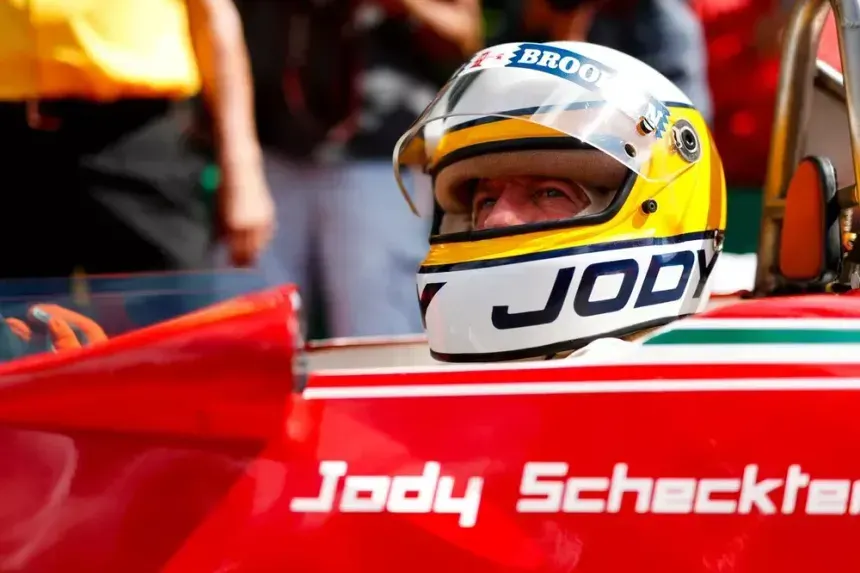
Jody Scheckter once had chickens killed at weekly intervals, starting at 70 days old and stopping at 100, to find out when they tasted best. One hundred days won. Supermarket chickens, he pointed out to The Caterer in 2005, were ready at about 40.
This is the man who won the 1979 Formula One world championship for Ferrari, and he is still the only African driver to have won a Grand Prix or the title. There's a Kiwi thread, too. His first Formula One race, in 1972, was for McLaren, the team Auckland-born Bruce McLaren founded in 1963.
The money came from somewhere else
He retired at the end of 1980. Drivers were dying every year, he later explained, and the magic was gone. In 1984 he started Firearms Training Systems, building simulators that trained police and armed forces. He sold his shares in 1996 for a reputed £100 million.
That year he bought Laverstoke House in Hampshire with 530 acres of parkland and farmland. The house was built in 1798 for the Portal family, whose paper mill pioneered watermarked banknote paper for the Bank of England. The old mill on the estate is now the Bombay Sapphire gin distillery, and Jane Austen was a frequent visitor to the house. A lot of history to start spreading compost on.
From sprayed prairie to biodynamic
He started out wanting to grow food for his own family, but couldn't keep the quantities small, so he began selling to the public. The land he took over, he told the Mail & Guardian in 2006, had been a big conventional arable farm, with "fields like prairies, constantly sprayed". He stopped the chemicals, replanted the pastures with native grasses, herbs and clovers, and put in 19km of hedging. The neighbouring farms were added in 2002, taking Laverstoke to about 1,000 hectares, roughly 2,500 acres.
The push into biodynamics came from his wife. She gave him a book on it, he told Decanter, and it went from passion to obsession until the house held about 500 books on agriculture. Biodynamics, which Rudolf Steiner started in 1924, adds herbal preparations to compost and soil, and the farm said its planting followed the moon's cycles as much as possible in a British climate. Which is a fair caveat for Hampshire.
He didn't do it by halves. By 2010 the farm had about 2,000 water buffalo, which The Grocer called Britain's biggest herd, alongside sheep, pigs, chickens and wild boar. He built a soil lab, which the farm describes as the only licensed Soil Foodweb laboratory in Europe. He also built an abattoir on site, at a cost he put at about £2.5 million, so no Laverstoke animal faced a long, stressful trip to slaughter.
Buffalo, mozzarella and Schampagne
People wanted what came out of it. Laverstoke started making buffalo mozzarella in 2009, the first British company to make it at scale, and was supplying Waitrose and Riverford right up until the dairy shut. By 2017 its products were also on the shelves at Harrods, Selfridges and Fortnum & Mason. Raymond Blanc, according to BusinessTech, said Laverstoke lamb was the best he had ever tasted.
There was a 9-hectare vineyard too, certified biodynamic by Demeter. Before the first bottle, he told Decanter he planned to make sparkling wine in the Champagne style. He couldn't use the name, so: "I'm going to call it Schampagne." He also wanted a red sparkling, on the grounds that purists would hate it.
And because this is still Jody Scheckter, the farm spent more than a decade hosting CarFest, a charity festival of cars and music.
Then the bills
None of it was cheap, and he knew it. He told The Grocer the farm wasn't profitable yet but was close, and pointed out that his simulator company had taken eight years to make money.
It never quite did. The buffalo dairy closed at the end of 2023 after energy costs more than doubled, and in May 2025 the estate went on the market at £58 million, with the house and parkland selling in January 2026. In September 2026 a UK tax tribunal ruled against him over the farm's losses, though the judge made a point of saying he was no hobby farmer dodging tax, and acknowledged how passionate he was about healthier eating.
The land is the part that lasts. A farm that was sprayed like a prairie when he arrived went to market 29 years later with 1,279 acres listed as certified organic. Whoever bought it, the conversion work is done.
As for Scheckter, he moved to Italy, where by mid-2025 his British licence had run out. The 1979 Formula One world champion told Corriere della Sera he couldn't pass the Italian driving test. "I speak Italian very badly," he said. He asked Ferrari for help.
Part of an occasional Sunday series on famous people, and a few very rich ones, who chose organic.
Before you go
If you want more like this in your inbox, sign up free. If this was useful and you'd like to chip in once, leave a tip.