The Government Was Asked to Fix the Bacon Label. It Just Said No.
A parliamentary committee found bacon labelling could mislead consumers. Three years on, the government has confirmed nothing will change. Here's the regulatory fight, and what compliant welfare standards actually cost a NZ pig farm.

In 2022, NZ Pork put a specific complaint in front of Parliament's Regulations Review Committee. In July 2023, the committee agreed with them. On 9 September 2026, the current minister told them, in effect, to go away.
Three years is a long time to wait for an answer that turns out to be no.
What was actually asked
If you've read the piece on imported bacon, you already know the mechanism. This post isn't about that mechanism. It's about what happened when someone tried to get it changed through Parliament, and why that attempt just failed.
NZ Pork's complaint was narrower than "fix the whole label." It targeted one specific rule: regulation 10 of the Consumer Information Standards (Origin of Food) Regulations 2021. Under it, a company can brand a product "made in New Zealand" on the front of the pack, then list the actual countries the pork came from in small print on the back, New Zealand included, even when barely any of the pork in the pack is New Zealand grown.
In July 2023 the committee ruled, chaired by National's Judith Collins. It rejected three of NZ Pork's four complaints outright. But on regulation 10, it agreed: fine print on the back "could be materially confusing or misleading to consumers" when the front says "made in New Zealand." It recommended the government fix it.
The then-minister, Duncan Webb, said he'd consider it.
The answer, three years later
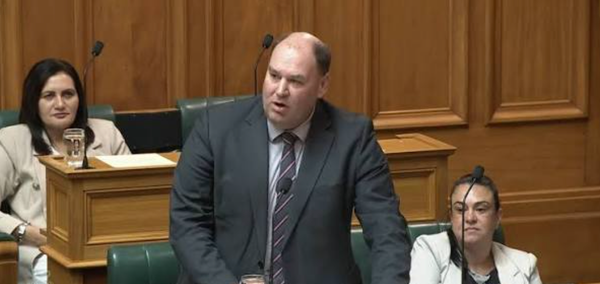
Cameron Brewer took over the Commerce and Consumer Affairs portfolio in April 2026. On 9 September, RNZ reported his decision. No change.
His reasoning, as reported: the committee's finding was about how products were branded, not about what companies are legally required to disclose. "I am not aware of evidence that this is occurring on a scale that would justify further regulatory change," he said. He acknowledged branding "may give consumers a misleading impression" about whether pork was raised in New Zealand, and pointed to his own Fair Trading Amendment Bill, which raises penalties for misleading conduct generally, as the actual remedy. His suggestion to NZ Pork: take specific labels to the Commerce Commission instead.
NZ Pork chief executive Brent Kleiss wasn't buying it. "Our fear is that the minister may have been misled or made a decision to get it off his plate rather than actually tackle the issue head on," he told RNZ. He said he'd visited a PAK'nSAVE in Christchurch the week before and found no New Zealand bred and processed pork on the shelf at all. Not one packet.
Foodstuffs told RNZ it supports "clear and accurate information" and that stock varies store to store based on "food safety, quality, animal welfare, supply reliability and value for customers." Nothing on the Christchurch store specifically.
A parliamentary committee found the labelling misleading. The minister responsible for consumer protection agrees the branding might mislead people. Both things are true, and the label still isn't changing.
Brent Kleiss - ‘Bewildering’: Pork sector reacts to Government’s labelling rejection
The number nobody's put on the welfare gap
The competitive disadvantage argument has been made before, including on this site, but almost always in general terms: our farmers meet higher standards, imports don't, so imports are cheaper. What's rarely quoted is an actual number for what "higher standards" costs.
In 2022, the government commissioned consultancy Sapere to model the cost of a proposed tightening of the pig welfare code, the one that would have restricted farrowing crates further. Sapere's modelling, laid out in a Cabinet paper prepared for the Associate Minister of Agriculture, found that an average 350-sow indoor farm would need $2.5 million in new infrastructure, and would need 19 years of its own cash earnings just to pay that back. To hold farmer income steady against that cost, Sapere estimated retail pork prices would need to rise 18.8 percent, an increase the same paper concluded consumers likely wouldn't wear once cheaper imports were sitting on the shelf next to it.
Worth being precise about what this number is and isn't. It's not a costing of the standards New Zealand pig farmers already meet, the sow stall ban since 2016, the farrowing crate limits, the no-castration-without-a-vet rule already covered in the imported bacon piece. It's a costing of a further proposed tightening on top of that, one that's since been softened. NZ Pork said in October 2025 that a revised version, with pen-based farrowing systems and a ten-year transition, is what's now moving through government. Nobody has published a fresh cost estimate for that softer version. But the 2022 figure is the only hard number on record for what it costs a New Zealand pig farm to meet a welfare standard imported pork doesn't have to, and it's a Cabinet document, not an industry press release.
Why this one matters more than the last one
This site has written about who actually grows New Zealand's pork, about the 20 percent, about Woody's, about what's genuinely worth buying, about what Woolworths' own-label pork actually is. None of that changes what's in this post. What changes is that the one lever available to fix the labelling for everyone, not just the people who read this newsletter and know which brands to trust, was just left where it was. Regulation 10 still stands. The fine print still works exactly the way it did before NZ Pork complained about it.
Buying carefully still works, if you know what to look for. That's what the other five pieces are for. This piece is about the fact that a regulatory fix would have meant everyone else didn't need to learn any of it, and the government just decided they still do.
Before you go
Organic Food Together is free to read, with no ads and nothing behind a wall. If you'd like new investigations in your inbox, you can sign up as a free member. And if the work is useful, you can leave a one-off tip to help keep it independent.