The Organic Farm Lincoln Tucked in a Corner Turns 50
In 1976 a Lincoln lecturer who researched herbicides started an organic plot and borrowed a British name for it. Fifty years on, the Biological Husbandry Unit is still there, and it's throwing a free party.
The word was the problem.
In the mid-1970s, "organic" drew so much derision that people who believed in it were embarrassed to be associated with it. Americans reached for eco-agriculture and agro-ecology instead. The British went with biological husbandry. When a Lincoln lecturer named Bob Crowder started an organic plot in 1976, he took the British name.
It stuck, even if it still sounds a little like a vet clinic. The Biological Husbandry Unit, known as the BHU, turns 50 this year. It describes itself as New Zealand's longest-running organic demonstration farm.
The herbicide man
Crowder was an unlikely founder. He came to New Zealand from the UK in 1963 with an honours degree in conventional horticulture. After four years with MAF he went to Lincoln to lecture in vegetable production. His research there used conventional herbicides and mechanisation.
His students changed his mind. During the first energy crisis they started asking why nobody was teaching them sustainability, or how to farm with fewer inputs. He listened.
"Lincoln was very conservative in those days but luckily I had some land at my disposal in the horticultural research area and that's where it all started," he told Rural Delivery in 2014. "We tucked ourselves away in a corner and did our thing."
Some colleagues considered him eccentric.
From the corner to the sticker
Crowder says the change came in the 1980s, when Federated Farmers and MAF got behind organics. Christchurch people started turning up to field days in big numbers.
He also says he was involved in inspecting farms and in establishing the BioGro certification process. BioGro itself was set up in 1983 by Soil & Health, together with the biodynamics and Henry Doubleday groups, which is the story behind the 1941 gardening club that owns New Zealand's organic logo.
In 1988 Lincoln hosted an organic agriculture conference that drew so many people the organisers thought they'd have to cap numbers. The Vice Chancellor's response was to extend the unit to 10 hectares. He also funded a technician to work only on organics.
Crowder was elected to the board of IFOAM, the international federation of organic movements. That brought IFOAM's conference to Lincoln in 1994. More than 800 delegates came from around the world.
Crowder retired in the late 1990s. In 2001 the BHU relaunched as a charitable trust, run jointly by Lincoln University and the New Zealand organic movement, according to the BHU's own history.
What it does now
The BHU says it farms 10 hectares and has been managed organically since 1976. As of 2026 it teaches fees-free Level 3 and Level 4 certificates in organic horticulture. Its research arm is the BHU Future Farming Centre.
The most useful thing it does may be the least glamorous. Under its stepping stone programme, graduates lease land on the farm and grow and sell their own crops before going out on their own. Penny Platt studied at the BHU in 2010 and started delivering veggie boxes to friends with the programme's support. She now co-owns Untamed Earth Organic Farm, which describes itself as certified organic and grows on 60 acres of market gardens around Christchurch. She also chairs the BHU's trust.
30 October
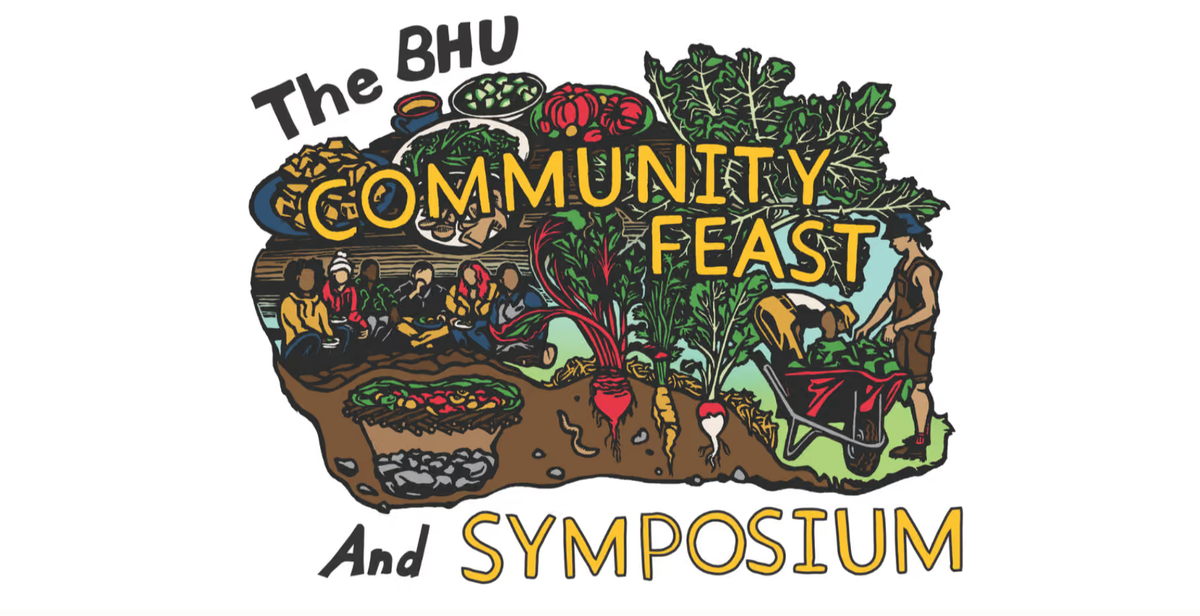
The anniversary is a free three-part day on Friday 30 October, with registration through Humanitix.
It opens at 11:30am with a community feast at the Lincoln Event Centre, cooked by chef Alex Davies of Gatherings. It then moves to Lincoln University's Stewart Building for a symposium of three panels and more than 16 speakers.
The panel most relevant here asks how the BHU can build capacity in the organics and regenerative sectors. It is chaired by Brendan Hoare, who studied at the BHU in 1984 and managed it from 1986 to 1989. The day finishes with an after party and farm tours at the BHU itself, from 5pm. The organisers say the programme is provisional. There's more detail on the BHU's 50th page.
Crowder, speaking to Rural Delivery in 2014, said the movement had spent years being ridiculed as "muck and mystery merchants." By then he could see conventional farmers adopting its principles.
"They take the best parts of the organic movement without actually ever saying thanks."
Before you go
If you want these in your inbox, sign up free. If the work is useful and you would rather not sign up for anything, you can leave a tip.