International Organic Day - 23rd September
This goes out at the exact minute of today's equinox, the same instant Europe marks its Organic Day. New Zealand's own organic reform just closed for submissions. No ceremony. Just a SurveyMonkey link and an inbox at MPI.
This is going out at 12:06pm today, the exact minute of the September equinox, the second the sun crosses the equator and day and night are briefly the same length everywhere on Earth. In the Northern Hemisphere that instant marks the start of autumn. Here it marks the start of spring. Same second, opposite season. Nobody planned that on my end. It's just when the sun does it.
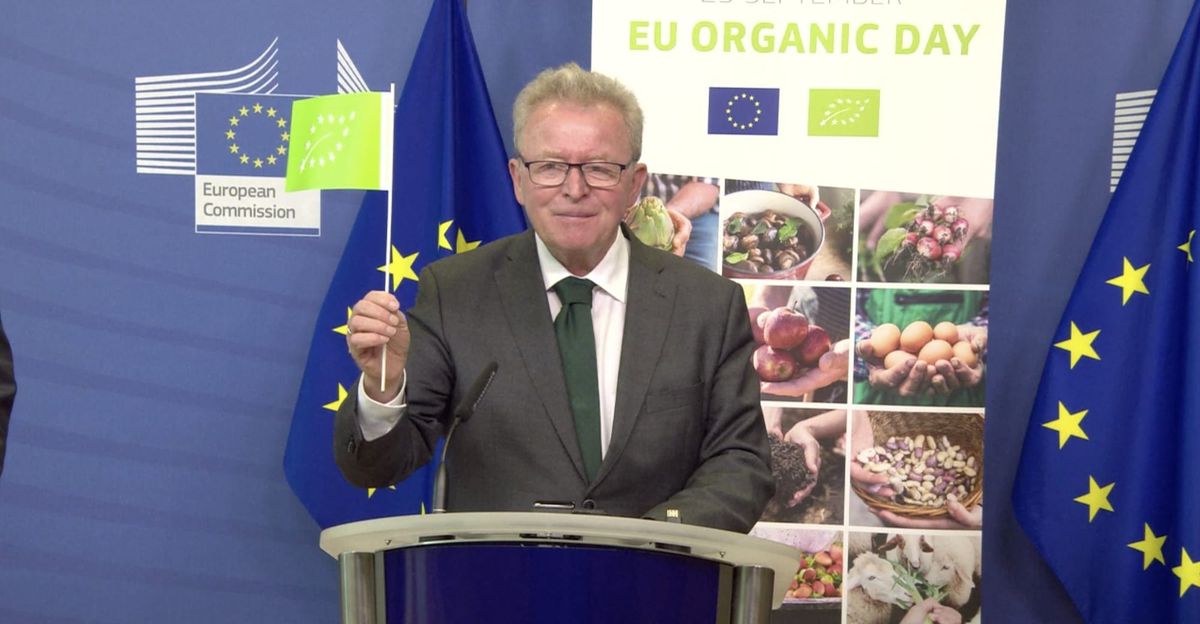
That same instant is also, officially, EU Organic Day. You'll sometimes see it called International Organic Day, which is what sent me looking into it in the first place. It isn't, really. Every official source I found, the European Commission, the European Parliament, IFOAM Organics Europe, only ever calls it EU Organic Day or European Organic Day. There's no UN observance, no global register, nothing outside Europe that recognises it. It's a European day wearing an international name. Which, it turns out, is sort of the point of this piece.
In Brussels today the European Commission is running an actual awards ceremony for it: the Charlemagne Building, 9am to 3pm, seven trophies across six categories, handed out in person by the EU's Commissioner for Agriculture and Food, Christophe Hansen. Best organic farmer. Best organic city. Best organic restaurant. Twenty-one finalists this year, from twelve countries. First time in the awards' five-year history the public can walk in.
The day itself dates to 2021, when the European Parliament, the Council of the European Union and the Commission signed a joint declaration making 23 September an annual fixture, growing out of the EU's Action Plan for organic production adopted that March. The date wasn't random. At the signing, then–Agriculture Commissioner Janusz Wojciechowski pointed out that 23 September is the autumn equinox in the Northern Hemisphere, and called it a fitting symbol for organic farming's whole idea of balance between agriculture and environment.
Every year since, the day has doubled as a progress check. Is the EU still on track for 25% of its farmland to be organic by 2030? Are consumers buying more of it? And, since 2022, who gets a trophy for doing it best.
There's a farmer in Bulgaria or Croatia or wherever this year's winners come from who is, right now, about to be personally congratulated by a government minister for growing food properly. New Zealand does not really do that.
Here's the coincidence that made me want to write this at all. Yesterday, 22 September, was also a deadline for organic regulation here: the MPI consultation on changes to New Zealand's own organic regulations closed at 11.59pm. It had been open since 11 August, covering things like whether the $10,000 exemption threshold for small organic operators should rise, and whether we get a single national organic mark. Businesses have to be fully compliant with the Organic Standards Regulations by 31 March 2028, so this was a real hinge point for how that plays out.
No ceremony. No minister. No public event. Just a SurveyMonkey link and an inbox at MPI, closing quietly on a Tuesday night, the day before Europe throws a party for the same general idea.
There's something almost comical about that too. A government department deciding who's allowed to call their food organic, running the whole national consultation through a free third-party survey tool. It's slightly unprofessional. A little uncaring, if I'm honest. You'd hope a ministry that regulates an entire industry could stretch to its own form, rather than whatever was left in the budget once everything more urgent had been paid for.
I keep coming back to the same question. Where are the people in government here with any actual vision for this? Is it that New Zealand's food and farming policy is genuinely too tied to, or too comfortable with, the existing agri-industrial set-up to bother marking a day like this? Or is it simpler than that, and nobody senior has ever stopped to think it might matter? I don't know which answer is worse.
We could have a day like this. Not the borrowed one. Our own. New Zealand's actual autumn equinox lands in March, usually the 20th or 21st. Call it the 21st, same logic Europe used, balance between agriculture and environment, just six months out of phase with theirs. Nobody owns that idea. There's nothing stopping New Zealand, or the organic sector here, from picking that date and building something on it: a day to actually look at how organic farming and organic buying are going in this country, instead of finding out later that a consultation closed on a Tuesday nobody noticed.
The EU built its version from a single signing ceremony into a public festival over five years. Picking a date costs nothing. Someone just has to do it.
So, who thinks New Zealand Organic Day, 21 March, is a good idea?
Before you go: if you want the next few pieces on this without hunting for them, sign up here, it's free. If you'd rather just chip in for the coffee that keeps this going, there's a one-off tip jar here.