Is Macro Organic Really Organic? What the Woolworths Brand Actually Is
Macro looks like a single organic brand. It's actually an umbrella covering certified-organic, free-range, "wholefoods," and "no artificial" products — only some of which are organic. Here's how to read the difference at the shelf.
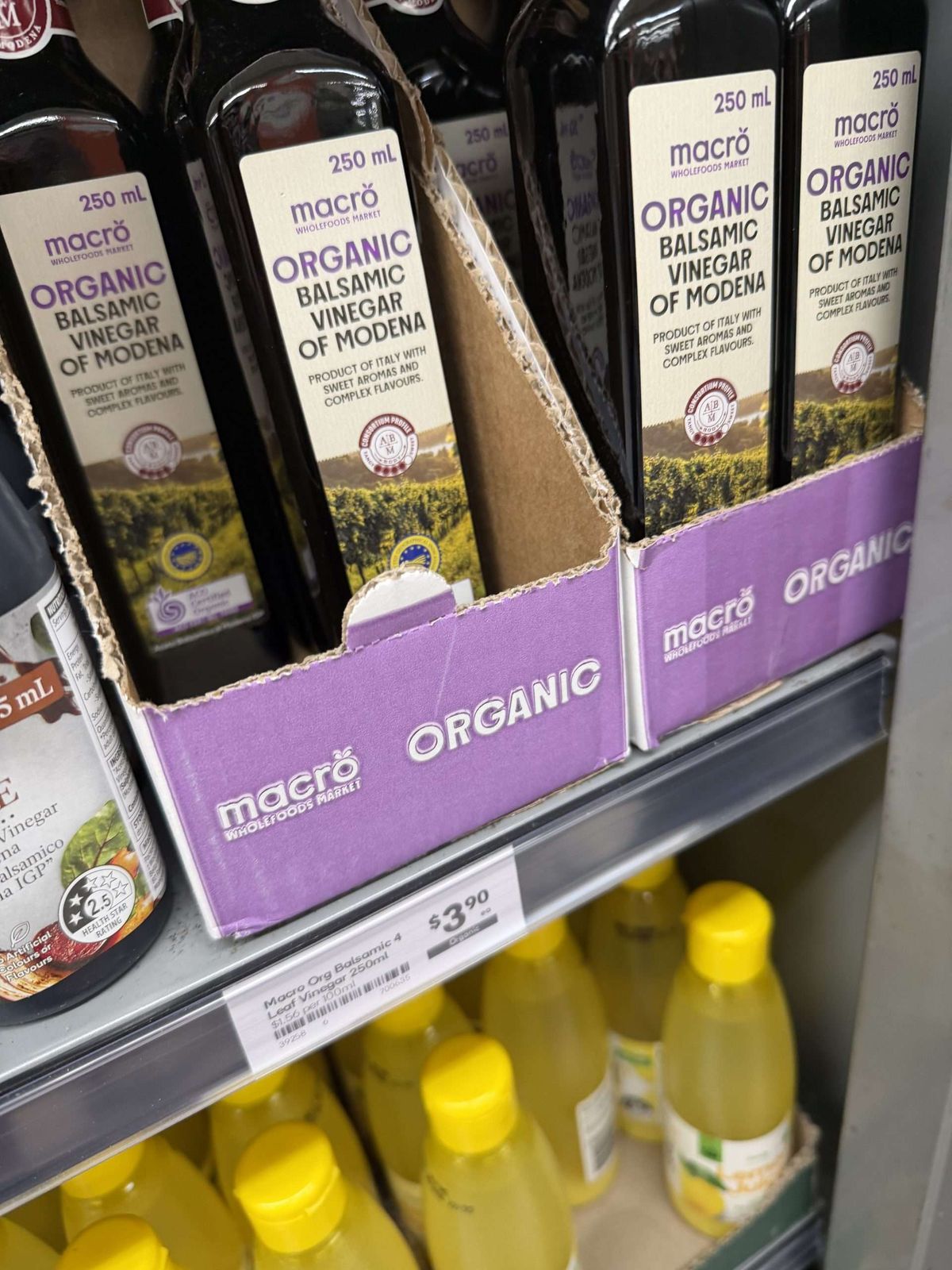
(Originally published February 2026. Substantially rewritten June 2026 with new analysis of Macro's four-tier structure.)
Short answer: some Macro products are certified organic. Most aren't. Macro is a Woolworths private label stretched across four tiers, certified organic, free-range, "wholefoods," and "no artificial," all wearing the same packaging. The only ones that are actually organic carry a BioGro, AsureQuality, or ACO logo. Everything else is a marketing claim, not a certification.
Walk into Woolworths and you'll see it everywhere.
Glass jars. Clean labels. Soft earthy colours. Olive oil from Spain. Spices from India. Free-range eggs. Frozen blueberries from the Waikato.
All under one name.
Macro.
It looks like a food brand. It sounds like a food philosophy.
But Macro isn't really a brand in the way most people think. It's an umbrella covering several very different things, and only some of them are actually organic.
This is the part most people don't realise. You can pick up a product with the Macro name on it and it might be certified organic. Or it might just be free-range. Or it might just be "no artificial colours and flavours." Or it might just be a wholefood ingredient with no certification at all.
All sold under the same brand. All with the same visual language.
Here's how it actually works.
Where Macro came from
Macro didn't start as a supermarket product.
It started in 1983 as Macro Wholefoods Market, a small Australian organic grocery chain built around the early natural-food movement. Long before "organic" was a mainstream category, these stores focused on minimally processed food, whole ingredients, natural sourcing, and affordable health food.
They were neighbourhood-style organic shops across Sydney and Melbourne suburbs. The idea was simple: real food, sold by people who believed in it. For over two decades Macro built trust the slow way, customer by customer.
Then in 2009, Woolworths bought it.
Not to run organic grocery stores. To scale the idea of organic grocery stores.
The Macro stores disappeared. The Macro brand appeared on supermarket shelves.
That's the part most people know. What fewer people know is what happened to the meaning of the word "Macro" in the process.
Macro isn't one thing. It's four.
If you look closely at the current Macro range, it's actually four distinct tiers wearing the same packaging:
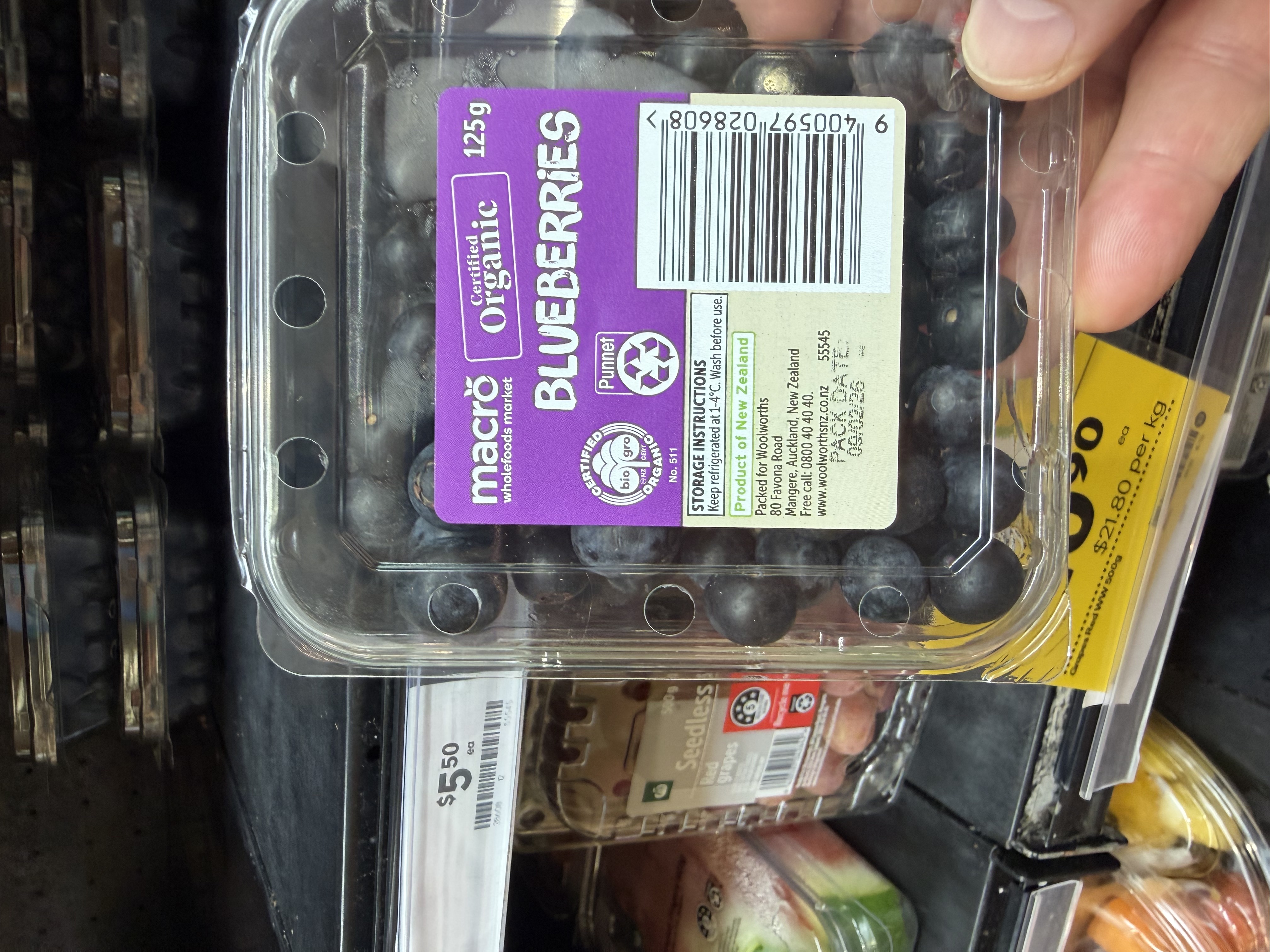
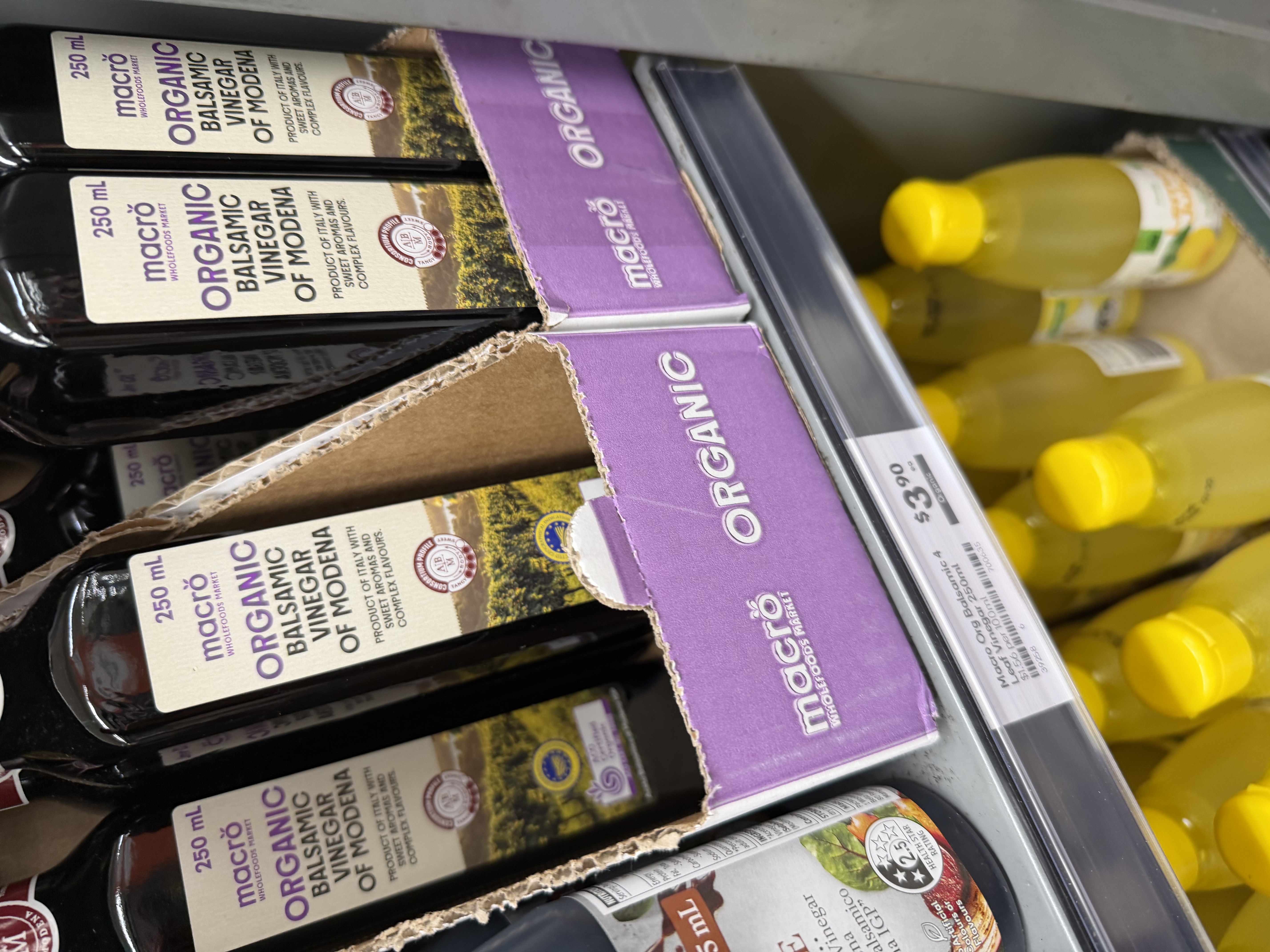
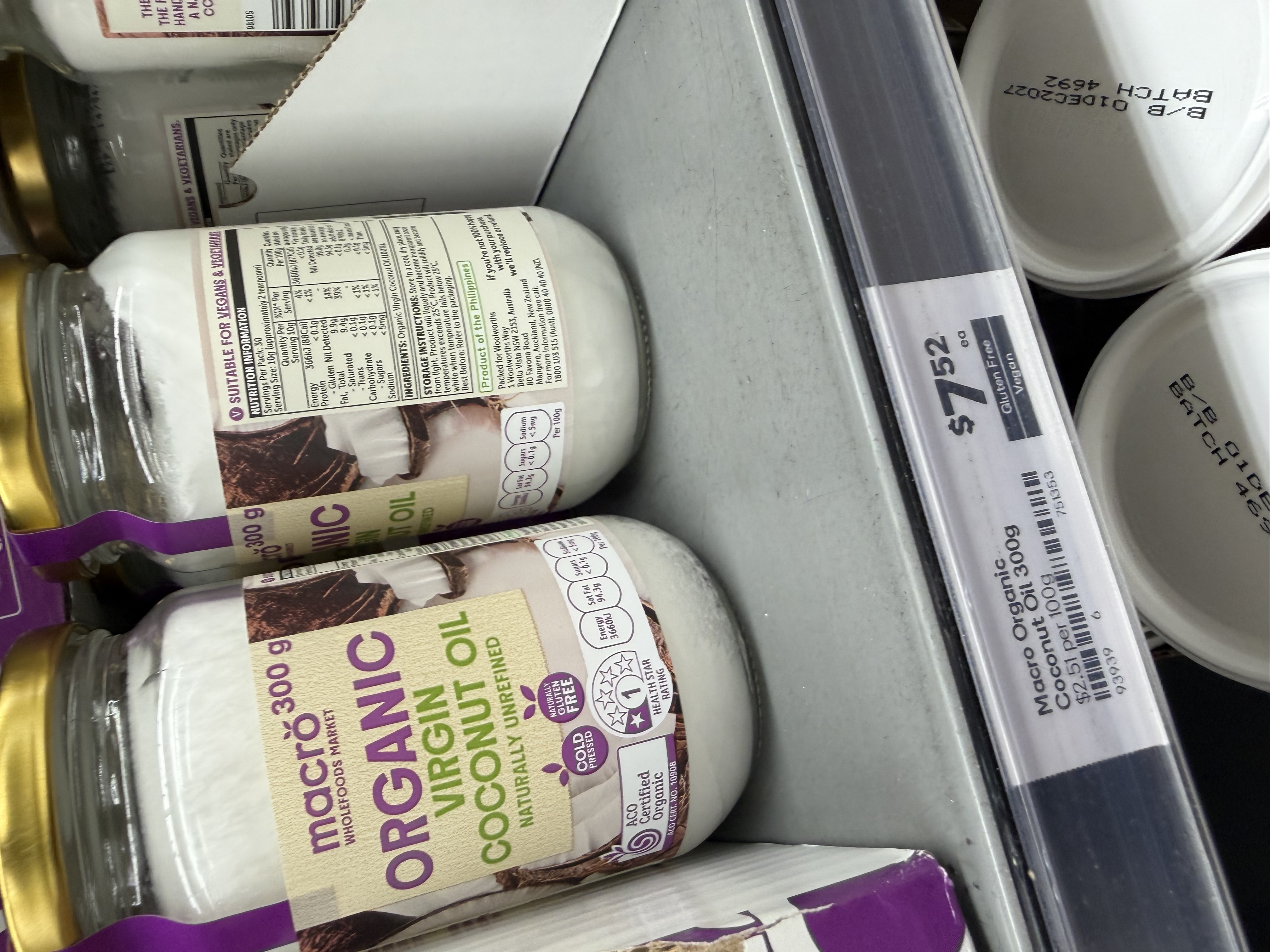
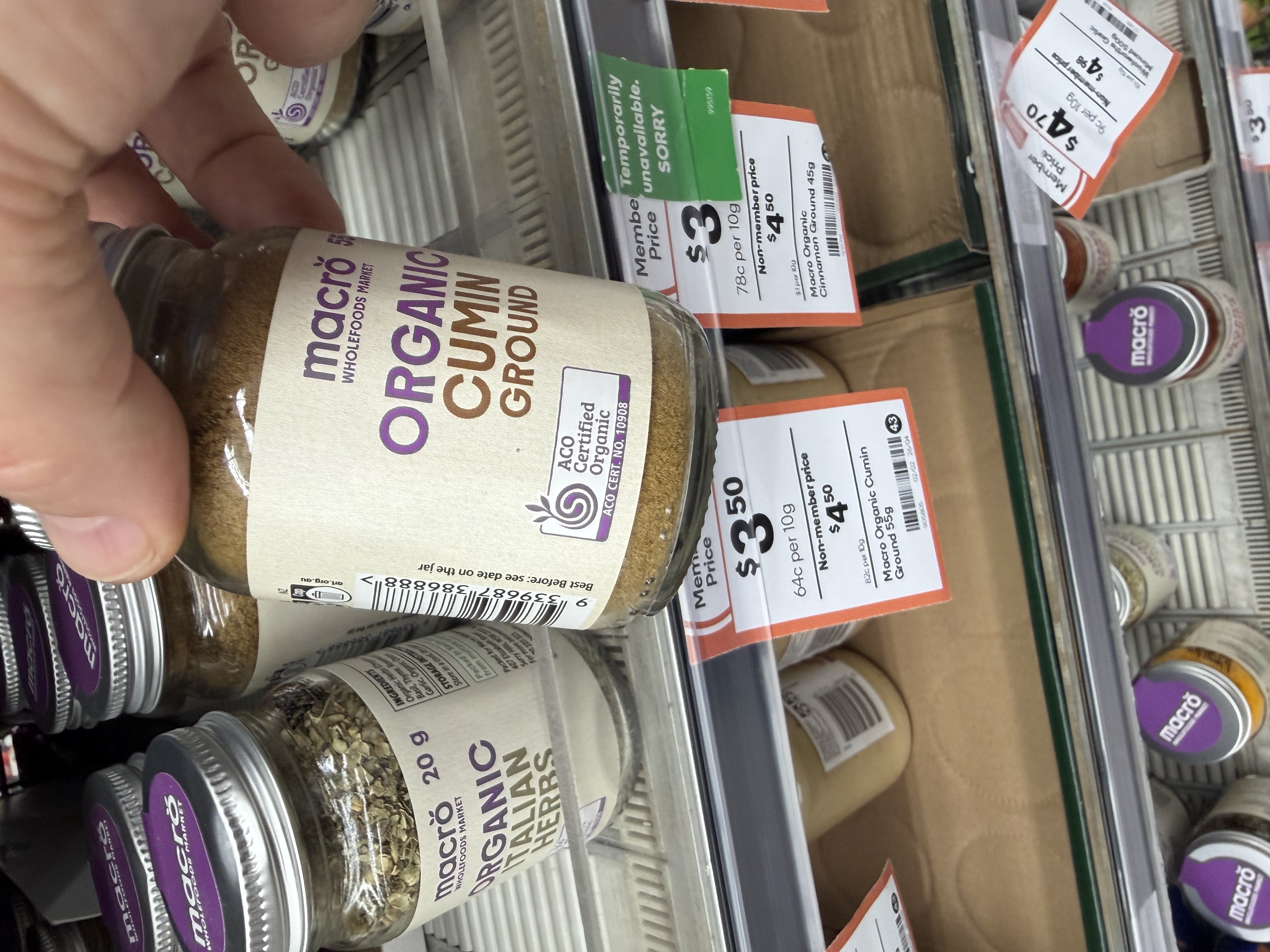
1. Macro Certified Organic: products that carry a real third-party organic certification mark (BioGro, AsureQuality, or Australian Certified Organic). These are genuinely organic. The certifier has audited the supply chain.
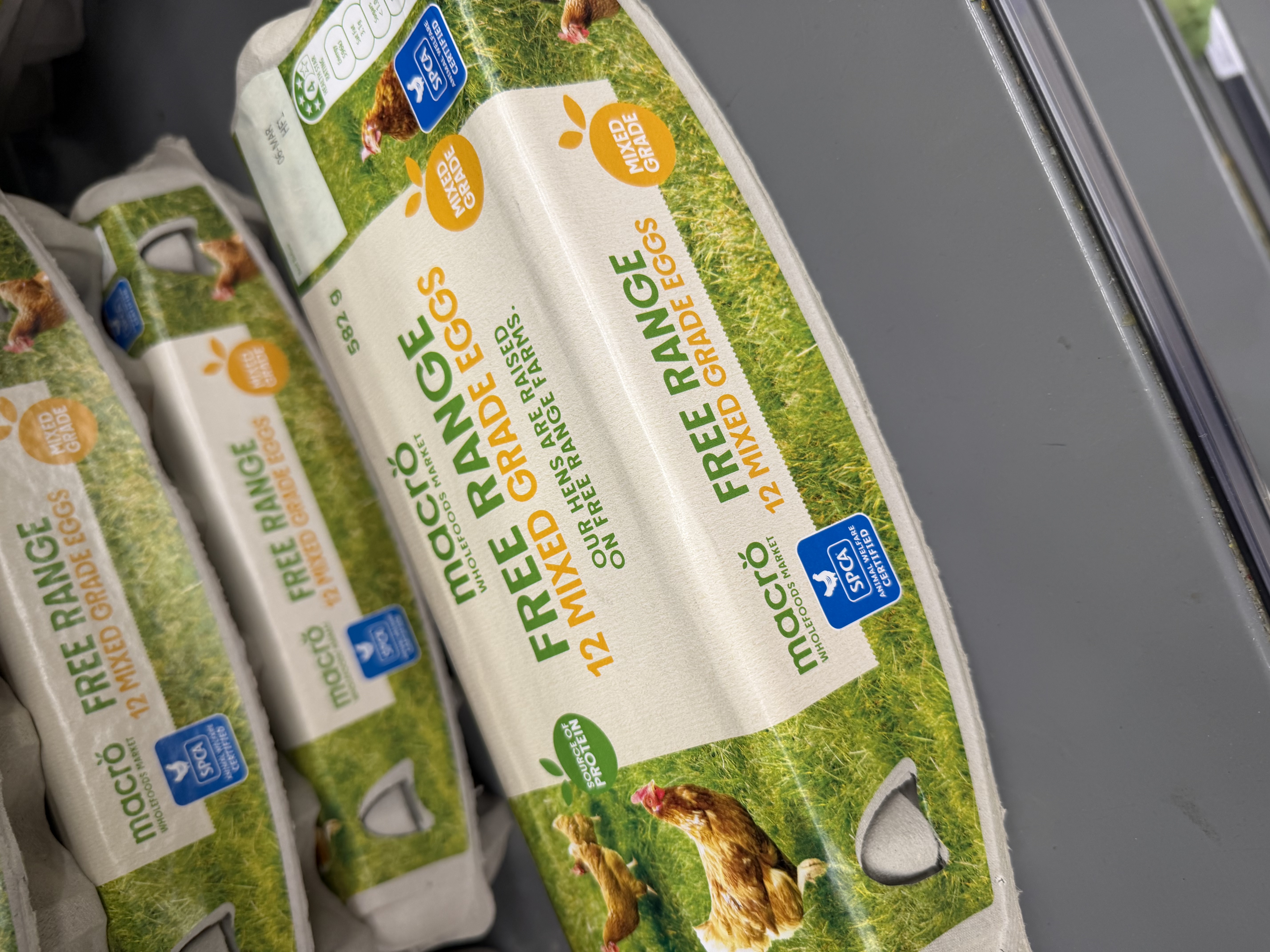
2. Macro Free Range: products that are certified free-range for animal welfare. Free-range chicken, free-range eggs, free-range pork. These are not organic. They're a welfare claim, not a production-system claim. The chicken is the clearest example, and the answer changes depending on which country you're standing in: "is Woolworths Macro chicken organic?"
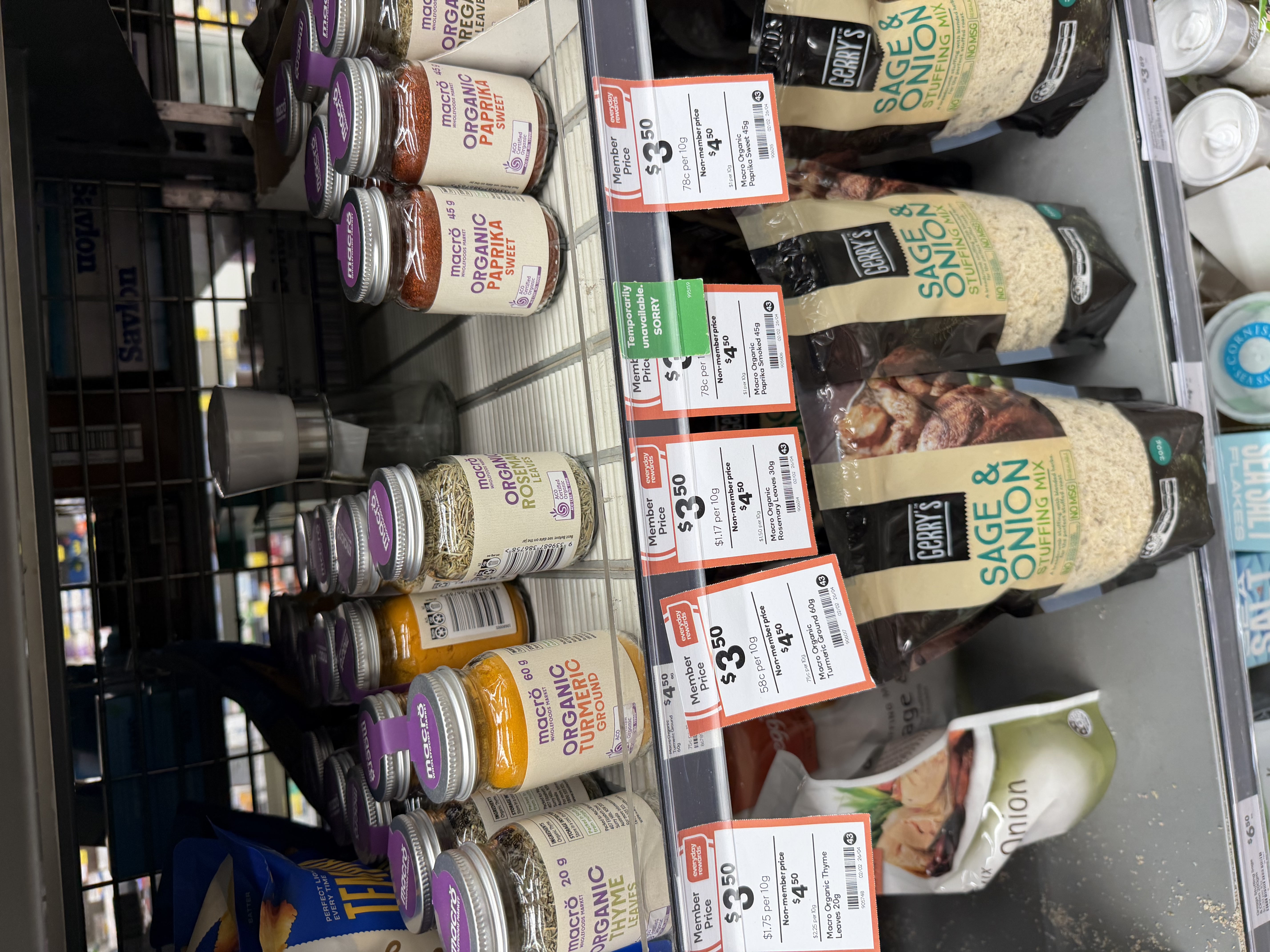
3. Macro "Wholefoods": products marketed as natural, minimally processed, or "free from" artificial additives. No artificial colours, flavours, sweeteners, hydrogenated oils, MSG. These are not certified organic. The "no artificial" claim is self-declared by Woolworths, not independently certified.
4. Macro everyday: broader range items positioned as "healthier" versions of standard supermarket products. Health Star Ratings, lower sugar, lower sodium. Again, not organic.
All four sit under one brand. All four use similar packaging language. The visual difference between a certified-organic Macro product and a "no artificial colours" Macro product is small, usually just the presence or absence of a certification logo somewhere on the label.
This is the answer to the question "is Macro organic?"
Some Macro products are. Most aren't. And the brand is structured so that the halo of the certified-organic products lifts the perception of everything else under the same name.
How to tell which is which
There's only one reliable test, and it takes about five seconds in front of the shelf:
Look for a third-party certification logo.
For organic products sold in New Zealand, the logos that actually mean something are:
- BioGro: New Zealand's largest organic certifier, established 1983, recognised internationally
- AsureQuality: government-owned, NZ's other major organic certifier
- Australian Certified Organic (ACO): for products certified under Australian Organic Ltd
- USDA Organic, EU Organic: for some imported lines
If one of these logos is on the package, the product has been independently audited against organic standards. The certifier's number is usually printed alongside, that number is traceable to a public register.
If none of these logos is on the package, the product is not certified organic, regardless of what else the label says. "Natural," "wholefoods," "no artificial," "free from," "healthier", none of these are certified organic claims. They're marketing language.
This includes the brand name itself. The word "Macro" on a package doesn't tell you anything about whether it's organic. It tells you it's a Woolworths private label.
If this distinction is new, the longer piece on what the organic label actually means in New Zealand walks through the four NZ certification bodies and what each of them actually audits.
What Woolworths says about it
To be fair to Woolworths, they don't actually claim every Macro product is organic. The brand positioning describes it as "real, whole food ingredients... mostly made in Australia... not containing artificial sweeteners, colours, flavours, MSG, hydrogenated oils." The organic tier is sold as one section of the range, not the whole thing.
Woolworths NZ also states publicly that all of its organic produce is certified by BioGro or AsureQuality, and partners with NZ organic growers including Monavale (Waikato blueberries), OOB, Central Organics, Thain Agri, and Southern Cross Produce.
So the certified-organic Macro lines are genuine. The certifications are real. The growers behind them are often well-known NZ organic operations.
The issue isn't that Macro is faking organic certification. The issue is that Macro is a single brand stretched across certified-organic and non-organic ranges in a way that lets the certified halo subsidise the rest. The buyer who picks up Macro almond milk and assumes it's organic, because Macro feels organic, is making the inference the architecture invites them to make.
Why it can be so cheap
A traditional independent organic supply chain looks like this:
Farmer → processor → brand → distributor → retailer. Each layer needs a margin. By the time a jar of certified-organic peanut butter from an independent NZ brand reaches the shelf at a specialty store, it's carried four or five sets of overheads.
Macro shortens the chain by collapsing several of those layers into Woolworths itself:
Supplier → Woolworths → shelf.
The supermarket is also the brand, also the distributor, also the retailer. That lets it sell organic-positioned food at prices independent stores struggle to match. A Macro certified-organic line can sit on the shelf at 30 to 40 percent less than the specialty-store equivalent.
Interestingly, some specialty organic retailers have shortened the chain the other way, by integrating into farming themselves. Commonsense Organics, for example, supplies a meaningful share of its own produce from its farm at Otaki. The supply chain is short because the retailer and the grower are the same operation. Macro's chain is short because the retailer and the brand are the same operation. Both compress the middle. They just compress it from opposite ends, one toward the soil, the other toward the shareholder.
For the certified-organic Macro lines, the price compression is genuinely useful, it makes organic food more accessible. For the non-certified Macro lines, it's a pricing strategy. The brand's organic halo lets non-organic products be priced as premium without being audited as premium.
Macro isn't priced like a specialty product. It's priced like a loyalty strategy.
What Macro is really selling
Macro doesn't promise locality. It doesn't promise small scale. It doesn't promise a relationship with a producer.
It promises something else: reassurance.
You can stay in the supermarket and still feel like you chose carefully. You don't have to make a separate trip to a specialty store. You don't have to research producers. You don't have to read labels closely. The brand has done the choosing for you.
For some products in the range, the certified-organic blueberries supplied by Monavale from the Waikato, for instance, that reassurance is backed by an audit chain. For others it's just packaging.
The role Macro plays is to keep the organically-curious shopper inside the supermarket. It's the answer Woolworths offers to people who would otherwise be at Commonsense Organics, an independent organic grocer, or their local farmers' market.
The ownership layer most people never see
Woolworths itself is not a family grocer. It's a publicly traded corporation largely owned by global investment funds including State Street, BlackRock, Vanguard, and various sovereign pension funds.
A Macro product on the shelf has actually travelled this route:
Independent farms and producers worldwide → contracted by Woolworths for private-label supply → packaged under the Macro brand → sold through Woolworths stores → revenue flows back to a publicly traded corporation owned by international financial funds.
The farm aesthetic sits on top of a financial infrastructure.
This isn't a moral judgement, it's a description of the supply chain that ends with the jar on the shelf. A Macro certified-organic product is still genuinely organic. But the route from soil to packet runs through one of the world's largest grocery duopolies and the global capital markets that own it. That's a different supply chain from a producer you can drive to.
So what should you actually do?
If you're trying to eat more organic food and Macro is what's available, here's a practical position:
For certified-organic Macro lines: these are legitimate. Look for the BioGro, AsureQuality, or ACO logo on the label. The certification is real. For households trying to introduce organic basics on a supermarket budget; flour, oats, frozen berries, eggs, milk; the certified Macro range is a reasonable starting point.
For non-certified Macro lines: treat these as what they are. "No artificial colours" is a useful claim if that's what matters to you, but it's not organic. Don't pay an organic-tier price for a non-organic-tier product just because the packaging suggests it.
For anything where production method really matters to you: meat, dairy, eggs, fresh produce, and anything with high pesticide exposure (apples, berries, leafy greens), it's worth knowing what's available outside the supermarket too. Specialty organic stores, farmers' markets, and direct-from-grower options carry products that the supermarket private-label model can't fully replicate, particularly around traceability and relationship. The OFT Places guide maps these across New Zealand.
The point isn't to avoid Macro. It's to read it accurately.
Why this matters
Macro isn't fake. Many products meet certification standards. Some are genuinely organic and competitively priced. For the people they reach, they're a real entry point into better food.
But Macro changed something important.
Organic food used to communicate how food was produced. A short supply chain. A specific farm. A particular set of practices the producer was personally accountable for.
Macro communicates how food feels to buy.
It turned a production philosophy into a retail category, and stretched that category to cover products that aren't actually part of the philosophy at all. The certified-organic tier inside Macro is doing the heavy lifting of brand trust for three other tiers that have nothing to do with organic certification.
For many shoppers it's a useful stepping stone. For others it blurs the difference between certified production and curated marketing.
Neither good nor bad on its own. But understanding the difference lets you choose intentionally.
Because today, more than ever:
the label tells you less than the system behind it.
Before you go.
You just read the back of the label so you didn't have to do it in the aisle. That's the job here. One piece most days, pulling apart what's in New Zealand's food and who actually owns it. Free to read. No ads. Nothing behind a wall.
If that's useful, the easiest thing you can do is let the next one find you.
And if you'd rather just back the work, there's a tip jar. A one-off $10 covers the parts that aren't free: the testing, the digging, keeping the map honest. No account, no subscription.
Related reading from OFT:
- What does the organic label actually mean? — the four NZ certification bodies and what each one audits
- What "organic" actually used to mean — Lord Northbourne, 1940, and the original idea
- What's not on your egg carton — what's behind the supermarket egg supply
- There's an 80% chance the bacon you eat is imported — how supermarket labels obscure origin
- What Soylent Green actually warned us about — when two chains run most of the groceries
- Is Woolworths Macro chicken organic? Australia has a certified organic one, New Zealand doesn't