What Soylent Green actually warned us about
Soylent Green is famous for its twist. The part that should worry us is the world the twist sits inside — a city fed by one corporation with no alternative. Watched from New Zealand in 2026, where two chains run most of the groceries, it stops feeling like science fiction.
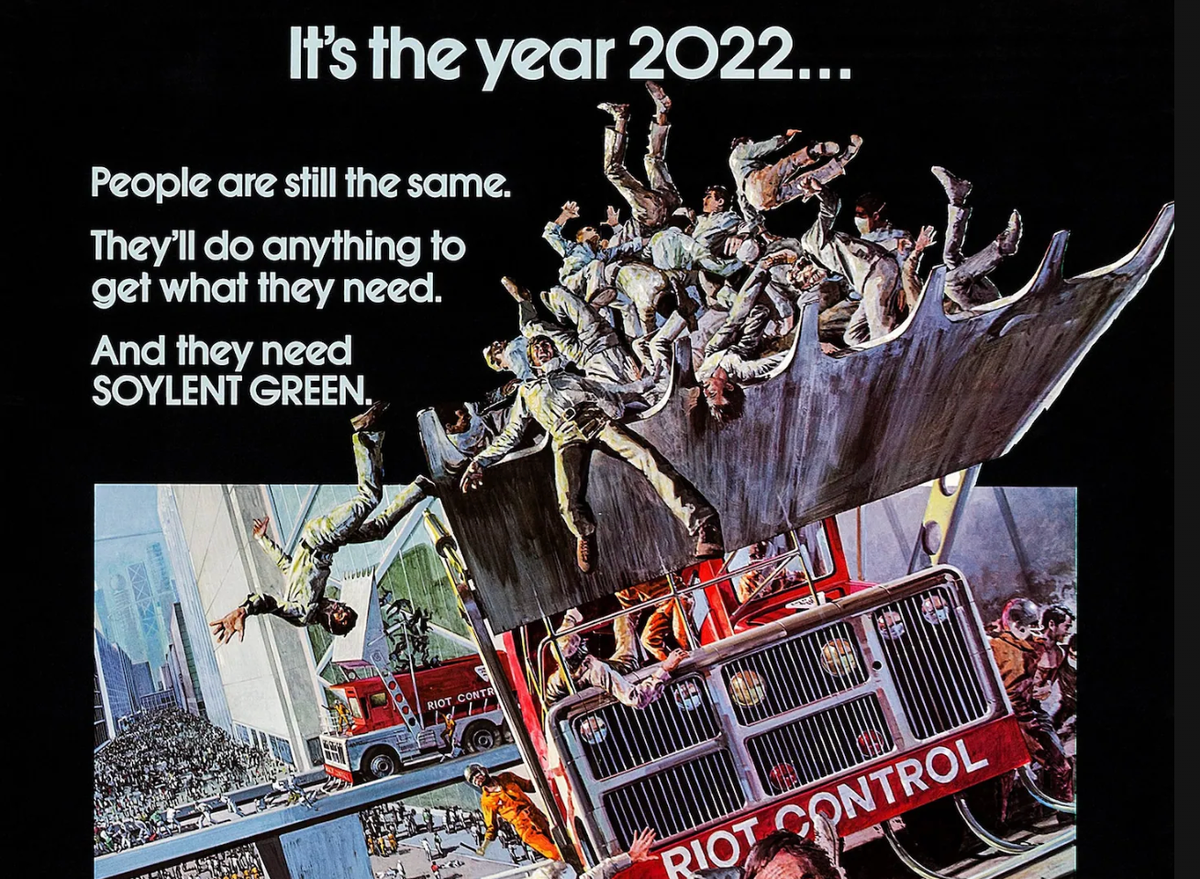
Soylent Green is famous for its twist. The part that should worry us is the world the twist sits inside.
I watched Soylent Green again last week. It is a strange film to revisit in 2026 — the haircuts are dated, the typewriters are dated, Charlton Heston is doing the loud Charlton Heston thing — but the bones of the world it builds have aged better than they should have.
The setup, briefly. It is the year 2022. New York is a city of forty million people. The oceans are dying. Real food has effectively disappeared. The masses eat coloured wafers — Soylent Red, Soylent Yellow, the new Soylent Green — manufactured by the Soylent Corporation, distributed on ration days, queued for in the heat. A detective named Thorn investigates the murder of a Soylent board member, and the trail leads somewhere most viewers remember. I will not spoil the ending. It does not matter for what I want to say.
What matters is the world the ending sits inside.
A city fed by one company
The Soylent Corporation is the food system in this film. Not a food company. Not a major brand. The food system. By the time Thorn's investigation begins, Soylent has been feeding New York for years. The oceans collapsed. The farms collapsed. And one company stepped into the gap and became the food supply.
There is no other option in the film. There are no farmers' markets at the edge of the city. There is no rival brand of wafer. There is no government food agency keeping Soylent honest, because the government works for Soylent — the board members move through the political class like senior partners through a firm. When Thorn starts asking awkward questions, his problem is not that he disapproves of the wafers. His problem is that there is nowhere else to buy lunch.
That is the part of Soylent Green that has stayed prophetic. The twist is the hook. The monopoly is the warning.
How a Soylent Corporation actually forms
A single company does not take over a food system by being evil. It takes over by being the cheapest, most convenient, most consolidated option, year after year, while the alternatives quietly run out of money.
New Zealand is not Soylent Corporation. But we are further down that road than the 1973 audience would have guessed for any country, and much further than most New Zealanders realise.
Two supermarket chains sell most of the groceries in this country. If you live in a New Zealand town, you almost certainly shop at a Foodstuffs store (New World, Pak'nSave, Four Square) or a Woolworths store (formerly Countdown). That is the choice. The Commerce Commission's 2022 market study found that the duopoly's profits are well above what a competitive market would deliver — a polite way of saying the lack of competition is being paid for by everyone who buys food.
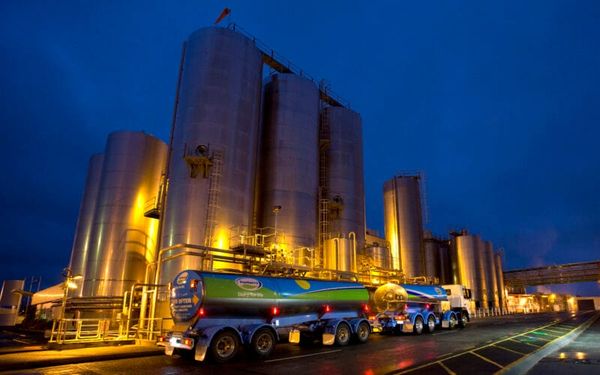
Behind the supermarkets, the processor concentration is more extreme than the retail concentration. One company processes most of the milk. Two or three companies process most of the meat. A handful of companies sit behind most of the bread, most of the eggs, most of the packaged anything. The brand proliferation on the shelf is largely decorative — five "different" egg brands routinely turn out to share a parent, and the parent is often offshore.
This is the architecture Soylent depicts. Not a single visible monopoly with a logo on every wafer, but a small group of companies that have quietly become the only practical route from a paddock to a plate. The shopper sees variety. The system has none.
The Wattie's cannery in Hastings is winding down. McCain is closing its Timaru plant. Marsden Point was demolished. Each closure removes a piece of the infrastructure that lets New Zealand process its own food at scale, and what fills the gap is imported, reformulated, or replaced. Every closure makes the remaining players a little more essential, a little harder to replace, a little more Soylent.
What a wafer actually is
The film is careful about the wafers in a way that I think most viewers miss. Soylent does not pretend the wafers are real food. The wafers are openly synthetic. They are sold as a triumph of food science — abundant, sanitary, nutritionally complete, available in three flavours. The marketing is not lying. The wafers are exactly what they appear to be. A processed, shelf-stable, centrally manufactured substitute for the food system that used to exist.
The reason this lands in 2026 is that we are living through a quieter version of the same transition. The supermarket aisles are filling up with products that are technically food but are mostly the outputs of industrial processing — emulsifiers, isolates, gums, flavouring systems, seed-oil-based fats, reconstituted proteins. Around 70% of packaged food in New Zealand supermarkets is now ultra-processed, and imports of ultra-processed food have risen 550% in a single generation. The science on what that does to a human body is still being written, but the early answers are not good.
There is a quiet scene later in the film where Thorn's elderly roommate, Sol, sits down to a meal of real food — a piece of beef, an apple, a stalk of celery, some strawberry jam — that Thorn has come across in the course of his investigation. Sol weeps at the table. He is old enough to remember what these things tasted like. The young man across from him is not.
That moment is not the centre of the film for me, but it is the moment that explains the rest. Sol is the last person in the room who has a reference point. Everyone else has accepted the wafer because the wafer is what food is now. The strawberries his generation remembers are not coming back, and the people who could have argued for them are dying off.
I have been buying organic strawberries from Commonsense Organics through the season this year. They taste like strawberries. They are not what is sitting in the punnets at the supermarket. The shopper twenty years younger than me, picking up the supermarket punnet, has nothing to compare it to. The substitution is already most of the way done in the produce aisle. It is further along in the centre aisles than anyone wants to admit.
Why the film still matters
Soylent Green is not really a science fiction film. It is a film about what happens when you let a small number of companies become the only practical way to feed a country, and then you wait fifty years.
The twist everyone remembers is just the punctuation mark. The argument the film is making — the argument that does not need any twist to land — is that a sufficiently consolidated food system will, eventually, feed people whatever is cheapest to produce, dressed up as whatever sells. There does not need to be a conspiracy. There only needs to be no alternative.
The alternative — in 2026, in New Zealand — is still here. There are still independent growers, still small processors, still farmers' markets, still co-operatives, still people who will sell you eggs from hens you can go and look at. The infrastructure is thinner than it was, but it is not gone.
That is the part of Soylent Green that I keep coming back to. The film is not a prediction. It is a description of the end state if nobody chooses otherwise. And the choosing happens every week, at the till.