The Long Drift — Part 1: What They Were Built For
Three New Zealand food institutions. Three founding acts of resistance. A century later, each one now serves the opposite of its founding purpose. This is how a long drift looks — like nothing, for a very long time.
There is a version of New Zealand food history that is genuinely inspiring.
A Hastings man looks at surplus peaches rotting on the ground and decides to can them himself rather than let Auckland businesses import fruit pulp from Australia. A group of Auckland grocers, worried about being squeezed out by the first wave of chain stores, pool their buying power to survive. A co-operative, cut off by a supplier who wants to discipline it, builds its own brand rather than comply.
Three origin stories. Three acts of resistance. Three institutions built to protect local food, local farmers, and the small operators who depended on them.
That is the inspiring version.
The version a century later is something else.
The man who didn't want imported jam
Jim Wattie was uncomfortable.
It was 1934, and he had noticed something that bothered him: an Auckland jam-making business was planning to import fruit pulp from Australia rather than source it from New Zealand orchards. Hawke's Bay was producing more fruit than it could sell fresh. Orchardists had surplus. The land was productive. And yet the processing was going to happen offshore, with imported inputs, because that was the easier commercial path.
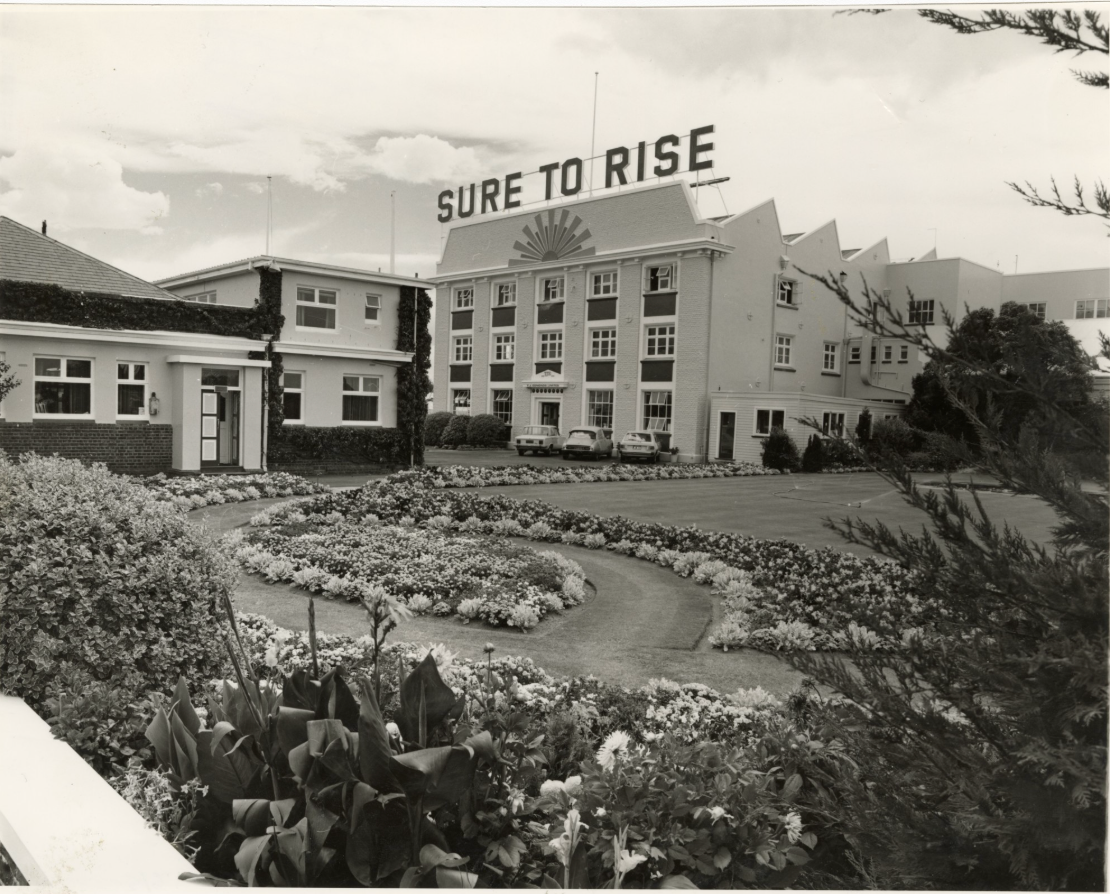
Wattie's response was to start J. Wattie Canneries in a rented cottage in Hastings with his partner Harold Carr, and begin canning what Hawke's Bay grew. The founding instinct was food sovereignty before anyone used that phrase — process it here, from what we grow here, for the people who live here.
From that cottage, Wattie's grew into the Southern Hemisphere's largest canning operation, producing 172 million cans annually at its peak. The factory in Hastings became an institution. Orchardists supplying Wattie's could plan their seasons around it. The cannery was the reason you could grow stone fruit commercially in Hawke's Bay and have somewhere reliable to sell it.
For nearly sixty years, that system held.
Then in 1992, H.J. Heinz purchased Wattie's for NZ$565 million. Heinz later merged with Kraft to become Kraft Heinz — one of the largest food conglomerates in the world, marketing brands in more than 170 countries. The logic of a company that size is fundamentally different from the logic of a regional cannery. A regional cannery exists to process what the region grows. A global conglomerate exists to maximise returns for shareholders. Those two purposes can coexist for a while. They don't coexist forever.
The rest is recent enough that many New Zealanders watched it happen in real time.
In September 2025, around twenty Hawke's Bay orchardists received letters from Wattie's telling them their fruit was no longer needed. Some had supplied the company for two generations. The peach trees are coming out. In March 2026, Heinz Wattie's announced the closure of factories in Christchurch, Dunedin and Auckland, and frozen packing lines in Hastings. Around 350 jobs. McCain's Hastings plant follows by January 2027.
The cottage in Hastings where Jim Wattie started canning fruit because he didn't want to import it is long gone.
The peaches now come from China and South Africa.
The man who drew a square on a calendar
Eight years before Wattie started his cannery, a different kind of resistance was taking shape in Auckland.
It was 6 July 1922. J. Heaton Barker, a grocer, called together members of the Auckland Master Grocers' Association to discuss a problem. Chain stores were emerging. Big players were acquiring scale that small independent grocers couldn't match. The fear was straightforward: if the chains got big enough, they could squeeze out the independents entirely — on price, on range, on the terms suppliers would offer.
Barker's solution was collective. If independent grocers pooled their buying power, they could negotiate terms that let them compete. The co-operative buying group that emerged from that meeting would become Foodstuffs.
The name came two years later, in 1924, when Barker was on the phone to one of the buying group members on the 4th of July and absently drew a square around the date on his calendar. Four Square. They would stand four square to all the winds that blew. The name stuck, then spread to the stores themselves.
The founding purpose was explicitly defensive. Protect the independent grocer. Resist the chain. Keep local ownership in local hands.
That co-operative built into what is now, with Woolworths, one half of a duopoly controlling roughly 90% of New Zealand's grocery market. Foodstuffs alone controls around 45% — Pak'nSave, New World, Four Square, all under the co-op structure Barker started to resist chain store power.
The Commerce Commission found the duopoly was generating excess profits of $1 million per day between 2015 and 2019. That figure preceded the current wave of supplier dislocations. It was the baseline.
J. Heaton Barker founded a co-operative to stop one or two large companies from dominating NZ's grocery market.
His co-operative is now one of those companies.
The baking powder that started a brand
In 1937, in the middle of the Great Depression, Foodstuffs launched a house brand.
The circumstances were specific. The Wholesale Merchants Association — the established trade body representing manufacturers and distributors — had decided to discipline Foodstuffs for threatening the traditional wholesale price structure. The co-operative buying model was cutting margins that the existing system depended on. As a sanction, Edmonds, whose baking powder was in virtually every New Zealand kitchen, removed Foodstuffs from its supply list.
The co-operative's response was to make its own baking powder and custard powder instead.
The brand they created was called Pams. Nobody knows who Pam was. The name was almost Pep — rejected because Kellogg's had already taken it. Almost Presto. The identity of the original Pam has never been established.
What is established is that Pams was born as an act of self-determination. A supplier tried to control Foodstuffs through withdrawal of supply. Foodstuffs responded by building the supply itself. The founding logic of Pams was: we will not be dependent on someone else's decision about whether to supply us.
Eighty-eight years later, Pams is the most popular grocery brand in New Zealand by volume, spanning every aisle of the supermarket. It claims 68% local sourcing. Its canned peaches come from South Africa and China. Its beetroot comes from China. Its corn comes from Thailand. Its tomatoes come from Italy.
In November 2021, Foodstuffs conducted a ranging review of its frozen lines. Wattie's frozen vegetables, chips, and hash browns were cut back across New World, Pak'nSave and Four Square. The shelf space went to Pams and Value instead.
The Edmonds company that cut Foodstuffs off is long gone — absorbed, relocated, owned by an Australian multinational. The co-operative that built Pams in response is now the entity doing the cutting. The brand born from a supply dispute is now the instrument of displacement.
The wheel had turned. Completely.
What the three stories share
Each of these origin stories is animated by the same instinct.
Don't be dependent. Don't let someone else's commercial logic determine what you can grow, what you can sell, what you can eat. Build something local, rooted in the land and the community it serves, that resists the pressure to outsource, offshore, and optimise purely for cost.
Wattie's was that instinct applied to fruit processing. Foodstuffs was that instinct applied to grocery retail. Pams was that instinct applied to product sourcing.
A century later, Wattie's is owned by an American conglomerate closing its NZ factories because the numbers don't work. Foodstuffs is a co-operative that distributes returns to store owner-operators funded partly by supplier rebates extracted from manufacturers it has displaced with cheaper offshore alternatives. Pams is the instrument through which that displacement happens, wrapped in a logo that has been trusted since 1937.
None of this happened overnight. None of it was announced. There was no moment when someone decided the founding purpose no longer applied. There was just a long sequence of individually defensible commercial decisions — a merger here, a ranging review there, a tender that went to the cheaper offshore supplier because the margin demanded it — that compounded over decades into something that looks, from a distance, like the exact opposite of what was intended.
That is what a long drift looks like.
It looks like nothing, for a very long time.
And then you look up, and the peach trees are coming out of the ground.
What this series is about
This is the first of four pieces examining how New Zealand's food system arrived at its current state, what it is doing to the farmers and manufacturers who built it, what it is doing to the households and children who depend on it, and where the current trajectory leads if nothing changes.
The story starts here, with three founding acts of resistance that became the institutions doing exactly what they were founded to resist.
The next piece looks at what Pams actually is now — where its products come from, what happened to the NZ manufacturers it replaced, and what the brand equity accumulated over 88 years is currently being used to cover.
The Long Drift is a four-part series. Continue:
Part 2 — The Brand That Ate Its Suppliers — Pams claims 68% local sourcing. The categories where it falls short are the exact categories where NZ food manufacturing was built.
Part 3 — Nobody Taught Them — When housing costs put both parents to work, the kitchen went quiet. The food system that filled the gap was built to last.
Part 4 — When the Ships Stop Coming — NZ has decommissioned its food processing infrastructure on the assumption that global supply chains will always work. They won't always work.
This piece draws on reporting and research published across Organic Food Together, including When NZ Stopped Canning Its Own Peaches, The Quiet Collapse Behind New Zealand's Frozen Vegetables, and Can New Zealand Feed Itself?