The egg aisle looks simple. It isn't.
The egg aisle looks like healthy competition — eight brands, a range of prices, lots of welfare claims. Follow the ownership trails and it's more concentrated than it appears.
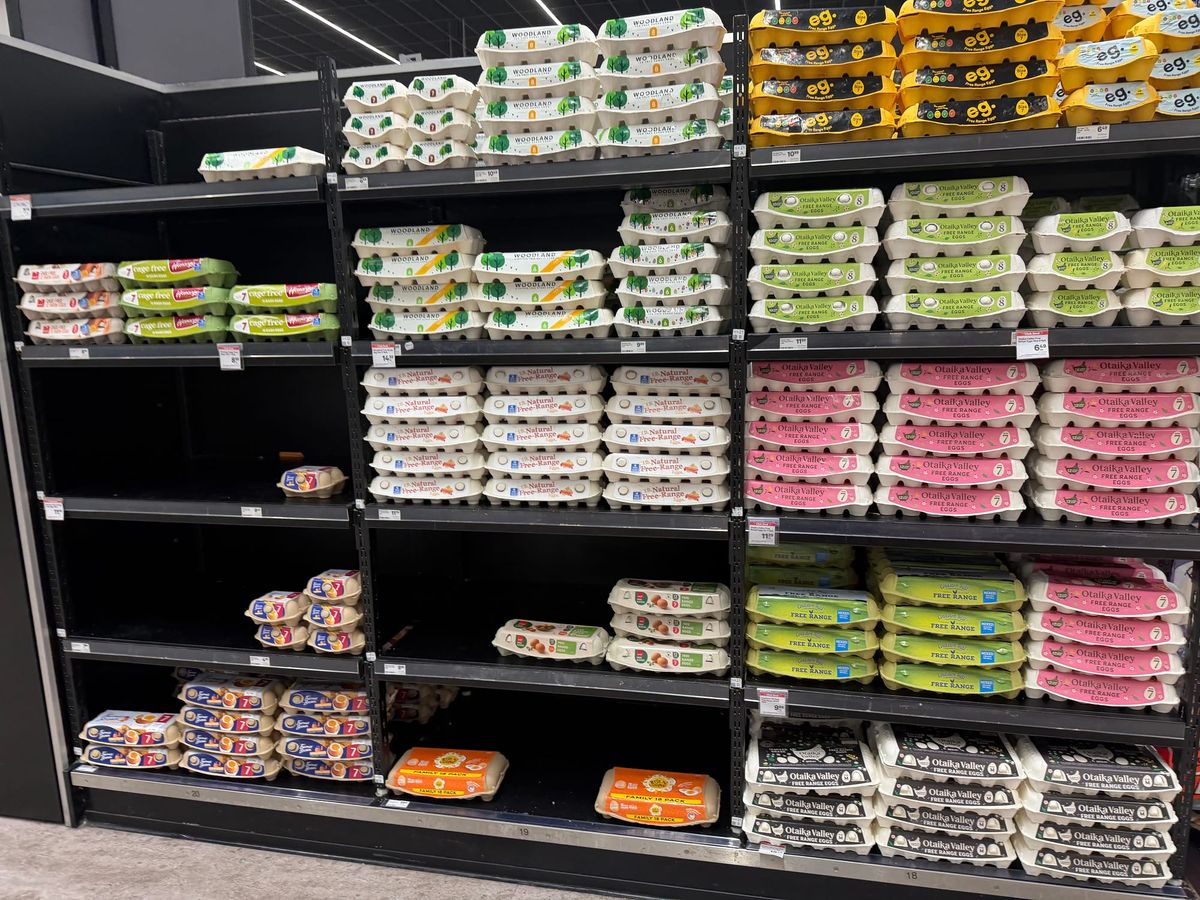
I opened the cupboard on Thursday morning and I was out of eggs. So I popped down to the local New World to grab some for breakfast.
I stood in front of the egg aisle and my brain did the thing it does. Eight brands. A wide price range. Welfare badges and pastoral imagery everywhere. And I started thinking: who actually owns these? What am I getting for what price? Where is the value?
I should say: supermarket eggs aren't my normal thing. I usually get mine from Commonsense Organics or Naturally Organic, or from a friend who keeps his own chickens. But this morning I needed eggs and I needed them now, so here I was.
This is what I found when I dug into it. It's not a story about labelling fraud or bad eggs. It's a story about structure. If you want more on what makes a genuinely good egg from a nutrition or welfare standpoint, the earlier posts go deeper: The Egg Is Not Simple and Organic Eggs in New Zealand are both worth reading if you haven't yet.
The big picture first
Eight brands on that shelf. They fall into four categories once you follow the ownership:
- One large offshore-owned company behind two brands (Woodland + Farmer Brown)
- Four genuinely independent NZ family businesses (Otaika Valley, eg., Coulston Hill, Natural Free-Range Co.)
- One supermarket private label sourced from audited NZ farms (Pams)
- One barn-specialist family group (Henergy / Better Eggs)
The shelf doesn't communicate any of this. The cartons communicate brand identity. Those are different things.
Woodland and Farmer Brown: same parent company
These two brands together occupied more than half the physical shelf space in the aisle I photographed. Both are owned by Zeagold Foods, the egg division of Mainland Poultry — NZ's largest egg producer, responsible for roughly a third of all eggs produced in the country. I've written more about how Farmer Brown specifically works in Farmer Brown: New Zealand's Biggest Egg Brand — including how the "golden yolk" is a feed formulation decision, not a pasture one.
What I want to add here is the ownership detail that sits above Zeagold. In 2017, a Malaysian private equity firm called Navis Capital Partners acquired approximately 73 percent of Mainland Poultry for around $350 million, held through a Hong Kong-registered entity. The founding shareholders retained a minority stake. NZ management stayed on. The farms and brands continued as before.
Woodland is presented as a premium free range option. Farmer Brown is the affordable colony egg. They look like competitors. They are not.
That's worth knowing — not because either brand is misrepresenting what's in the box, but because the "feel good about your free range choice" framing sits differently once you understand the ownership structure underneath it.
The same pattern appears across other supermarket staples — Who Owns Your Lunch follows the Wattie's ownership trail and what it reveals about brand trust.
The four genuinely independent producers
These brands are family-owned, NZ-based, and have no private equity or offshore parent.
Otaika Valley
The Sandle family has been farming eggs near Whangarei for three generations, with a second farm at Kaharoa near Rotorua. They supply a significant portion of McDonald's NZ free range egg requirements — which gives a sense of the scale they've reached while staying independent. Priced in the mid-to-upper range. Certified free range, no SPCA certification on the cartons I saw, but a long-established NZ operation.
eg.
Founded by Nathan Williams in Hawke's Bay. SPCA certified. The claim that stands out: zero caged, zero colony, zero barn hens — every egg from genuinely free range birds. Most brands can't say that cleanly. Many have a barn or colony operation running alongside their free range offering. eg. doesn't. Around $10–11 for a dozen. The carton credentials hold up to scrutiny.
Coulston Hill
A small family farm at Hamurana in the Bay of Plenty. Free range, mixed grade, and noticeably cheaper than most free range options on the shelf — around $9.99 for 12 mixed grade eggs when I was there. Mixed grade means varied sizes rather than a uniform graded pack, which keeps the cost down without compromising the production method.
Natural Free-Range Co.
SPCA Animal Welfare Certified. The carton claims authentic free range, natural grain diet, meadow habitat. Behind this brand is Wholesome NZ, the sales and distribution arm of the Higgins family's poultry farm near Whanganui — a co-operative structure that also markets eggs from partner farms. Less well-known than Otaika Valley or eg., but the welfare credentials are genuine and the ownership is local. If you're interested in the organic side of this category, Wholesome NZ also supplies certified organic eggs — see the Best Eggs in Auckland guide for more on that.
Pams: the supermarket's own answer
Pams is Foodstuffs' private label, sold across New World, Pak'nSave and Four Square. The eggs are sourced from audited NZ farms — Foodstuffs doesn't farm them directly. The free range cartons carry an audited free range mark and a Trace My Egg code (a five-digit stamp you can enter at tracemyegg.co.nz to see which farm your eggs came from). Pams barn eggs are SPCA certified.
Foodstuffs is a NZ-owned cooperative, so the ownership story is cleaner than Woodland or Farmer Brown. Cage-free has been the Pams standard since 2008. What you don't get is any named farm on the carton — it's an abstracted product rather than a traceable one. The Trace My Egg code closes most of that gap if you bother to look it up.
Henergy / Better Eggs: the barn specialist
Henergy is barn, not free range. That distinction matters. But if barn is your tier for reasons of price, Henergy has one of the most credible histories in that space: the Napier family founded it in the Wairarapa in the mid-1990s and it was the first egg producer in NZ to receive SPCA welfare certification, back in 1999.
Henergy is now part of Better Eggs, a group formed in 2020 from the merger of three family farms: Henergy Cage-Free, Heyden Farms, and Rasmusen's Poultry Farm. Better Eggs is still family-owned, led by Gareth van der Heyden, and they've been developing a significant free range forest farm near Tokoroa. If you want a barn egg with genuine welfare credentials and a transparent NZ owner, this is the pick.
How the shelf space actually breaks down
I counted carton facings from the photos — one facing being one carton visible from the front. The approximate breakdown: Otaika Valley 28%, Woodland 22%, Natural Free-Range Co. 14%, Farmer Brown 10%, eg. 10%, Pams 7%, Henergy 5%, Coulston Hill 4%. About 14% of the shelf space was empty at the time.
By ownership: Mainland Poultry's two brands (Woodland + Farmer Brown) account for around 32% of facings between them. The four independent NZ family businesses together hold about 47%. Pams takes 7%.
One caveat: these were taken at 8am after overnight restocking. Facing count reflects what the retailer has allocated, but stack depth is harder to read — shallow stock on a small independent brand might mean fast turnover, or it might just mean they deliver twice a week rather than daily. The large corporate suppliers almost certainly deliver daily to a store this size, so their depth is a more reliable signal.
What everything actually costs per egg
The cheapest option on that shelf by unit price — once you get to a 20-pack — is actually Woodland free range at 75¢ an egg. Farmer Brown colony eggs in a 6-pack work out at 78¢. That's the same parent company, with the free range egg undercutting the colony egg on per-unit cost. Pack size does a lot of work on this shelf.
The more useful comparison is at scale. Pasture Poultry at Commonsense Organics is $34 for a 30-egg tray — $1.13 per egg. Local Foods at GoodFor runs around $31 for 30, which is just over $1.03. At that scale, certified organic pasture eggs are only a few cents more per egg than supermarket free range — and in some cases less than a small pack of colony eggs once you account for pack size premiums.
The "free range" label on supermarket eggs is also worth treating with some scepticism. The standard permits up to 2,500 hens per hectare with theoretical outdoor access — which can mean very different things in practice depending on the farm. Certified organic carries stricter requirements around stocking density, feed, and land management. That distinction matters when the prices are this close.
If you want to understand what's actually different about the egg at each tier, The Egg Is Not Simple and Organic Eggs in New Zealand cover it properly.
A note on what I haven't verified
The Navis Capital ownership of Mainland Poultry is based on 2017–2018 news sources and OIO records. I haven't independently confirmed the current shareholder structure — it's possible something has changed since then. If you know otherwise, I'd genuinely like to hear it.
Prices are from the New World shelf on 16 April 2026 and will vary by store and over time.
The ownership trails, production system information, and SPCA certifications are from publicly available information on company websites, news archives, and SPCA records at the time of writing.
As for what I bought: Otaika Valley, six-pack. Not because I did a welfare deep-dive in the aisle — but because it was the only free range 6-pack on the shelf. I was expecting a delivery from my mate with the chickens that afternoon and just needed enough for breakfast. Sometimes the decision gets made for you.
If you're still working out what the organic certification mark actually means in NZ, this piece covers it
I'm still working through all of this and trying to make proper sense of it — there's more to understand than one morning in the egg aisle can cover. But for now I'm comfortable paying a few extra cents per egg for a 30-tray of organic and regenerative eggs, knowing the chickens are out in the sun, eating bugs and good food, and living their best lives. That feels like a reasonable place to land while I keep digging.
This article is part of OFT's eggs series. The full guide to New Zealand's better egg producers — sorted by how they farm, with regional buying tips — lives at Eggs in New Zealand.