What Does the Organic Label Actually Mean?
The word "organic" has no legal protection in New Zealand. Here's what the certification marks actually mean, who issues them, and what sits outside the system entirely.
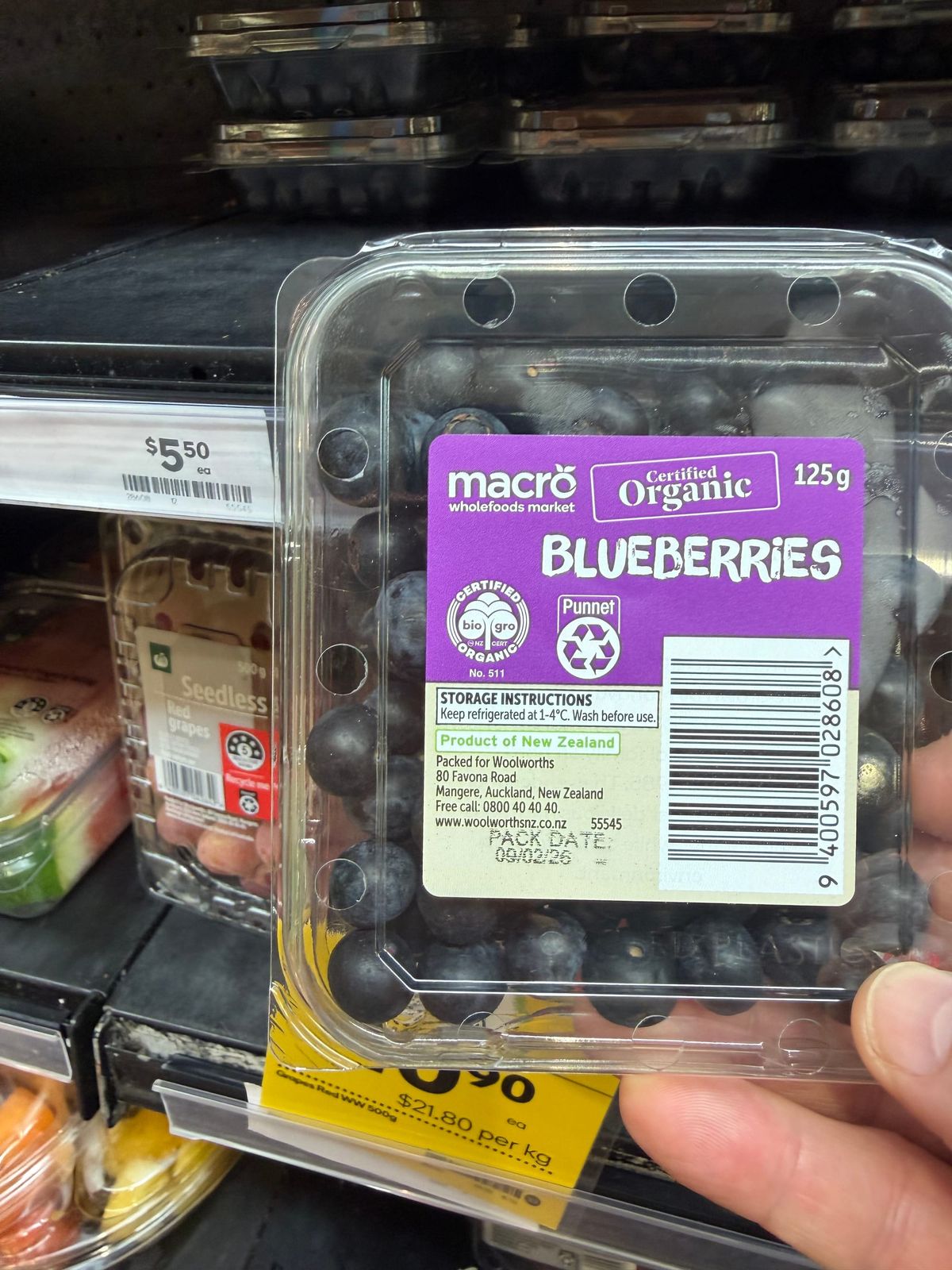
I kept turning things over in the supermarket and wondering what I was really looking at.
"Certified Organic." "BioGro Certified." "Grown Organically." Sometimes a logo, sometimes just words. Occasionally nothing at all — but someone at the farmers market telling me their produce is spray-free, they just haven't bothered with the paperwork.
After a few months of following this thread, I have a clearer picture. Here it is.
The short answer
In New Zealand, the word "organic" is not legally protected.
Anyone can put it on a product. There is no government regulation requiring a producer to prove anything before using it. If you see "organic" on a label without a certification mark behind it, you are taking the producer's word for it.
That's not necessarily a problem — plenty of excellent growers operate without formal certification — but it's useful to know. The word itself means nothing in law. The certification mark is what carries weight.
The certifiers
There are four certification bodies operating in New Zealand. They are quite different from each other.
BioGro is the one most people have seen. It's been running since 1983, it's the largest, and it's the most widely recognised both here and overseas. More than 850 producers and businesses are certified under it. The process involves a formal conversion period — typically three years — followed by annual independent audits. The standards cover what inputs are permitted, how soil is managed, animal welfare, and environmental practice. If a product has the BioGro logo, someone has physically visited that operation and checked it.
OrganicFarmNZ takes a different approach. It's built for smaller growers supplying the domestic market — the market gardener selling at the Saturday farmers market, the lifestyle block running a small CSA. Rather than an individual third-party audit, it uses a pod system: small groups of three to five growers who conduct peer reviews of each other's operations. It's deliberately more accessible and lower-cost than BioGro, and it draws on BioGro's standards for what's actually permitted. It's not designed for export. But for local food networks, it fills an important gap.
AsureQuality is a government-owned agency that provides certification aligned with international standards — specifically USDA Organic and EU organic regulations. It exists primarily to get New Zealand products into overseas markets that require recognised third-party certification. If you're buying organic product in a supermarket that's described as export-grade, AsureQuality is likely involved somewhere in that chain.
Demeter certifies biodynamic operations. Biodynamic farming goes further than standard organic — it treats the farm as a living system, follows specific planting calendars tied to lunar cycles, and uses particular preparations to build soil vitality. Demeter certification requires compliance with those additional standards on top of an organic foundation. It's a smaller community in New Zealand, but a committed one.
What the certification actually prohibits
Across all four certifiers, the core prohibitions are similar: no synthetic pesticides or herbicides, no synthetic fertilisers, no genetically modified organisms. For livestock, there are requirements around antibiotic use and welfare conditions.
The conversion period — that three-year window before a farm can be certified — exists because synthetic inputs don't disappear overnight. The soil needs time to clear. An operation that was conventionally farmed last year can't simply stop spraying and call itself organic.
What certification doesn't guarantee is zero residue. Spray drift from neighbouring farms is real. Glyphosate has shown up in certified organic products in testing done here and overseas, not because the farmer cheated, but because boundaries are porous and the landscape carries history. Certification is about practice and intent, verified through inspection. It's meaningful. It's not a clean-room guarantee.
The gap no one really talks about
The most interesting part of this system is what sits outside it.
There's a substantial number of growers in New Zealand who farm organically by practice — no sprays, composted soil, genuine care for what they're producing — but who haven't certified. Some can't justify the cost. Some sell everything locally and don't see the point. Some are too small for BioGro and don't know OrganicFarmNZ exists.
This is where the farmers market conversation matters. The person at the stall who tells you "we don't spray" deserves a few questions: What do you use for pest management? What did the previous landowner use? Have you done any soil testing? Most of them will answer clearly. The ones who can't or won't are telling you something.
The certification system is valuable precisely because it takes those questions out of the hands of individual consumers and puts them with trained auditors. But it doesn't cover everything, and what it doesn't cover is worth understanding.
Why this matters right now
The Gene Technology Bill currently moving through Parliament has implications for all of this. If new gene-edited varieties are approved for use in New Zealand agriculture, certified organic operations will need to demonstrate they haven't used them — which requires testing and documentation that currently doesn't exist at scale. Organics Aotearoa New Zealand has led the sector's response, helping mobilise more than 15,000 public submissions and commissioning economic analysis estimating potential export losses in the billions. The bill hasn't been defeated, but it has been delayed and publicly challenged. The certification ecosystem was built around a set of inputs and practices that the regulatory environment is now in the process of changing.
There is also a national organic regulation — the Organic Products and Production Act 2023 — which was a significant milestone. But it's still being implemented, with the first tranche of organic notices only recently out for public consultation. For now, the certification bodies continue to operate under their own published standards while the regulatory framework catches up.
That's not a reason to distrust the certification bodies — BioGro in particular has a rigorous track record. But it's context worth holding when you're looking at a label.
A map of who does what
If you want to understand the full ecosystem — the certifiers, the industry bodies, the advocacy organisations — I've put together a reference page that covers all of it: Organic Ecosystem in New Zealand.
The short version: BioGro and OrganicFarmNZ do the certification most consumers encounter. AsureQuality handles the export-facing work. Organics Aotearoa NZ coordinates the sector and produces the industry data. Soil & Health runs OrganicNZ magazine and has been advocating since 1941. Demeter sits slightly apart, serving the biodynamic community specifically.
They don't always agree, and they serve quite different constituencies. But together they're the infrastructure behind what the label means.
The certification pages for BioGro, OrganicFarmNZ, AsureQuality, and Demeter each have more detail on how each system works.