What "Organic" Actually Used to Mean
In 1940, a shy English farmer coined the word "organic" to describe something specific — a farm as a living system. Eighty years later the word is on everything. The idea is harder to find.
The word organic is on everything now. Organic yoghurt. Organic cotton. Organic dog food. Organic cleaning spray. It's a label, a price point, a signal to other shoppers that you're a certain kind of person.
It didn't start that way.
The word was coined once, by one person, in one book, in 1940. And what he meant by it is almost nothing like what it has come to mean.
His name was Walter James — the fourth Baron Northbourne, a farmer in Kent, England, an Oxford-educated agricultural lecturer, an Olympic silver medallist, and a deeply spiritual man who spent the second half of his life translating philosophy. He was, by all accounts, very shy. Not the obvious profile for a man who would plant a word into the global food system that is still there eighty years later.
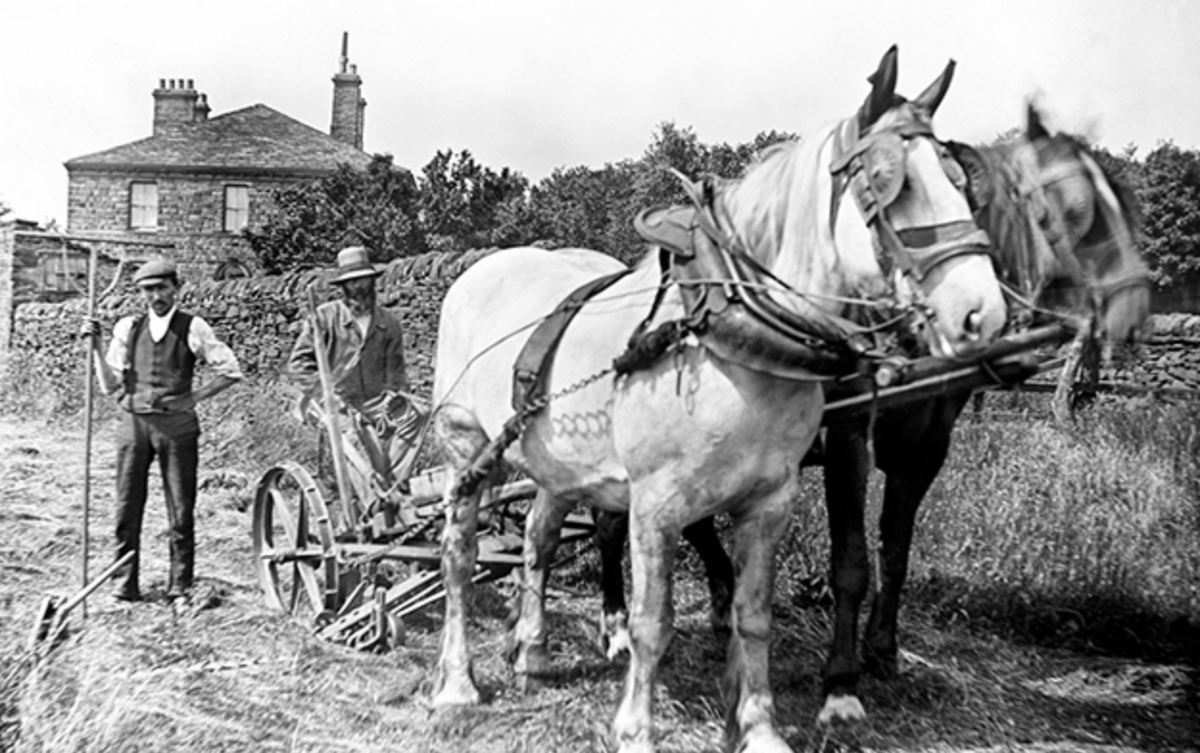
In 1939, Northbourne hosted the first biodynamic agriculture conference in England at his estate in Kent. Less than a year later, in 1940, he published Look to the Land. It was a wartime book, written as industrial agriculture was tightening its grip, and it was not a how-to guide. Rather than the mechanics or the practices of farming, Northbourne's book presents the philosophy, the rationale, and the imperative.
His central idea was simple and radical at the same time. He wrote that "the farm itself must have a biological completeness; it must be a living entity, it must be a unit which has within itself a balanced organic life." The farm as organism. Not a factory. Not a chemistry experiment. A living whole, with soil and microbes and animals and crops all bound together in something that had to be understood as a system, not a set of inputs and outputs.
In Look to the Land, Northbourne identified debt and exhaustive farming as having the potential to lead to "the extermination of much of the earth's population by war or pestilence." He pointed out that if the land is sick, then farming is sick — and people will be sick.
The word organic, in this original context, wasn't primarily about what farmers avoided using. It was about what they were trying to preserve. A living system. Soil that behaved like soil, not like a substrate for chemicals.
That distinction matters because it is precisely what got lost.
In 1943, Eve Balfour's The Living Soil built on Northbourne's ideas, and she founded the Soil Association three years later in 1946. But the debate about the future of farming in Britain was effectively closed off by the Agriculture Act of 1947, where exhaustive agriculture to maximise production prevailed. Subsidies were given to farmers who used synthetic fertilisers, and farmers who refused to modernise were threatened with land confiscation. The organic movement was pushed to the margins.
It stayed there for decades. Then something changed. Consumer demand grew. Supermarkets saw an opportunity. Governments created certification systems to regulate the label. In the United States, the Organic Foods Production Act was passed in 1990, and the National Organic Program became operational by 2002.
Here's where it gets interesting. When the US Secretary of Agriculture announced the final national organic standards, he declared that consumers "can buy organic with the confidence of knowing exactly what they're buying" — and then, a few sentences later, clarified that the organic label is a marketing claim. Both things in the same speech.
What followed, researchers argue, was a race to the bottom. Large corporations entered the organic sector to gain a competitive advantage and chose to follow the lowest regulatory standards permitted. The meaning of "organic" became diluted — rather than representing the founding spirit of the movement, the market came to be dominated by industrial producers.
The technical term for what emerged is "organic by substitution" — farms that simply swap synthetic inputs for organic-approved ones without genuinely transforming how they manage land. Certified. Legal. Labelled. Not what Northbourne had in mind.
What he had in mind was a farm that functioned like a living thing. Where the soil wasn't a medium to grow crops in, but the whole point. Where biodiversity wasn't a marketing term but a condition of the system working at all. Where the farm fed itself, rather than importing its fertility from a bag.
That idea didn't disappear. It became regenerative agriculture, agroecology, biodynamic farming — movements that exist partly because the word organic got crowded out by the certified-organic industry it created. The philosophy moved on while the label stayed behind, attached to supermarket shelves.
None of this makes the organic label worthless. Certified organic is still meaningfully better than conventional in most cases — fewer synthetic pesticides, no GMOs, some genuine soil health requirements. But it's worth knowing what the word was reaching for when it was first written, in wartime England, by a shy farmer who thought the question of how we treat land was a question about how we treat life itself.
Northbourne wrote that nature "is imbued above all with the power of love; by love she can after all be conquered but in no other way."
That didn't make it onto any supermarket label either.