New Zealand Is Debating Gene Tech. It's Been in the Cheese for 25 Years.
New Zealand calls itself GE-free. But the enzyme that sets the cheese in nearly every fridge is made by genetically modified microbes, and has been for 25 years, with nothing on the label to say so. It arrived before the GM crops we actually argued about. Here's how, and why.

New Zealand thinks of itself as GE-free. At the dinner table it isn't, and it hasn't been for twenty-five years. The cheese in nearly every fridge is set by an enzyme made by genetically modified microbes, with nothing on the label to say so. It was the first genetically modified ingredient ever allowed into food anywhere, approved in the United States in 1990 on the grounds that it was close enough to the real thing, a ruling that quietly set the template every GM food since has used. This is the story of how it got here, who makes it now, and why we're debating gene technology as though it isn't already on the bench.
Ask most New Zealanders about genetically modified food and you'll get some version of the same answer: not our problem. We're GE-free. We kept it out of the paddock, we market ourselves to the world on exactly that, and we've spent twenty-five years feeling quietly clean about it.
It's a comforting story. It's also, at the dinner table, not quite true.
Genetically modified material has been in the New Zealand food supply for decades, in plain sight, on the label, eaten daily by people who'd tell you with total confidence that they avoid the stuff. Most of the country's chicken and pork is raised on imported GM soy, which nothing on the packet has to disclose. And the cheese in nearly every fridge is set by an enzyme made by genetically modified microbes, which nothing on the packet has to disclose either.
That cheese enzyme has a particularly good story, because it didn't just sneak in. It went first. Before the GM crops, before the protests, before any of the arguments New Zealand thinks of when it thinks about gene technology, there was an enzyme in a block of cheddar, approved on the quiet, on the grounds that it was close enough to the real thing. It set the rule every genetically modified food since has used to get waved through. And it's still in your cheese today.
Here's how it happened, who makes it now, and why we're debating gene tech as though it isn't already on the bench.
What was actually in the cheese before
Start with the thing being replaced, because most people have never thought about it and it's the fact that stops them mid-sandwich.
Cheese needs an enzyme to set. For thousands of years that enzyme came from exactly one place: the stomach of a baby cow. Specifically the fourth stomach lining of a young, milk-fed calf, slaughtered before weaning. Calves make chymosin to curdle their mother's milk; cheesemakers worked out, somewhere back in the mists, that you could take that stomach, dry it, and use it to curdle milk on purpose.
That is animal rennet. It is the traditional method, the "natural" one, the one a certain kind of shopper is reaching for when they avoid anything that sounds like a lab. And it is, at its source, a dead calf's stomach.
This is why real Parmesan can never be vegetarian. Authentic Parmigiano-Reggiano is legally required to use calf rennet under the EU rules that protect its name. So are Grana Padano, Gruyère, and Manchego. The fancier and more "authentic" the cheese, the more certainly there is slaughtered calf in it. The cheap, mild, industrial block is the one more likely to be vegetarian. Almost everyone has it backwards.
Worth knowing too: the vegetarian alternatives aren't the modern invention people assume. Long before any fermentation tank existed, cheesemakers on the Iberian Peninsula were setting milk with the cardoon thistle, a flower, and they still make creamy, spoonable tortas that way today. Plant rennet didn't arrive with veganism. It's older than the industry that replaced it.
So that's the before: a calf's stomach, or a thistle, for several thousand years. Then 1990 happened.
The side door
By the 1980s, cheese demand was outgrowing the calf supply. You can't make more cheese by wanting more cheese; you needed more enzyme, and the enzyme depended on how many calves were being killed, which had nothing to do with how much cheddar the world wanted. The industry needed a way to make chymosin on tap.
The American pharmaceutical company Pfizer cracked it. They took the calf gene that codes for chymosin and spliced it into a microbe, so the microbe would produce the enzyme during fermentation, in a tank, forever, with no calf involved. They branded it Chymax. The enzyme it made was molecularly identical to the calf version, just grown by a genetically modified organism instead of harvested from an animal.
In 1990 the FDA approved it. And the way they approved it is the whole point of this story.
They didn't run a safety study. There was no new toxicology, no feeding trials, no public assessment of a novel ingredient. The FDA reasoned that the lab chymosin was chemically the same as calf chymosin, which already had decades of safe use behind it, so the existing approval simply stretched to cover the new version. Same molecule, same status. Done.
That ruling, "it's substantially the same as the thing we already allow, so we don't need to look again," became the template. It is, in plain terms, the doctrine that every genetically modified food since has walked through. The tomato, the soy, the corn, the gene-edited everything that followed: the regulatory logic that lets them in traces back to a decision about cheese rennet that almost nobody was paying attention to. The first GMO didn't kick the door down. It found a side door, and propping that door open is its real legacy.
And one detail people enjoy: the GM organism that makes the enzyme is killed and filtered out during production, so the chymosin in your cheese contains no genetically modified material at all. The microbe is GM. The enzyme is not. The cheese is not. This is the distinction the whole approval rests on, and it's the same distinction that, years later, lets a precision-biotech enzyme sit inside a block of certified organic cheese without breaking the rules, a contradiction I followed all the way through one specific supermarket block in Mainland Organic Cheese: Is Non-Animal Rennet Legit?
It worked, by the way. Within a few decades the lab enzyme had taken over. Today it sets something like 80 to 90 percent of the world's cheese. The calf-stomach method, ten thousand years the default, is now the exception you pay extra for.
Who makes it now
Here's where the story turns from history into something more like the rest of this site: follow the thing back to who owns it.
You'd think an enzyme this fundamental, in this much of the world's cheese, would come from a sprawling industry. It doesn't. It comes from a handful of companies most people have never heard of, and the handful keeps shrinking.
The dominant one is a Danish company called Novonesis, and its origin is the best joke in the whole piece. One half of Novonesis is Chr. Hansen, founded in 1874. Its founding product, the thing the entire company was built on a century and a half ago, was animal rennet for cheesemaking. Calf rennet. The company that is now the world's leading maker of the lab enzyme that replaced calf rennet got its start, 150 years ago, selling calf rennet. It spent a century perfecting the traditional product, then spent the next few decades helping make it obsolete.
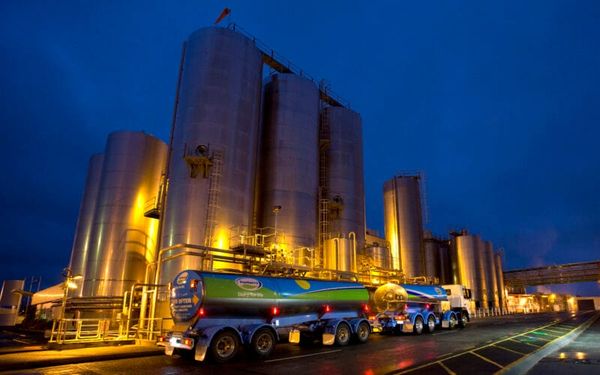
Novonesis itself is brand new as a name. It formed in January 2024 when two Danish bioscience giants, Novozymes and Chr. Hansen, merged into a single roughly €3.7 billion company. The other big players are dsm-firmenich, itself the product of a 2023 merger between a Dutch nutrition group and a Swiss fragrance house, and the American conglomerate IFF. A few firms, all formed or reshaped by mergers in the last few years, supplying the enzyme that most of the planet's cheese depends on. In 2025 Novonesis bought out dsm-firmenich's share of a joint venture between them for around €1.5 billion, and the field got smaller again.
This is the part the calf-stomach story and the corporate story turn out to share. Cheese feels like the most local, oldest, most human food there is. Milk, time, a farmhouse. But the single ingredient that makes it cheese at all now runs through one of the most concentrated industrial supply chains in food, owned by a few biotech conglomerates in Denmark, the Netherlands and the United States, led by a firm that started out selling the very thing it helped retire. The farm aesthetic on the front of the packet sits on top of a fermentation tank and a merger sheet.
Which brings it home
New Zealand sits downstream of all of this, the same as everyone else.
The cheese in the average New Zealand fridge is set, overwhelmingly, by the lab enzyme. It has been for a long time. The companies that make that enzyme are the global handful above; no New Zealand cheesemaker brews their own chymosin from scratch. The exact arrival date here is harder to pin than the American one, because New Zealand's regulator approves each enzyme application separately rather than flicking a single switch, but the trade points to the late 1990s, roughly a decade after the US. Call it twenty-five years, give or take. For a quarter of a century, a country that markets itself to the world as clean, green and GE-free has been quietly eating a genetically-modified-microbe-derived ingredient in most of its cheese, with nothing on the label to say so, because the rules class it as a processing aid that doesn't need declaring.
That's not a scandal. The enzyme is safe by every regulatory measure, and there's no calf in it, which a lot of people would count as a gain. But it sits oddly against the current moment. New Zealand is, right now, arguing about gene technology, the Gene Technology Bill, what GE-free should mean, whether to loosen the rules that have kept genetically modified organisms out of the field. I've written about that fight in The year New Zealand nearly raised its glyphosate limit and across the food-system pieces on this site.
And here's the quiet irony to take away from it. The country debating whether to allow gene technology into its food has, in one specific and almost invisible form, already been eating it for twenty-five years. Not in a trial, not in a lab, in the cheese toastie. The argument we're having as though it's about the future was settled, for cheese, before a lot of the people having it were paying attention. And it was settled the same way the original American decision was made: quietly, on the grounds that it was close enough to the real thing, with nobody at the shelf told a word.
That's the thing worth remembering. Not the chemistry of the enzyme. The pattern. Big changes to what's in your food don't usually arrive with a label and a debate. They arrive through a side door, get waved through because they're "the same as" something already allowed, and become the new normal so completely that, decades later, we argue about whether to permit the thing we've been eating all along.
It started with cheese.
Before you go
This is the kind of thread OFT pulls most days: take something ordinary off the shelf, turn it over, and follow it back to who actually makes the decisions. Free to read. No ads. Nothing behind a wall.
If that's your thing, let the next one find you.
Or back the work directly. A one-off $10 keeps the digging going. No account, no subscription.
Related reading from OFT:
- What Is Non-Animal Rennet, and Is It in Your Cheese? — the short version: what it is, how to read it on a label, and which NZ cheeses use what
- Mainland Organic Cheese: Is Non-Animal Rennet Legit? — how a GM-made enzyme ends up inside a certified organic block
- What does the organic label actually mean? — the four NZ certification bodies and what each one audits