Jason Mraz Bought a House. It Came With an Avocado Farm.
In 2004 the singer behind "I'm Yours" was eating fast food, drinking beer and smoking. He bought a house north of San Diego that happened to come with avocado trees. Today the farm is certified organic, grows coffee, and sells to Chipotle.
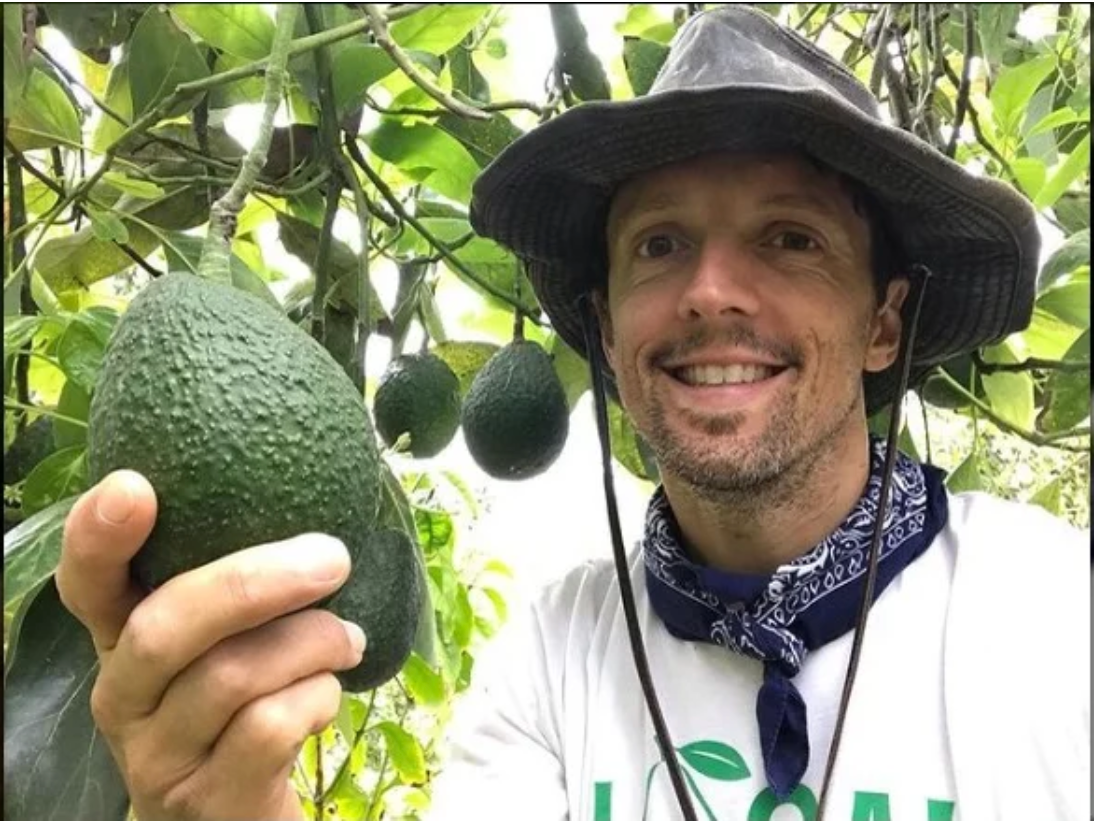
In 2004 Jason Mraz bought a house north of San Diego that happened to have an avocado farm on it. He had no plans to farm. By his own account he was still eating fast food, drinking beer and smoking cigarettes, and mostly wanted somewhere in the country where he could be as loud and as weird as he liked.
Twenty years on, that accident is a certified organic farm growing ten crops, including coffee, and one of its customers is Chipotle.
Who is Jason Mraz?
If the name doesn't ring a bell, the song probably will. "I'm Yours" is the cheerful ukulele-and-reggae one that seemed to be playing in every café in 2008 and 2009. On the Billboard Hot 100 it spent 76 weeks on the chart, a record at the time. Mraz told Billboard he "had little expectations about 'I'm Yours' on the radio." It did fine here too: in February 2009 it was number one on the New Zealand singles chart, fourteen weeks into its run.
Jason Mraz - I'm Yours (Official Video)
He grew up in Mechanicsville, Virginia, and went to New York to study musical theatre. About a year in he wanted to quit and write his own songs, so he went looking for someone to agree with him and found a palm reader in Central Park. The palm reader told him to go with what he knew. He left school and moved to San Diego.
He started out playing Java Joe's, a local coffeehouse where Jewel also got her start. He never really left the coffee business. In 2024 he was still doing shifts behind the bar, pulling espresso shots and pouring latte art.
The Rolling Stones did it
The change in how he ate started on tour. In 2006 he played a few shows with the Rolling Stones and noticed how well they looked after themselves, while he was smoking and living on junk food. He had also taken up surfing, and told EatingWell he felt kind of ridiculous lighting a cigarette after a surf. When a bandmate was diagnosed with type 2 diabetes, Mraz brought a chef on the 2008 world tour for 30 days and the whole crew went vegetarian and raw.
It stuck. He stopped eating animal products in 2008, and in 2024 he said he had eaten an avocado a day for 20 years. On tour he travels with a second suitcase that is basically a kitchen: juicer, blender, kettle, herbs. His dressing room has fruit, vegetables and a juicer instead of beer.
His signature dish is chocomole, a dessert made from his own avocados with dates and raw cacao. He told CNN it was a raw chocolate mousse with no sugar, soy or tofu, and promised: "You will freak when you try this chocolate mousse."
The accidental farmer
When he moved in, the property was a small hacienda with five acres of Hass avocados planted in the early 1970s. He wasn't a farmer, so he hired a grove-management company and went back on tour. In 2008 he bought a few neighbouring farms and planted more fruit trees, and in 2012, by Experience Life's account, he went fully organic.
There was some family history behind it. His grandfather had a farm, and Mraz said he learned a lot watching him. Around 2015 he was taking urban farming classes online through Arizona State University, and the learning curve showed. One experiment involved a helicopter spraying essential oils over the crops. It killed all of the corn. Another involved releasing hundreds of thousands of wasps to eat the flies in the compost heap, after which the birds ate the wasps.
He said certification took three years. The farm stopped using chemicals, built drains to stop runoff and retrained its workers, and he reckoned he was the first of the farms around him to go organic. Three years is the standard wait in the United States. Under the USDA's rules, land must go 36 months without prohibited substances, and nothing grown on it can be sold as organic until that clock runs out.
It cost him. He told San Diego Magazine in 2017 that converting 40-year-old avocado trees was expensive, and that commercial farming wasn't paying for him or his neighbours. With nothing but avocados, he couldn't cover the water bill during the drought. In 2019 he put it more simply: he was growing organic, and he "was losing money."
So he planted coffee
His farming mentor, Scott Murray, came back from a lecture by a California coffee grower with a simple pitch: "if you can grow avocados, you can grow coffee." About 2,000 coffee trees arrived in April 2015, and that, Mraz has said, is when the backyard officially became Mraz Family Farms. The coffee is sold through a partner company, Frinj Coffee, according to the farm's FAQ.
On the register
Mraz Family Farms has a listing in the CCOF directory. CCOF is California Certified Organic Farmers, and the listing shows the farm certified under the USDA's National Organic Program. As of November 2026 the status reads certified, with crops certified since 31 March 2017 across 11.55 acres, a bit under five hectares. The list runs well past avocados: bananas, cactus, cherimoyas, coffee, lemons, limes, mandarins, mangos and passion fruit are all on it.
The dates don't quite line up. Organic from 2012 plus a three-year process should land around 2015, and the CCOF listing says 2017. I couldn't find the reason for the gap. What I could find was the certifier, which is more than I managed for Sandra Bullock's ranch in the last post in this series.
The Chipotle bit
When a Los Angeles Times reporter met him in 2014, Mraz handed over an avocado with a "Mraz Fresh" sticker on it. The year before, he had sold 34,000 pounds of them, about 15 tonnes, to Chipotle restaurants near his home. That sounds like a lot of guacamole until you look at the other side of the deal. Around the same time, Chipotle was using about 97,000 pounds of avocados a day, so his whole year's sales would have kept the chain going for roughly eight hours.
Chipotle seems to have liked him anyway. In 2021 it named him a mentor for its food start-up accelerator and called him a longstanding avocado supplier. A San Diego Business Journal profile later named Chipotle the farm's biggest customer, taking more than 62,000 pounds in a year for its local restaurants. The rest goes to a handful of Oceanside grocers and cafés, or out in boxes by post, which the farm warns often sell out quickly. There are no tours.
Pie, but not much sugar
In November 2017 he made his Broadway debut in Waitress, playing the doctor who falls for a small-town diner baker. It was a neat twist for a man who once worried he'd fail at theatre and end up a waiter. According to Songfacts, he gave up sugar for the role, except for the bites of pie his character had to eat on stage.
He went on season 32 of Dancing with the Stars expecting to last two or three weeks. He finished runner-up.
Built to outlast him
At concerts, he used to throw bags of compost to the crowd during his song "Back to the Earth," and he has sold packets of seeds at his shows. In 2024 he said the avocado trees he was planting that year would outlive him, and that he liked that.
The trees he started with were planted by the previous owner, who was in his 80s when he sold. Mraz told Green Matters what he took from that: "If a farm is done right, it'll outlive its farmer."
Part of an occasional Sunday series on famous people, and a few very rich ones, who chose organic.
Before you go
If you want more like this in your inbox, sign up free. If this was useful and you'd like to chip in once, leave a tip.