What "Vegetable Oil" Isn't Telling You
Vegetable oil" is the least informative label in your pantry. Behind it sits one of the most industrial processes in the kitchen — and one of the loudest health fights online. Here's what canola actually is, how it's made, what the science really says, and the NZ oil that maps its own provenance.

If the olive oil scandal is a story about a label that claims too much, canola is the opposite. It's a story about a label that says almost nothing.
"Vegetable oil." "Canola." Two of the most common words on a New Zealand pantry shelf, and between them they tell you nothing about what plant, what country, what process, or what farming system produced the liquid in the bottle. It's the least informative label in the kitchen — sitting on top of one of the most industrial processes in it.
So I went looking for what's actually behind it. The answer comes in three parts that get tangled together constantly: how it's made, where the seed comes from, and whether any of it is bad for you. They're worth keeping separate, because the loud version of this story mashes all three into a single panic.
First, what canola even is
Start by demystifying the word. "Canola" isn't a plant. It's a contraction of "Canadian oil, low acid" — a name coined in 1970s Canada for a cultivar of rapeseed bred to be low in erucic acid, which the original rapeseed had too much of. The plant is a Brassica, the same family as broccoli, cabbage and cauliflower, and it throws those bright yellow flower fields you see across Canterbury in spring.
As a fat, it's unremarkable in a good way: roughly 63% monounsaturated, 30% polyunsaturated, 7% saturated. Low in saturated fat, no trans fat, and unusually for a seed oil it carries a meaningful slug of omega-3 alongside its omega-6. None of that is the problem. The plant isn't the story. The process is.
How the cheap stuff is made
This is the part the label hides.
Most commodity canola oil is made in two passes. First the seeds are heated, flaked and run through a screw press to squeeze out the bulk of the oil. That alone leaves a fair amount behind in the press cake — so the cake is then washed in hexane, a petroleum-derived solvent, which dissolves and pulls out the rest. Between the two, the process recovers something like 97–99% of the oil in the seed. The hexane is then boiled off, and the crude oil goes through RBD: refined, bleached and deodorised. Degummed with acid, neutralised with caustic soda, bleached with clay, then steam-stripped at high heat until it's the clear, neutral, odourless liquid you recognise.
Here's where the honest line matters, because this is exactly the point the scare version overshoots. The hexane does not stay in your bottle in any meaningful amount. It's volatile, it's boiled off, and the finished oil carries only traces — the EU caps residual hexane in edible oil at 1 milligram per kilo. The genuinely debated residue sits in the leftover meal that becomes animal feed, not in the oil. So "your canola oil is full of hexane" is not really true.
What the process does tell you is something subtler and more useful: this is a commodity. Anonymous seed, solvent-assisted extraction, and enough refining to strip out colour, smell and flavour — and with them most of whatever was distinctive about the seed in the first place. The point of the process is to make a cheap, neutral, interchangeable oil. Provenance isn't lost by accident. It's refined out on purpose.
The GM question
Most of the world's commodity canola is genetically modified — the great majority of the Canadian crop, plus much of what's grown in the US and parts of Australia. So a generic imported "canola oil" in New Zealand is very likely pressed from GM seed.
But here's the fair part, because the panic overshoots here too. Refining strips the proteins out of the oil, and the genetic modification lives in the protein. By the time it's RBD oil, canola from GM seed is chemically more or less indistinguishable from canola from conventional seed. So the GM issue isn't really about a molecule in your bottle. It's a question about the farming system the oil comes from — herbicide-tolerant cropping (mostly glyphosate-tolerant "Roundup Ready" canola, developed by Monsanto and now owned by Bayer, alongside glufosinate-tolerant "LibertyLink" from BASF), seed grown under licence rather than owned by the farmer, the rise of glyphosate-resistant weeds, the whole model — which is a legitimate thing to care about, but a different thing from "there's GM in my oil." Worth caring about with the reasons stated correctly.
New Zealand, for its part, grows no commercial GM crops. So canola grown here is GE-free by default — which becomes relevant in a moment.
The health fight, honestly
This is the loudest part of the whole subject, and the most worth slowing down on, because both camps overclaim.
The viral position is that "seed oils" cause inflammation, mostly via their omega-6 (linoleic acid), which the body can convert into pro-inflammatory compounds. That conversion is real on paper. But the leap from there to "seed oils are inflaming you" doesn't survive contact with the human evidence. Reviews of controlled trials have found that higher linoleic acid intake doesn't raise inflammatory markers, and large cohort studies have linked higher omega-6 intake to lower — not higher — risk of heart disease and all-cause mortality. Bodies like Johns Hopkins' public health school, the Academy of Nutrition and Dietetics, and cancer research organisations have all landed in roughly the same place: the inflammation claim isn't supported, and cutting omega-6 is more likely to hurt heart health than help it.
So the mainstream verdict is that canola, as a molecule, is fine — probably good. I'll report that plainly, because it's where the evidence sits.
Now the caveats, in the same spirit — because the obvious question is: who paid for all that reassurance? Some of it is the industry. A widely promoted 2025 review came funded by the soybean, corn and canola boards, and some prominent seed-oil defenders sit inside commercial nutrition companies. Worth knowing, and worth discounting accordingly. But it isn't the whole picture, and this is the part that matters: the inflammation conclusion holds up in independent work too — university-run meta-analyses of randomised trials, and pooled cohort studies of tens of thousands of people with no seed-industry money attached — which is why public-health academics, not just trade bodies, keep landing in the same place. Set every industry-funded study aside and the specific claim that omega-6 is inflaming you still doesn't stand up. That's the honest asymmetry: the "seed oils are toxic" case leans heavily on mechanism and animal studies, while the human evidence, independent included, runs the other way.
What's genuinely true on the sceptics' side, though. There are fewer long-term, whole-diet human studies than you'd expect for something this ubiquitous. Animal studies do show inflammation and oxidative stress, even if they don't reliably translate to people. And the real issue the molecule debate distracts from is that most of the omega-6 in a Western diet arrives inside ultra-processed food, and oils reheated hard and often do oxidise. The honest concern was never the seed itself. It's the company it keeps and how it's treated.
In other words: the oil probably isn't hurting you. The diet it's usually a marker of might be. That's a less shareable conclusion than either tribe wants, which is rather the point.
Why this belongs next to the olive oil story
Remember the cheap oil that gets blended into fake "extra virgin"? A lot of the time, this is it — a neutral, anonymous, refined seed oil, sometimes tinted to pass. The two stories are the same story told from opposite ends. Olive oil fraud is a lie of commission: claiming a provenance the oil doesn't have. The "vegetable oil" label is a lie of omission: a product engineered to have no provenance worth claiming. In both cases the fix is the same instinct — knowing where the thing in the bottle actually came from.
The New Zealand alternative
Which is where canola gets genuinely interesting here, because New Zealand makes the opposite kind of oil.
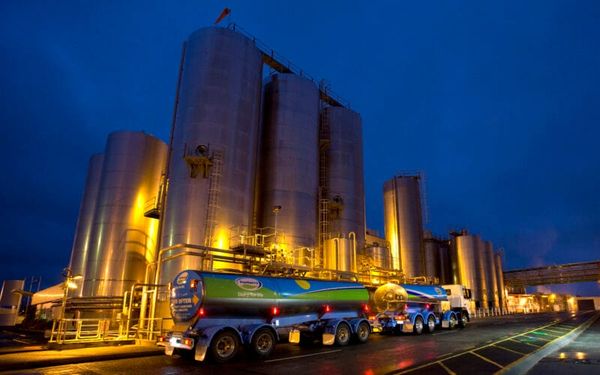
Pure Oil New Zealand, in Rolleston near Christchurch, presses rapeseed grown by around a hundred family farms across South Canterbury, Otago and Southland and sells it as The Good Oil. The seed is GE-free and 100% New Zealand grown. The oil is cold-pressed — mechanical pressing only, no added heat, no hexane — then triple-filtered and bottled on site. They also make a refined version for food manufacturers, but even that starts from cold-pressed crude and is gently low-temperature refined rather than solvent-extracted and stripped. The varieties are high-oleic, which means more of the stable monounsaturated fat and a higher smoke point, plus that useful slug of omega-3.
The detail I keep coming back to is how they describe themselves: handling and processing rapeseed, in their own words, the same way a quality New Zealand-grown olive oil is handled. Short chain, named region, pressed fresh, sold close to home. It's the exact provenance answer the olive oil story arrived at, applied to the oil nobody thinks to ask about. (There's even a plot twist: the Rolleston plant was originally built to make biodiesel, before a Canterbury consortium bought it in 2012 and pointed it at food.)
A few honest asterisks, though, because this shouldn't read as an ad. Pure Oil is more or less the only game in town for New Zealand-grown rapeseed oil, so "buy local" here largely means buying from one company. It costs more than the commodity stuff, and you won't find it on every shelf. And — this is the one that matters — it is still a seed oil, pressed from the same plant, not a different food group. Cold-pressing and local growing don't change that. They make it fresher, solvent-free, GE-free and traceable. That's a provenance upgrade, not a health rescue.
Which is exactly where this should land, and it's worth saying plainly after all that build-up: the mainstream evidence says ordinary canola probably isn't hurting you, so this was never a switch-or-suffer story. The case for a cold-pressed local oil is the same case as for a local olive oil — you know what it is and where it came from. If that matters to you, the option exists. If it doesn't, the commodity bottle isn't the villain the internet makes it out to be. Either way you now know what sits behind the blandest label in the cupboard, which is more than the label was ever going to tell you.
How to read the bottle
You don't need to fear canola. You need to know which canola you're holding, and the label usually tells you if you read it properly.
"Vegetable oil" with no plant named is the lowest-information option there is — it can be canola, soy, palm or a blend, refined and from anywhere. A named oil is already more honest than an unnamed one.
"Cold-pressed" or "expeller-pressed" means mechanical extraction, no solvent — a different product from the refined commodity, with the colour and flavour left in.
"New Zealand grown" on a canola or rapeseed oil means GE-free by default and a supply chain measured in regions, not oceans.
And the same nose test from the olive oil story applies in reverse: a cold-pressed local rapeseed oil should taste of something — mildly nutty, golden, alive. If it tastes of nothing at all, that blankness was engineered, and now you know how.
Sources and further reading
How it's made
- A plain-language walk through pressing, hexane extraction and RBD refining: https://www.centrafoods.com/blog/what-is-the-difference-between-cold-pressed-expeller-pressed-solvent-expelled
- Canola processing, seed to oil, including the solvent-extraction step: https://onecpm.com/success-story/the-complete-guide-to-canola-oil-processing-from-seed-to-oil
- On hexane residue limits and the RBD process generally: https://scienceinsights.org/how-to-make-seed-oil-press-extract-and-refine/
The health debate
- Johns Hopkins Bloomberg School of Public Health — the evidence on seed oils and inflammation: https://publichealth.jhu.edu/2025/the-evidence-behind-seed-oils-health-effects
- Academy of Nutrition and Dietetics — a balanced fact-check of the seed oil claims: https://www.eatrightpro.org/news-center/practice-trends/nutrition-fact-check-seed-oils
- The counter-note worth reading with eyes open — reporting that a major reassuring review was industry-funded: https://www.aol.com/negative-seed-oil-hype-wrong-010127497.html
The New Zealand alternative
- Pure Oil New Zealand / The Good Oil — GE-free, NZ-grown, cold-pressed rapeseed from Canterbury: https://thegoodoil.nz/about/technical-information-research/ and https://pureoil.nz/products/edible-oils/extra-virgin-oils/
- How a Canterbury biodiesel plant became a food-oil crusher: https://www.midlandsnz.com/oilseed-rape-goes-from-biodiesel-to-a-food-oil-crop
- The Good Oil featured on A New Zealand Food Story with Ben Bayly (TVNZ+, Season 4, Episode 5)
Previously in this series: the olive oil scandal — how the world sells more "Italian" extra virgin than Italy grows, and what New Zealand's OliveMark does about it.