Bürgen Is Gone. Two Companies Own Nearly All The Rest.
Bürgen left New Zealand shelves in August 2026 and the replacement lists went up within a day. Nobody asked who makes the alternatives. Nineteen loaves, two owners, and independent testing that points the opposite way to the nutrition advice.
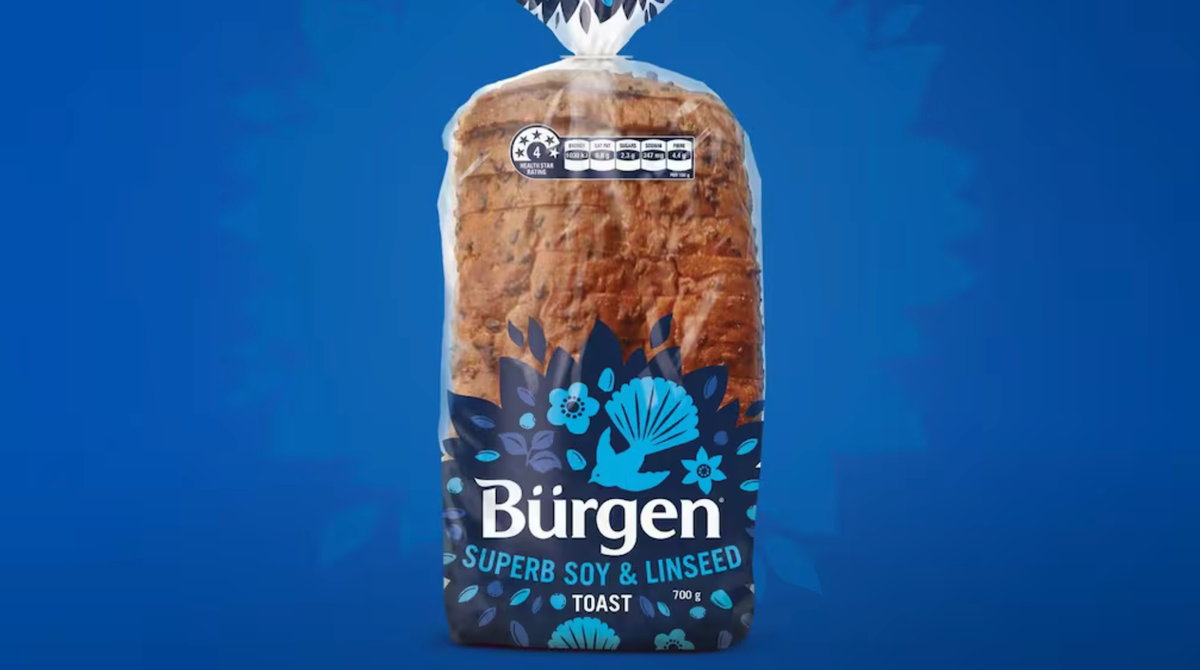
Bürgen left New Zealand supermarket shelves in August 2026. Nearly every loaf being offered as a replacement comes from one of two companies: George Weston Foods, owned in Britain, and Goodman Fielder, owned in Singapore. Here is what they own, what independent testing found in those same loaves, and where else you can look.
The goodbye went up on Facebook on a Sunday. Bürgen thanked New Zealanders for having it at the table, said it was gutted to be leaving, and that was that. George Weston Foods told 1News the product was no longer being produced, that sales had declined in recent years, and that retailers had advised they were removing the range because of lower demand and pressure on shelf space.
The replacement lists appeared within a day. The Herald ran a guide to the healthiest supermarket breads and what to buy instead of Bürgen, updated from an earlier version, alongside its April piece on the best "functional" breads and the claims to ignore. Which loaf has the most fibre, which one the dietitians rate, which one is quietly refined flour wearing a grainy jumper. All useful. None of it asks who makes the alternatives.
So I checked. Nineteen loaves are named across those two guides. Every single one belongs to the same two companies.
The two owners
George Weston Foods bakes Tip Top, Ploughmans, Bürgen, Golden, Big Ben and Dad's Pies. It is headquartered in Sydney, which is why most coverage of the Bürgen exit called it an Australian manufacturer. It is a wholly owned subsidiary of Associated British Foods plc, which is listed in London. Australian-run, British-owned.
Goodman Fielder bakes Vogel's, Nature's Fresh, Molenberg, Freya's, MacKenzie and Quality Bakers, and also owns Edmonds, Meadow Fresh, Chelsea and Ernest Adams. It was bought in 2015 by Wilmar International of Singapore and the Hong Kong fund First Pacific. Wilmar bought out First Pacific's half in 2019 and has owned the whole thing since.
That is the aisle. Two companies, neither owned here, between them holding the brand your grandmother trusted, the brand the dietitians recommend, and the brand that just walked out.
There is a further wrinkle worth knowing. George Weston Foods also owns Mauri, which supplies bakers' flours, yeasts, grains and pre-mixes across Australia and New Zealand. Whether Tip Top's bakeries run on Mauri's own flour is not something either business publishes. The capability sits inside the same corporate structure either way.
None of this is a nutrition claim. Both companies bake in New Zealand plants, employ New Zealanders, and buy a meaningful amount of New Zealand wheat. A loaf is not worse because a holding company is registered somewhere else. But when every option on a "what to buy instead" list traces back to two owners, the list is describing a shelf, not a choice.
The part the nutrition advice leaves out
Here is where it gets awkward.
The bread guides recommend wholegrain and seed-heavy loaves, on solid ground: more fibre, more of the grain left intact, better numbers on almost every measure that matters.
In April 2026, independent testing of eight supermarket loaves found detectable glyphosate in six of them, ranging from 0.023 to 0.21 mg/kg. The highest results were in the wholegrain and seed-heavy loaves. Freya's Tusan Mixed Grain topped it at 0.21 mg/kg. Bürgen Superb Soy & Linseed came second at 0.168 mg/kg. Three Vogel's lines returned detections. Tip Top Supersoft and Woolworths Essentials Wheatmeal came back non-detect.
Read those two paragraphs together and the advice inverts. The loaves that score best on fibre are the ones carrying the most residue, because residues concentrate in the outer layers of the grain and in the seeds. The loaves that came back clean are clean partly because refining has already stripped away the part you were trying to eat.
Three things to keep straight before anyone shouts. Every result was legally compliant and well inside the permitted limits. Eight loaves in one round is a small sample and should not be treated as a survey of the market. And the testing was commissioned by a campaign group with a stated position on glyphosate, which is a reason to read the numbers carefully rather than a reason to dismiss them.
What it does establish is that fibre and residue move in the same direction, and no supermarket bread guide in this country mentions it.
The loaf that just left the shelves happened to sit second on that list. Bürgen's Soy & Linseed also appeared on the Herald's "ones to avoid" list in the original version of that guide, at 4.4g of fibre and 347mg of sodium per 100g, below the guideline the dietitians use. Two publications, two completely unrelated objections, one loaf, discontinued within months. Coincidence, almost certainly. Still worth noticing.
Both Bürgen entries have since been edited out of the updated guide, which is the correct call once a product stops existing. It does mean the list headlined as five healthiest breads now contains four.
The numbers do not compare
If you go looking at those guides yourself, watch the denominator.
The August guide quotes fibre per 100g. The April one quotes fibre per serve. The same loaf, Ploughmans Farmhouse Wholemeal, appears as 7.1g in one and 6.2g in the other. Both figures are correct. They are measuring different things.
The thresholds move too. Under the Food Standards Code, a bread needs at least 4g of fibre per serve to be called a good source and at least 7g per serve to be called high fibre. The dietitians quoted in the same coverage suggest aiming for 5g per 100g, with more than 7g being excellent. Those two sets of numbers look identical on the page and are not.
A slice is not 100g. Nothing on the shelf is.
What the ingredient list does not tell you
Bread does carry an ingredient list. Beer, for reasons I have written about elsewhere, does not. You would think that settles it.
It does not, quite. Substances classed as processing aids under the Food Standards Code do not have to appear in the ingredient list, because they are held to have no technological function in the finished food. In commercial baking that category covers a range of enzymes used to condition dough and extend softness. They are permitted, assessed and legal. They are also invisible on the pack.
There is a smaller example sitting in plain sight. One of the darker loaves on the market takes part of its colour from roasted barley malt rather than from wholegrain rye. That is a legitimate ingredient, declared as such. It is also a reminder that colour is a decision someone makes, not evidence of what is in the flour. Where that malt comes from is about to get more complicated.
So what do you actually buy
The honest answer is that if you want a loaf off a supermarket shelf, you are choosing between two owners, and within that you should follow the fibre advice, because more fibre is genuinely better for you and the residue question is a second-order concern next to eating enough of it.
If you want to step outside that shelf, the options in New Zealand are real but they take effort:
- Certified organic bread. Organic standards prohibit synthetic glyphosate, and organic flour is also the only wheat flour in New Zealand exempt from mandatory folic acid fortification. I have written about why that exemption exists and what it involves.
- A real sourdough bakery. Long fermentation does things to the dough that no enzyme in a factory schedule replicates, and a small baker will usually tell you exactly whose flour they use if you ask.
- Home baking with New Zealand organic or spray-free flour. Where to find it is its own small research project.
- Milling your own. I bought a mill, which sounds like the sort of thing a man says just before he starts making his own cheese. I worked out what a home loaf actually costs against the supermarket, and the answer was not what I expected.
Bürgen leaving is a small thing. One brand, declining sales, a shelf reset. What it exposes is that the bread aisle was never as wide as it looked, and that the guide telling you which loaf is healthiest has never once had to tell you who bakes it.
Nineteen loaves. Two owners. Nobody counted.
Sources
- 1News, Bürgen is toast: Bread brand to leave New Zealand shelves, 10 August 2026
- NZ Herald, The healthiest supermarket breads and what to choose to replace Bürgen, updated 10 August 2026
- NZ Herald, What are the best "functional" supermarket breads and the nutrition claims to avoid, 16 April 2026
- NZ Herald, the original version of the healthiest breads guide, November 2025
- George Weston Foods Baking New Zealand and George Weston Foods corporate, brand and division listings
- Goodman Fielder New Zealand, brand listings
Before you go
If this was useful, sign up free to get a new piece most days, or leave a one-off tip if you want to help keep the research going.