Who Am I to Tell You What to Eat?
Fair question. Before you trust anything I write about food, you should know who's writing it. Thirty years of brewing, blind hop selection in the Yakima Valley, judging at the World Beer Cup, and a lifetime of asking where things come from. Here's my answer.
My first brewing job was assistant brewer. Then the head brewer left, and I started asking questions.
The first one was about yeast. Why were we using dried yeast? What else was out there? The answer turned out to be in Oregon, a company called Wyeast making liquid yeast cultures. I didn't just buy some. I started importing it, and ended up supplying breweries and wineries around New Zealand for over 25 years.
When I switched our beer to the liquid yeast, the flavour changed. I thought it changed for the better. The customers didn't. It was different, and different meant bad, and they complained, and some of them told me straight that if I didn't change it back they'd drink somewhere else.
Here's the thing though. They were drinking more. Sales went up 60% in a few months. Nobody left. The beer tasted better; they just needed time to notice.
That's been the pattern of my whole working life. Ask the question, go find the better ingredient, hold your nerve.
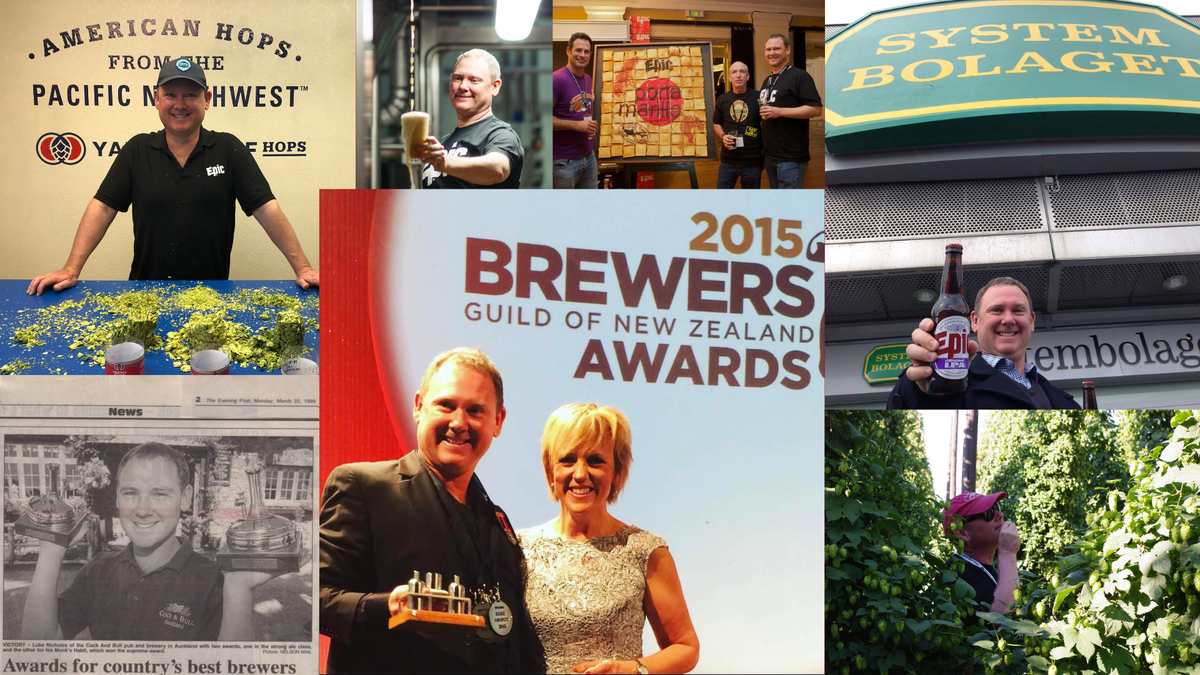
When I created Epic Pale Ale I brewed it with Golden Promise malt from the UK, a malt so good the Scottish whisky distillers used it. It was expensive. It was worth it. Epic Pale Ale won Supreme Champion Beer of New Zealand in 2006, the very first awards it was ever entered in. That wasn't my first either; my beers had taken the supreme championship twice before, each time using ingredients nobody else was using, in ways nobody was thinking about using them.
Over the years the search for better ingredients turned into an annual pilgrimage. Every September I flew to the Yakima Valley in Washington for the hop harvest. I walked the rows with the growers, inspecting the crop, talking through that year's challenges. Drought. Weather. Disease pressure. Which varieties were being planted, which were being ripped out, which new ones nobody had tried yet. That advance knowledge became the Epic One Trick Pony series; I'd get new hop varieties before any other brewer in the country, and people would race to taste the beer to find out what the hop was like.
At harvest I had the privilege of selecting my own hops. I'd be presented with eight to twelve lots from different farms, and I'd rub and smell each one, hunting for the characters I loved in each variety. The selection is done blind; the lots are coded, so you have no idea which farm you're smelling until after you've chosen. Every year the hops came out slightly different, so you might end up buying from different farms, or different states entirely.
Except once. Three years in a row I picked the same Centennial, and three years in a row, when the codes came off, it was the same farm. C&C Farms. There was a character in that hop, from that farm, that I loved, and I found it blind, three times. So I went to find out exactly where it grew. I met the farmer, we jumped in his truck, and we drove out to the exact block where my hops came from.
That is what I do. I want to know where my food comes from. I want to stand on the farm, meet the farmer, understand his problems and what he does brilliantly. And when you get in the field with a grower and show them you actually care, something happens. Relationships form. There are hop farming families where I know three generations. I've had dinner at their tables and drunk beer with them in their sheds.
Does any of this show up in the glass? Armageddon IPA won eight consecutive best-in-class trophies across competitions in New Zealand, Australia and Sweden, and an unofficial word in my ear that it placed fourth at the 2012 World Beer Cup. It's possibly the most awarded IPA in the world. I believe that came down to one thing: I was in the fields, selecting the hops myself.
I've spent plenty of time on the other side of the judging table too. I started judging beer in 2000 at the New Zealand Beer Awards, and went on to judge in New Zealand, Australia and the United States. I was the first New Zealand beer judge invited to judge at the World Beer Cup. Twenty-five years of formal blind tasting trains a palate in a way nothing else does; you learn to taste what's actually in the glass, not what the label tells you is there. That skill doesn't stay in beer. It's one of the tools I've brought to this site.
The backstory, quickly. Bachelor of Commerce and Management from Lincoln University. First job at NZ Gourmet, a produce exporter, learning how food moves from growers to the world. A year living in California, where I discovered craft beer and homebrewing took over my life. Back in New Zealand, a year at Watkins running production for their compost and potting mix division before the brewing career began. Soil, produce, supply chains, beer. It all connects, though I couldn't see it at the time.
And maybe it started earlier than any of that. My grandfather gave me my first homebrew kit. He'd been a homebrewer for years, and always had a big garden when I was growing up. Go back further and my great grandfather was a market gardener in the late 1940s, after the war. The questions were in the family before they were in me.
They've never stopped. Why does my bread have folic acid in it? If I don't want to eat that, what are my options? Organic bread is expensive; can I get it cheaper? Yes, make it myself. What flour? What about milling my own? Where does a flour mill even come from, and where do I get organic wheat? I now mill my own grain and bake my own sourdough, because I followed that chain of questions to the end.
That's what Organic Food Together is. The same questions, asked about everything on your plate. Who grew this, who owns the company behind it, what's actually in it, and is there something better. I chase these things down so you don't have to.
A note on how I work, at this stage. Everything I publish comes from information that's publicly available. I'm not calling companies or emailing PR departments. I search the registers, the reports, the ownership records, the labels, and I piece together what's actually there. Partly that's deliberate; anything I find, you can find and check yourself. And it's revealing in its own right. What a company makes easy to find, and what it doesn't, tells you plenty. This is where the work starts.
I should also say: this isn't my job. I still work full time in brewing at Epic, twenty years on. But the truth is I've been doing this work my whole life anyway. I ask questions every day, then go looking for answers; that's just how I'm wired. The only thing that's changed is that now I'm documenting them and sharing them as I go.
One last thing. I'm always learning, and when new information shows up, I'm prepared to change what I think. If I get something wrong here, I'll correct it and say so.
Nobody assigns me stories. There are no ads. Just questions, followed to the end.