Woody Harrelson Was Growing Organic Food Before Hollywood Thought It Was Cool
Long before organic was a supermarket staple, Woody Harrelson was growing cacao in Hawaii and getting arrested over four hemp seeds. Thirty years on he's still talking about soil, and the films he narrates deserve a closer look.
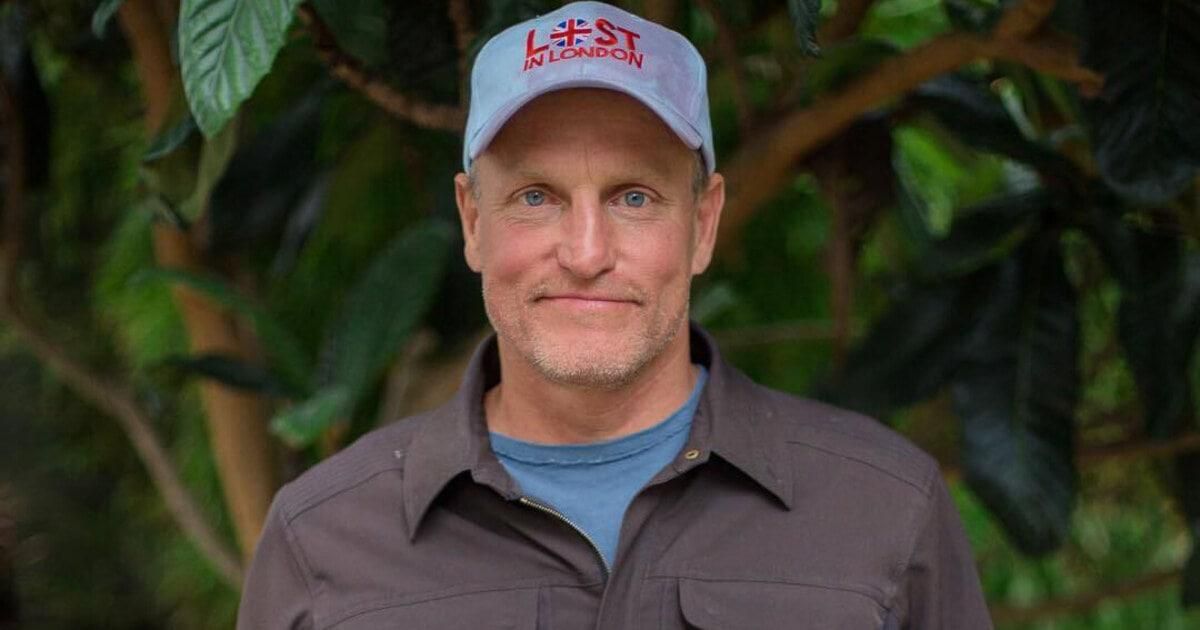
Long before organic food was a supermarket staple, Woody Harrelson was growing cacao in Hawaii and getting arrested over four hemp seeds. Thirty years on, he's still talking about soil.
Most people know Woody Harrelson from Cheers, Natural Born Killers, The Hunger Games and True Detective.
Fewer know he once got arrested for planting four seeds.
The chocolate farm dream
In December 2005, Harrelson was in London starring in The Night of the Iguana when he sat down with The Independent.
He described his family's home in a solar-powered community in Hawaii.
"We farm organically, biodynamically," he told journalist Alice Jones.
He listed fruit trees, coconut trees and cacao trees.
His big dream, he said, was to one day be able to say he lived on a chocolate farm.
He turned up to the interview on a Brompton folding bike, wearing hemp trousers. He did his London grocery shopping at an organic store.
He called himself "a hairless hippie, but still a hippie at heart."
Biodynamic farming builds on organic principles. It adds specific preparations and treats the farm as one connected system.
The interview tells us how he lived. It doesn't tell us whether the land was certified organic or biodynamic.
Four seeds and an arrest
On 1 June 1996, Harrelson planted four hemp seeds on a patch of land in rural Lee County, Kentucky, according to the Kentucky Supreme Court's decision.
He was arrested for cultivating marijuana. The charge was later amended to possession.
He argued the state's law was unconstitutional because it lumped hemp in with marijuana.
He told The Independent he wanted to show hemp was a sustainable crop for making clothes and paper.
He also had skin in the game. In court he testified that he owned a California company making hemp clothing, with $1.5 million in US sales, using hemp it had to import from Hungary and China.
Four seeds, a CNN camera crew and an arrest. Hardly the usual Hollywood publicity tour.
Kentucky's Supreme Court ruled against him on the law. It found the state had a rational basis for treating hemp as marijuana.
He was acquitted of the charge anyway.
Going further
In the early 2000s, Harrelson took the message down the US Pacific coast, from Seattle to Los Angeles.
The trip became Ron Mann's 2003 documentary Go Further.
The travellers included an attorney, a web designer, a raw food chef and a yoga instructor. There was also a junk-food-loving production assistant called Steve, brought along for comic relief.
They visited organic farmers, solar power generators and a worm farmer.
The film made it to New Zealand, screening at the 2004 New Zealand International Film Festival.
From organic food to soil
In 2020, Harrelson narrated Kiss the Ground, a documentary about regenerative agriculture that landed on Netflix that September.
In his own description, regenerative farming means growing cover crops, stopping harmful tillage and moving away from agrochemicals.
He returned as the main narrator of the 2023 follow-up, Common Ground. Near the end he calls on politicians to "prioritize the farmer".
In a December 2023 guest column for TheWrap, he urged readers to turn lawns into food gardens, compost their food waste and buy from local regenerative farmers.
In the same column he recalled meeting King Charles, who told him he loved Kiss the Ground so much he'd personally sent it to 1,000 people.
Taking it to Washington
In a 20 April 2023 post, the nonprofit Kiss the Ground reported that Harrelson had joined it for a bipartisan policy briefing with members of the US Congress and their staff.
The briefing focused on regenerative agriculture and the 2023 Farm Bill.
Regenerative isn't organic
The documentaries are about regenerative agriculture. That is not the same thing as certified organic.
Certified organic farming runs to defined standards that restrict synthetic pesticides and fertilisers.
Regenerative agriculture has no single agreed definition.
A 2026 study in Global Environmental Change shows how loose it can get. On Fox News, filmmaker Rebecca Tickell said regenerative farming uses no pesticides, herbicides or fungicides. On a Kansas farming podcast, her co-director Josh Tickell said the switch could happen at the producer's own comfort level.
The same study notes that glyphosate is widely used by farmers who call themselves regenerative.
Rick Clark, the star farmer of Common Ground, used glyphosate until he got organic certification.
So a product labelled regenerative is not automatically organic.
The study's authors, two geographers at Dartmouth College, go further on climate. They argue both films ignored the scientific doubts and evidence gaps around regenerative farming, and that their planet-saving claims were largely unfounded.
Healthier soil is a worthy goal. Whether it can store enough carbon, for long enough, to offset emissions is still argued over.
Still talking about soil in 2026
The third film, Groundswell, was set to launch worldwide on Prime Video on 5 June 2026. Harrelson and Demi Moore executive produced and narrate it.
As of October 2026, it's streaming in New Zealand on Prime Video.
Its claims deserve the same scrutiny as the first two films.
Why it matters
Organic food didn't start when supermarkets gave it a shelf.
People were questioning how food was grown, and trying other ways, long before the label paid.
Harrelson was one of the louder ones. He farmed organically by his own account and went to court over hemp. His films put soil in front of audiences who had never given it a thought.
None of that makes every claim in his films right. Celebrities are messengers. The farmers and the scientists are the evidence.
But four hemp seeds in 1996 and a chocolate farm dream in 2005 are hard to write off as a passing phase.
Hollywood made him famous. Organic food gave him something else to talk about.
Before you go
If you enjoyed this, sign up free to get new stories in your inbox. If you'd like to help keep the research going, you can leave a one-off tip.