What's Actually In Auckland's Tap Water
Most Aucklanders assume their water comes from clean bush catchments. About 15 percent comes from the Waikato River — 400 kilometres through dairy farms, geothermal country, and industrial towns. Here's what that means.
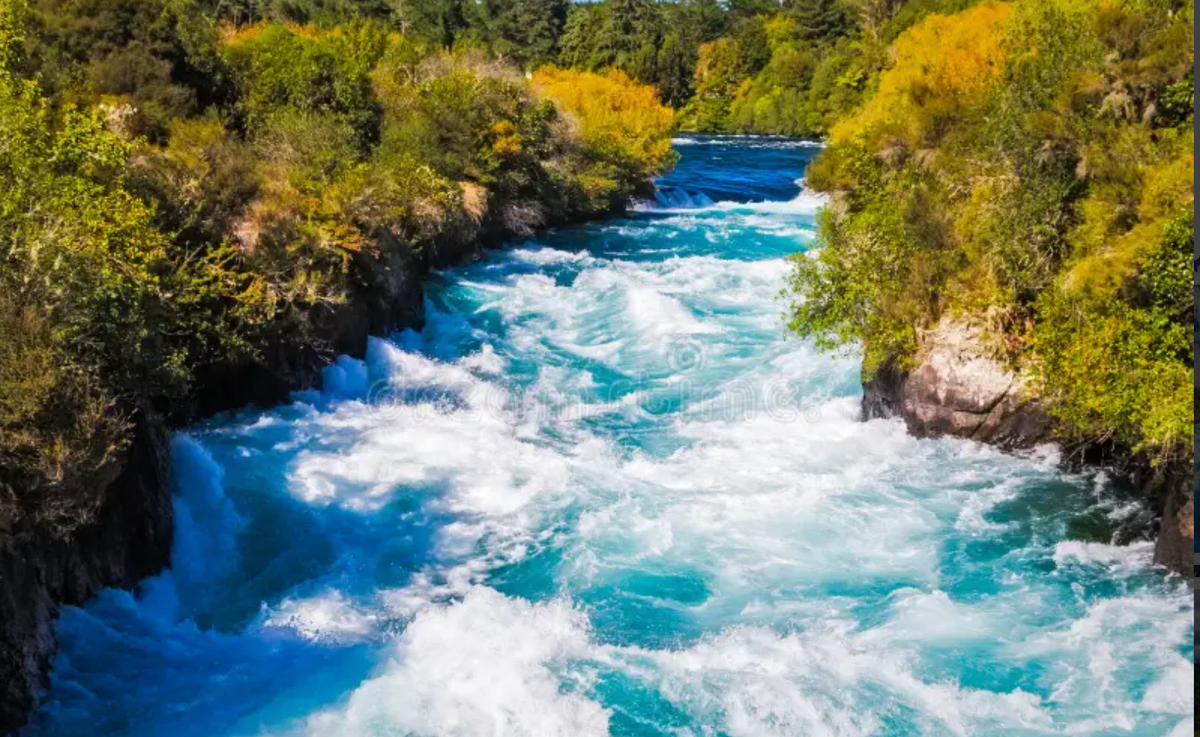
Every major rain event in the Waikato does the same thing.
Heavy rainfall accelerates everything that's been accumulating on the land — animal waste, fertiliser residue, pesticide runoff — washing it off paddocks and into tributaries at once. Bacterial concentrations in pastoral streams can rise more than a hundredfold within hours of rain beginning. Downstream, wastewater treatment plants get overwhelmed and sometimes bypass final disinfection stages. Rivers run brown with sediment carrying whatever the catchment has been absorbing for months.
This happens several times a year. It's not exceptional. It's the normal pattern of a river running through intensively farmed land.
That river — the Waikato — supplies about 15 percent of Auckland's drinking water.
Most Aucklanders have never thought about that.
Where Auckland's water actually comes from
The common assumption is that Auckland's water comes from clean bush catchments in the Waitākere and Hūnua ranges. Mostly that's true — about 84 percent of supply comes from dams in those protected native forest areas, and that water requires relatively minimal treatment.
But Watercare draws from three sources depending on dam levels, rainfall, and demand. The Hūnua and Waitākere dams. Groundwater. And the Waikato River — about 15 percent of supply on an average week, drawn at Tuakau and pumped north to Auckland.
That river water travels more than 400 kilometres through towns, past farms and industries before it reaches the treatment plant at Tuakau.
Four hundred kilometres through the most intensively farmed region in New Zealand.
What the river carries
The Waikato catchment is dairy country. It has been for over a century. The scale is hard to picture. Scientists estimate the waste generated by the 3,000 dairy herds in the Waikato River catchment equals the output of roughly five million people — about 50 cities the size of Hamilton. That waste doesn't go to a sewage treatment plant. It goes, through rain and runoff and leaching, toward the river.
Studies show that 95 percent of bacteria found in the lower Waikato comes from non-point source discharges — rural and urban runoff — not from the sewage treatment plants people usually picture as the main problem. During a flood event, bacterial concentrations can rise more than a hundredfold. Research recorded E. coli levels peaking at 41,000 colony-forming units per 100ml during a single flood event in a Waikato dairy catchment. The drinking water limit is 1.
The river also passes through Hamilton, Ngaruawahia, and several industrial areas before reaching Tuakau. There are real point source discharges along the way — municipal sewage from Hamilton, a meat processing works, Ngaruawahia sewage. But these combined contribute only about 5 percent of total bacteria levels compared to the agricultural diffuse sources. The towns are a footnote. The farmland is the story.
But bacteria is the visible part of the picture. There are several less visible layers.
Nitrogen and phosphorus from fertiliser and animal waste leach into groundwater and tributaries continuously, not just during rain. Nitrogen concentrations in the lower Waikato have been slowly increasing for decades, and the main concern over coming decades is that rising nutrient loads will increase the risk of harmful algal blooms. Nitrates in drinking water are associated with serious health risks, particularly for infants. They are colourless, odourless, and tasteless. Standard water treatment does not remove them. A 2025 study on nitrate contamination in NZ groundwater confirmed dairy effluent as the primary cause of high nitrate levels, with Waikato among the most affected regions.
Pesticides and herbicides. In a landmark study of Waikato groundwater — the first wide-screening survey of its kind in New Zealand — researchers tested 723 compounds across 61 sites and found emerging organic contaminants at 91 percent of sites. They detected 48 pesticide compounds, 11 pharmaceutical compounds, and 10 industrial chemicals. Concentrations of 28 compounds exceeded EU maximum limits for pesticides in drinking water.
The compounds detected included herbicides, fungicides, and insecticides from agricultural use — among them glyphosate metabolites, atrazine-family compounds, chlorpyrifos, 2,4-D, and imidacloprid. New Zealand still permits several of these that have been banned elsewhere, including atrazine and chlorpyrifos, due to ongoing agricultural use. The researchers described "ubiquitous occurrence of unmonitored, unregulated emerging organic contaminants" in the region's groundwater. Most are not on New Zealand's standard monitored list for drinking water. NIWA has noted that the major concern with these compounds is precisely that they are not regulated — environmental concentrations and effects remain largely unknown.
Legacy chemicals. DDT and other organochlorine insecticides from past agricultural practices continue to enter the river system as a legacy of historical land use. These compounds persist in soil for decades and leach slowly. They don't disappear because they were banned.
Zinc. Zinc inputs to the Waikato have been increasing due to heavy usage of zinc supplementation for facial eczema control in livestock — a standard Waikato farming practice. Zinc enters the river through animal waste and runoff.
Geothermal arsenic. This one surprises most people. The Waikato River rises in the central volcanic plateau and flows through active geothermal country. Arsenic from geothermal sources enters the river naturally, and it has been doing so for as long as the river has existed. Arsenic levels in raw Waikato River water drawn for drinking have historically averaged around 32 micrograms per litre — typically higher in summer months. The New Zealand drinking water standard is 10 micrograms per litre. Raw river water routinely exceeds it before treatment begins.
Treatment at the Tuakau plant removes roughly 80 to 90 percent of arsenic via coagulation — enough to bring treated water within the standard under normal conditions. But the margin is not large, and seasonal and weather-driven fluctuations in the river push it. In November 2024, treated water at both Hamilton's supply and Watercare's Tuakau plant briefly exceeded the 0.01 mg/L limit, peaking at 0.0115 mg/L. Watercare reduced draw from the Waikato and shifted to greater Hūnua dam supply while treatment was optimised. A similar minor exceedance occurred in August 2025, with treated water reaching 0.0123 mg/L. In both cases authorities confirmed the water remained safe to drink and compliance was restored within weeks. But the episodes illustrate something important: natural geothermal inputs, combined with seasonal variation, can push even sophisticated treatment close to its limit. The redundancy built into the system — the ability to switch sources quickly — is what keeps it within bounds.
Mercury. More than 380 tonnes of arsenic and half a tonne of mercury have accumulated in lake sediments in the upper Waikato since the 1960s. Under low-oxygen conditions — more common in warmer months — these can mobilise back into the water column.
Pharmaceuticals. Hamilton's treated sewage enters the river. Conventional sewage treatment removes most biological contamination but is largely ineffective at removing pharmaceutical compounds — antibiotics, hormones, anti-inflammatories, antidepressants — which pass through and enter waterways. This is a global problem wherever treated sewage enters rivers that supply drinking water. New Zealand has not yet systematically monitored pharmaceuticals in the Waikato, and the Our Freshwater 2026 report listed this as a specific knowledge gap.
So how is it safe to drink?
This is the legitimate question, and the answer is: the Tuakau treatment plant.
The plant incorporates ultra-filtration membrane technology, activated carbon filters, and a complete chemical dosing system — described as one of the most sophisticated water treatment plants in New Zealand. It was specifically engineered to handle Waikato River water, which is why it's significantly more complex than the plants processing water from native bush catchments.
The treatment sequence at Tuakau handles: suspended solids, biological contamination — bacteria, Giardia, Cryptosporidium, removed by ultra-filtration membrane — arsenic (coagulation removes roughly 80 to 90 percent), taste and odour compounds (activated carbon), followed by chlorine disinfection, fluoride addition, and pH adjustment.
It works. The water that arrives at your tap meets the New Zealand Drinking Water Standards.
But there are honest things to say about what that means and doesn't mean.
What treatment handles — and what it doesn't
New Zealand Drinking Water Standards test for a defined list of compounds. Not everything in the river is on that list.
The groundwater survey found 48 pesticide compounds at 91 percent of Waikato sites. The majority of those are not in the standard monitoring programme. Activated carbon filtration — which the Tuakau plant uses — provides partial removal of some pesticides and herbicides, but not complete removal of all of them, and effectiveness varies by compound.
Nitrates are not removed by conventional water treatment. If a town water supply from the Waikato has elevated nitrate, it comes through to the tap. Nitrate levels in Auckland's Waikato-sourced water are monitored and currently within standards — but the underlying trend in the river is upward.
Pharmaceuticals are not effectively removed by conventional treatment. There is no systematic monitoring of pharmaceutical compounds in New Zealand's treated drinking water.
PFAS — per- and polyfluoroalkyl substances, the forever chemicals — are increasingly found in waterways globally and have been detected in NZ groundwater. Standard water treatment doesn't remove them.
None of this means the water coming out of your Auckland tap is dangerous. It means the treatment system was designed around a list of known contaminants, and our understanding of what's actually in the river is still incomplete. That's not a failure of Watercare — it's an honest description of where water science currently sits, and where monitoring hasn't yet caught up.
What you can actually do with this information
If you're in Auckland on town supply, this isn't an alarm. The treated water meets the standards. Watercare tests it continuously — running an average of 366 tests per day across the network. During major weather events, turbidity and contaminant levels at the Tuakau intake are monitored in real time and draw can be throttled within hours, shifting production to the Hūnua dams. The arsenic events of 2024 and 2025 showed that redundancy working as designed.
But if you want to go further than what the treatment plant handles:
For nitrates: standard carbon filters don't touch them. Reverse osmosis removes nitrates effectively. This matters most for households with infants, where nitrate exposure carries more acute risk.
For pesticides and herbicides: activated carbon filtration provides partial reduction of many compounds. RO provides more complete removal. Neither removes everything.
For pharmaceuticals and PFAS: RO is the most effective household-level treatment currently available. Specialist activated carbon media designed for PFAS exists but isn't in most standard filter systems.
For chlorine and taste: a basic carbon filter handles this easily and cheaply. This is the highest-return, lowest-effort improvement for most households. Auckland uses free chlorine, not chloramine — which matters because free chlorine is removed easily by any standard carbon filter.
To know what's specifically in your area's water right now: Watercare publishes area-by-area water quality reports covering different zones across Auckland. You can also call them directly on 09 442 2222 and ask what source your zone is currently drawing from and what the residual chlorine level is. A pool test strip from a hardware store — dipped in unfiltered tap water — will tell you in thirty seconds what chlorine residual is actually coming out of your tap.
One note on location: if you're on the southern Auckland network — Manurewa, Papakura, that way — you're more likely to be drawing blended Waikato water when dam levels are low. The area-by-area reports will tell you what your zone is currently running on.
The Waikato River is extraordinary. It drains 14,000 square kilometres of the North Island, sustains enormous biodiversity, and is deeply significant to Waikato iwi. It has been significantly cleaned up from the severely degraded state it was in fifty years ago. That matters.
At the same time, it runs through the most intensively farmed land in the country, carries geothermal inputs from the central volcanic plateau, and receives treated and partially-treated urban discharges from every town it passes.
Knowing that 15 percent of your tap water starts its journey there isn't a reason to panic. It's a reason to understand what the treatment plant does, what it doesn't do, and what your options are if you want to go further.
Part of the OFT water series: What's in our water and what "safe" actually means · Water Solutions · Fluoride in drinking water: what it does and who decides · The lifetime fluoride dose
There's one more thing worth knowing about the Hūnua supply. The ranges are managed for biodiversity as well as water — and that means periodic aerial 1080 drops across the catchment to control possums, rats and stoats. The most recent operation ran in October 2025, covering 23,500 hectares. The dams are taken offline before each drop and only returned to service after testing confirms no detectable 1080. Every operation to date has returned clean results. But most Aucklanders have no idea it happens — which is a reasonable thing to know about the source of 65 percent of your drinking water.
 Organic Together