Little Farms and the quiet case for doing it differently
A former solicitor, a no-dig garden, and eleven Wairarapa farms working together. Little Farms just aired on Country Calendar — here's everything you need to know.
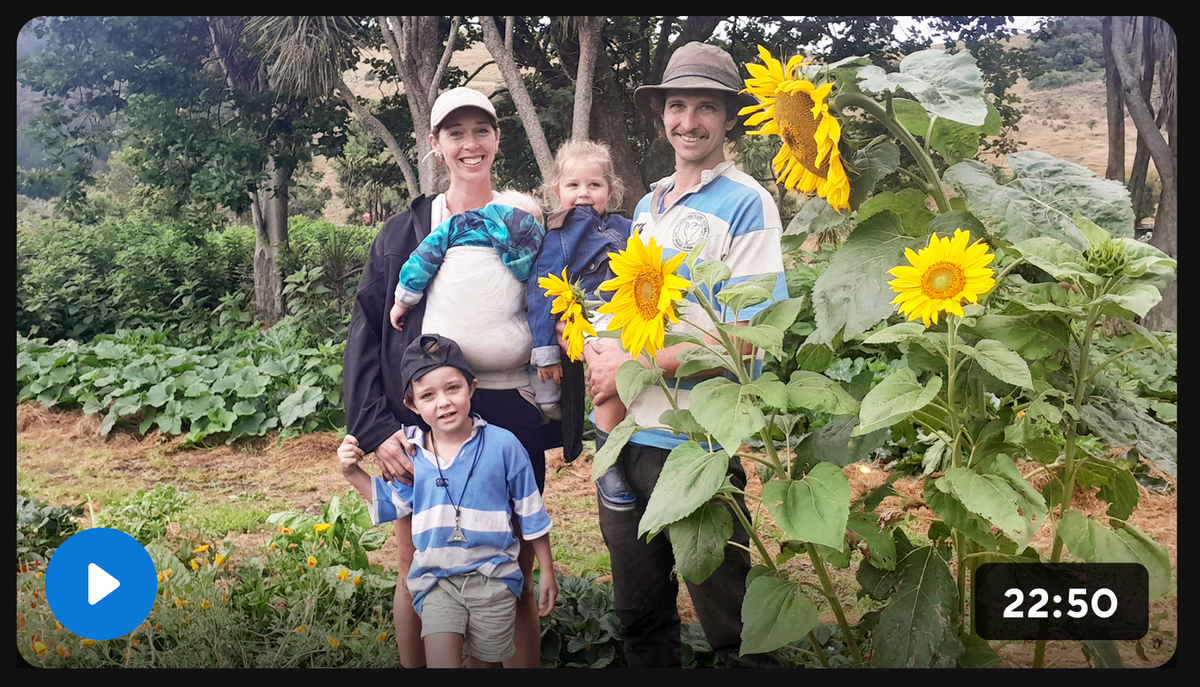
If you caught Country Calendar recently, you may have found yourself watching a woman walk through a Wairarapa market garden talking about sunchokes, edible flowers, and the idea that the supermarket system has taught us to expect everything every week of the year. That was Alex Morrissey, and the operation she's built — Little Farms — is worth understanding properly
Country Calendar reaches an average of 779,000 viewers each Sunday night, with more than 2.5 million New Zealanders watching at least one episode across the year. NZ Herald For a small Wairarapa collective, that's extraordinary reach. Here's the full story behind what they found.
What Little Farms actually is
Little Farms is a collective of eleven organic and regenerative farms across the Wairarapa, working together to supply a weekly box delivery service to Wellington and Wairarapa customers. It's not a single farm with a brand. It's a network — and that distinction is the whole point.
The farms span the region from Pirinoa in the south to Masterton in the north:
- The Little Farms Market Garden (regenerative) — Pirinoa
- Vagabond Vege (Hua Parakore certified organic) — Greytown
- Te Manaia Organics (BioGro certified organic) — Masterton
- Four Corners Organic (BioGro certified organic) — Masterton
- Bella Olea (BioGro certified organic) — Greytown
- T Base 2 Limited (BioGro certified organic) — Featherston
- Martinborough Manor (spray free) — Martinborough
- Rebel Gardens (spray free) — Martinborough
- T Gasper (spray free) — Masterton
Plus two further contributing farms that rotate seasonally. All farms follow organic principles and hold themselves to the highest standard of organics. Little Farms NZ The mix of BioGro-certified, Hua Parakore-certified, and spray-free operations reflects the reality of small-scale organic growing in New Zealand — full certification carries a cost, but the commitment to chemical-free growing runs across the whole collective.
The number of contributing farms ebbs and flows slightly through the year, with some growers active only in certain seasons. Morrissey has noted that the "seasons of life" affect what gets grown and harvested too — these are small operations run by real people, not agricultural units.
How the model works
At peak in summer, Little Farms sends out around 100 boxes a week. rova The logistics are deliberately tight. Customers order on Monday evening, the team harvests through the following days, and boxes go out by Thursday. "It's a very direct-to-customer, no wastage kind of model." rova
Delivery covers Wellington, the Hutt Valley, Kapiti Coast, and Wairarapa. Wairarapa deliveries run Wednesday afternoons, Wellington and Hutt Valley on Thursdays. Little Farms NZ
Boxes come in four sizes. The Little box contains 6–7 types of produce and is sized for one adult for a week. Little Farms NZ The Original has 8–9 types and feeds two adults. Little Farms NZ The Whānau has 10–11 types and is aimed at two adults or a small family. Little Farms NZ The Super Whānau tops out at 11–13 types — enough for a whole family. Little Farms NZ Prices range from $30 to $80. Beyond vegetables, the collective also covers meat, eggs, and bread, all sourced from Wairarapa producers.
What makes the structure work is specialisation. As Morrissey put it: "With the volume of farms, it means that we can have a really good variety of different produce, and no one farmer has to grow 20 different things, so people can specialise. That makes their farming systems a lot more efficient, and they can get really good at the things they grow, rather than spreading themselves a bit thinner."
Morrissey's own plot focuses on specialty items — sunchokes, herbs, yams, edible flowers — while partner farms handle the volume crops. Year-round staples are greens: spinach, lettuce, kale. Winter brings leek, beetroot, cabbage, and carrot. Summer leans toward fruit. rova
The growing method
The no-dig approach is central to how Little Farms operates, and it goes back to the very beginning. Morrissey and co-founder Victoria Sala started their market garden with a small rented plot and materials scrounged from skips and op shops. "We didn't put any money into this venture — we just put signs up around town, saying we'll take your green waste, we'll come and collect your cardboard. We were jumping in dumpster bins trying to collect as many resources as we could for free." rnz
Those cardboard layers, sheep dags, and coffee grounds became the foundation of their no-dig beds. Rather than tilling each season, they layer organic matter on top of existing soil — smothering weeds rather than pulling them, adding nutrients, and leaving the soil structure undisturbed so the microbes and worms keep doing their work. rova The result is rich, crumbly soil built on top of what was originally hard clay.
Her reference point for the method is UK grower Charles Dowding, who has been working in no-dig systems for forty years. Morrissey has called his books her go-to guide and says he gives her hope she's on the right path.
The backstory: from solicitor to grower
Before any of this, Morrissey was a solicitor with a focus on rural, commercial, and employment law. She was a city girl living in Wellington, fell in love with a farmer, and moved to the country to be with him. She went to work on an organic vegetable farm down the road, thinking it was just a job. "I discovered I loved being outdoors with my hands in the dirt, growing food. It unlocked a part of me I didn't even know existed." rebeccagreaves
At university she had studied Development Studies, where "everything came back to how broken the food system was." rebeccagreaves That academic thread, the practical discovery of growing, and then Covid creating both a crisis and an opportunity — those three things converged into Little Farms.
She has described the motivation plainly: if she was doing this purely as a business, she thinks she would have quit twenty times over. It's the belief in the problem being worth solving that keeps it going.
The harder truths
Morrissey has been unusually candid about the realities of running this kind of operation. Sales drop around 40% over the summer holiday period as customers go on holiday, eat out more, and fall out of their cooking routines. Orders also dip every school holiday. Wairarapa Times-Age When that coincides with peak summer yields, the maths gets difficult fast.
When it happens, Little Farms donates what it can — broccoli and lettuce between Christmas and New Year have gone to food rescue — but the harvest cost doesn't disappear. "Often for farmers, the cost of harvest isn't financially sensible if the food is going to be given away, so the reality is that some food isn't harvested, it is mulched back into the soil." Wairarapa Times-Age
On farmers markets, Morrissey has been equally direct. After four years attending local markets, she described it as feeling "naïve" to keep believing they were the future: "There is just so much uncertainty and wastage in the market model. Farmers spend months growing food, hours harvesting, washing, prepping, and then a day standing at the market trying to sell it, only to be able to sell a fraction of what they have taken." Wairarapa Times-Age The box model — where food is only harvested after it has been ordered and paid for — was the direct response to that.
"It looks probably like rainbows and sunshine but there's definitely been a few tears." rnz
The bigger argument
Underneath the practical operation is a consistent food systems argument. "We live in a rural area where there is lots of organic food grown but you couldn't buy it. It was mainly sent in pallets to Auckland or Wellington so the locals couldn't actually get access to it." rova That gap — between what a region produces and what its own people can buy — is what Little Farms is trying to close.
"When supply chains get caught short due to environmental issues, fuel prices, and adverse events, if we don't have local food, then we don't have food. When things go wrong, we need local food, but if we don't support local producers when times are good, then when we need them, they might not exist." Wairarapa Times-Age
"The only way for a region to be truly sustainable is if most people have the ability to grow some food for themselves so we are less reliant on supermarket systems and if we get cut off we are more resilient." rova
Morrissey has also said she hopes Little Farms will eventually make itself redundant — that there will be so many people growing food in their own backyards, or through community initiatives, or farmers working together, that she'll be put out of a job. That's either a very unusual thing for a founder to say, or a very honest one. Probably both.
If you're in Wellington or Wairarapa and want to order, head to wearelittlefarms.com.