What Is a New Zealand Cow Given in Its Lifetime?
Nobody is hiding what your beef was given. Nobody is telling you either. I went looking for the record and found a form that only asks about right now.
I started reading ingredients panels because of bread. Folic acid first, then glyphosate, then the Chorleywood process, and by the end of it I was milling my own grain in the kitchen like a man with too much time and not enough sense.
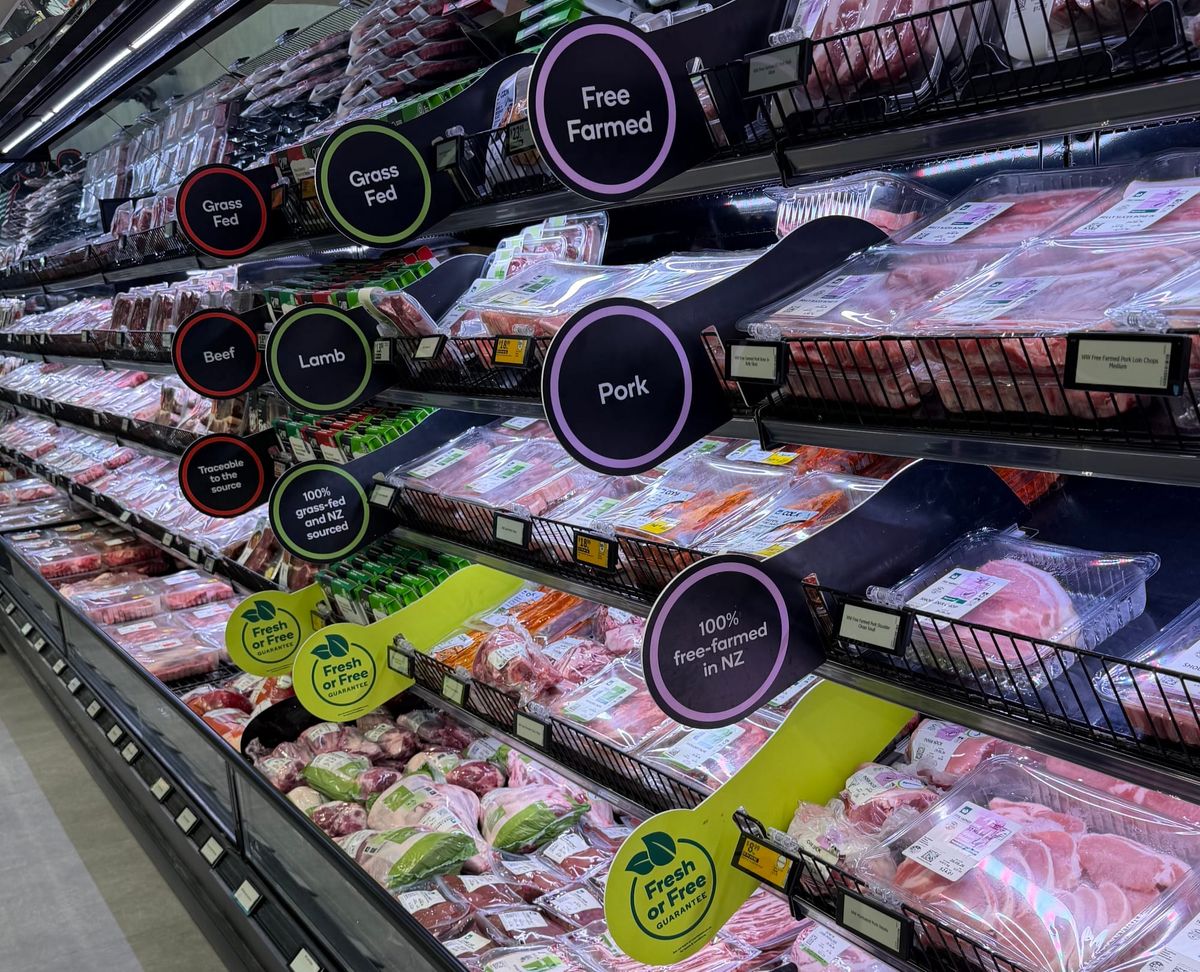
Meat has no ingredients panel. A pack of mince tells you a weight, a price, and a fat percentage. So I went looking for the thing behind the label: what the animal was given across its life, and where I could go to read it.
I expected to find residues. I found something duller and more interesting.
The testing is genuinely reassuring, and I'm going to say so
New Zealand Food Safety runs the National Chemical Residues Programme. For the year to 30 June 2025, adult cattle were tested for anthelmintics, antibacterials, anti-inflammatories, anticoccidials, hormone-class compounds, pesticides and environmental contaminants, and chemical elements like cadmium and lead.
Cattle returned no results above maximum levels. Not in any compound class.
Across every species, there were four results above the limit out of more than 223,000 test results. Two in farmed deer, cadmium in a chicken, and one in sheep casings. That's it.
If you came here for a scare, that's the door.
Two things to hold alongside it. The cattle sample sizes run around a hundred per compound class per year, against a national kill in the millions. And the programme reports results above the maximum level, not detections. Below the limit is not the same as absent. Those are real limitations, but they don't turn a clean result into a dirty one.
Hormone implants are a similar story. MPI's own guidance says hormonal growth promotants haven't been used in New Zealand since 2016 and have never been approved for dairy cows. That page was last reviewed in July 2021, so treat it as dated. Beef + Lamb New Zealand separately puts treated cattle at fewer than one percent, and notes export processors generally won't take an implanted animal.
So the meat is clean. That was never quite my question.
What she is actually given
Most of the mince in this country is dairy cow. Roughly 60 to 70 percent of the national beef kill is dairy-origin: cull cows, bulls and dairy-beef crossbreds. So the animal to follow is a working dairy cow, and the thing to ask is what she receives across five or six years, not what's left in her on the day she's killed.
The big one is antibiotics, and the shape of it surprised me.
DairyNZ says mastitis control, including dry cow therapy, accounts for about 85 percent of all antibiotics used on dairy farms. Dry cow therapy is an antibiotic tube put into each quarter of the udder at the end of lactation. For a long time it was given to the whole herd. In 2018 a DairyNZ senior scientist estimated around 70 percent of farmers were treating every cow, with 30 percent being selective.
VetSouth puts the other half of that sentence plainly: 80 percent or more of cows don't have an active infection.
That's preventive antibiotic dosing, herd-wide, once a year, on animals that aren't sick.
It is changing, and the reasons are worth knowing. Recent New Zealand research found only herds with a bulk milk somatic cell count above 250,000, rising by more than 50,000 in the final three months of the season, benefited from blanket treatment. That's likely fewer than five percent of herds. New Veterinary Council professional standards are expected to bite from 1 January 2027, shifting from "you should" justify each cow to "you must".
The drivers are antimicrobial resistance and the European free trade agreement, which runs on equivalence, and preventive dry-period antibiotic use isn't permitted across much of the EU.
Not consumer disclosure. Nobody changed this because shoppers asked.
To be fair about scale: New Zealand dairy antibiotic use is low internationally. A 2016 study of 78 farms put it at about 1.7 cow-days a year against 5.4 in the United States and 5.3 in Canada and the Netherlands.
Beyond antibiotics she'll receive anthelmintic drenches for internal parasites, pour-ons for lice and ticks, trace element supplementation, zinc through the facial eczema season, vaccines, teat sealants, and treatments for the metabolic problems that come with calving. Each one carries a withholding period.
Withholding periods are the mechanism, not the loophole
Worth being straight about this, because it's the part people get wrong.
A withholding period is the interval between the last treatment and the day the animal can be slaughtered for human consumption. MPI sets it per species from residues data supplied when the product is registered, calculated so residues from the approved label use won't exceed the maximum residue level. It isn't a gap in the rules. It's how the rules work, and the residue results above suggest it works.
Two things it doesn't do, though.
The first is combinations. MPI publishes default withholding periods for cases where there's no residues data to set one, and it names the situations: off-label use, and when more than one medicine is being used at the same time. Read that again. The residue science is built one compound at a time. A cow that gets a drench, a mineral supplement and an antibiotic in the same season is a combination the framework has no data for, so a blanket default applies instead. For ruminants that default is 91 days for meat and 35 days for milk. It doesn't apply to long-acting injections or controlled-release boluses at all, because those are designed to keep releasing.
The second is bigger, and it isn't about residues.
A withholding period clears the drug out of the meat. It does nothing about what the drug did while it was in there. Dosing an animal with antibiotics selects for resistant bacteria on the day it's given, in the animal and in the environment around it. That harm is already done by the time the stand-down starts.
So a farm can be entirely compliant, produce zero residue exceedances, and still be generating the consequence that actually matters. That's not a loophole. It's outside the withholding period's scope entirely, and it's precisely why the rules tighten in 2027.
The form that follows her
Every consignment of cattle sent for processing travels with an Animal Status Declaration, a form mandated under the Animal Products Act. The farmer signs it. It goes to the processor.
I read it expecting a treatment history. It isn't one.
Question 1.1 asks whether any of the animals are currently within a withholding period of any treatment. The instructions are explicit: you only need to detail treatments that remain within the withholding period. So a cow drenched a dozen times and given dry cow antibiotics five years running, all withholding periods long expired, produces an empty box.
Question 5.1 asks whether animals have been treated with antimicrobials "for the sole purpose of promoting growth or to increase yield". Therapeutic antibiotic use, which includes every one of those dry cow tubes, is declared nowhere on the form.
And the definitions do the rest of the work. The notes state that hormonal growth promotants, vaccines, parasiticides, trace elements such as selenium, and zinc formulations used to prevent facial eczema are not antimicrobial agents. So drenches, pour-ons and zinc don't appear on the declaration at all.
The only genuinely lifetime questions are whether the animal was fed ruminant protein, whether it was fed anything other than milk or pasture, whether it was vaccinated against Johne's disease, whether it got growth-promoting antimicrobials, and whether it got hormone implants.
The farmer keeps their copy for one year. The processor keeps it for four.
The document states its own purpose, and this is the sentence the whole piece hangs on. The information is there to guide ante-mortem and post-mortem examination and to determine export eligibility and certification.
That phrasing turns up more than once. MPI's own page on withholding periods says they make sure residues won't pose a health risk to consumers or risks to trade. Consumer health and market access, in the same clause, in both documents.
Consumers aren't the design brief. They never were. There's no decision anywhere in this system that you shouldn't be told, which is exactly why nobody has ever had to defend it.
The system certifies compliance on the day of slaughter. It does not disclose exposure across a life. Those are different questions, and only one of them gets an answer.
The register that does exist
Here's what tipped me over.
Read BioGro's Livestock Production Standard, reviewed 2026, and you find the document I'd been looking for. It just isn't kept on the farm my mince came from.
Certified organic producers must keep records for all stock, including age, certification status and any treatments. For every administration of any restricted or interim remedy, antibiotics included, the record must show the treatment date, the animal treated, the product by brand and by active ingredient, the withholding period, the quarantine location, when quarantine ended, and the date certification will be regained.
That's a lifetime treatment register, held per animal, and it exists because certification requires it.
The rest of the standard explains why so little needs recording. Routine or scheduled use of any interim animal health remedy is prohibited. Not restricted, prohibited. Routine or scheduled vaccination is prohibited unless the infection is proven inherent to the property. Zinc for facial eczema is only permitted where the pasture spore count shows a definite need. Even the trace elements are as-needed.
Treatment costs something. A treated animal loses certification immediately, for the following twelve months, and must be quarantined at least 48 hours. The quarantine paddock itself loses certification for twelve months. Eliminating parasites by breeding resilient animals and managing grazing must be a stated objective, not an aspiration.
Hormones and growth promotants are prohibited, including hormones used to control reproduction. Artificial synchronisation and induction are prohibited except for individual veterinary reasons with written approval. Embryo transfer and cloning are prohibited outright.
For meat exported to the United States under the National Organic Program the rules are harder still: an animal treated with an antibiotic can never supply certified meat or milk, and a synthetic parasiticide at any point in its life disqualifies the meat.
One clause stopped me. Calves must receive maternal milk for at least three months.
In the conventional system, bobby calves leave at four days old.
Same species. Same country. Two entirely different ideas of what an animal is.
So what do I do with that
I'm not going to tell you conventional beef is dangerous. The residue data doesn't say that and I'd be lying.
What I'll say is narrower, and it's the same thing I found at the bottom of a bread bag. The information exists. It's collected, on a form, by a regulator, for a purpose. The purpose is trade eligibility and disease control, and it stops there. By the time the animal is a chilled pack with a fat percentage on it, the trail has gone cold by design.
Organic costs more per kilo. What it buys isn't cleaner meat, on the evidence I can find. It's a production system that prohibits the routine dosing rather than permitting it with a stand-down, and it keeps the record to prove it.
I make my own bread because I got tired of not knowing. I can't make my own beef.
So I buy the one that writes it down.
Before you go
If you found this useful, sign up for free to get new posts as they go up.
If you'd like to support the work, you can leave a one-off tip.