Weet-Bix: What's Actually in New Zealand's Favourite Breakfast
I turned the box over on the country's favourite breakfast and kept going: the glyphosate a lab found in the multi-grain, the food pyramid that just flipped, the synthetic vitamins sprayed back on because the factory stripped them out — and the breakfast that was on the bench all along.
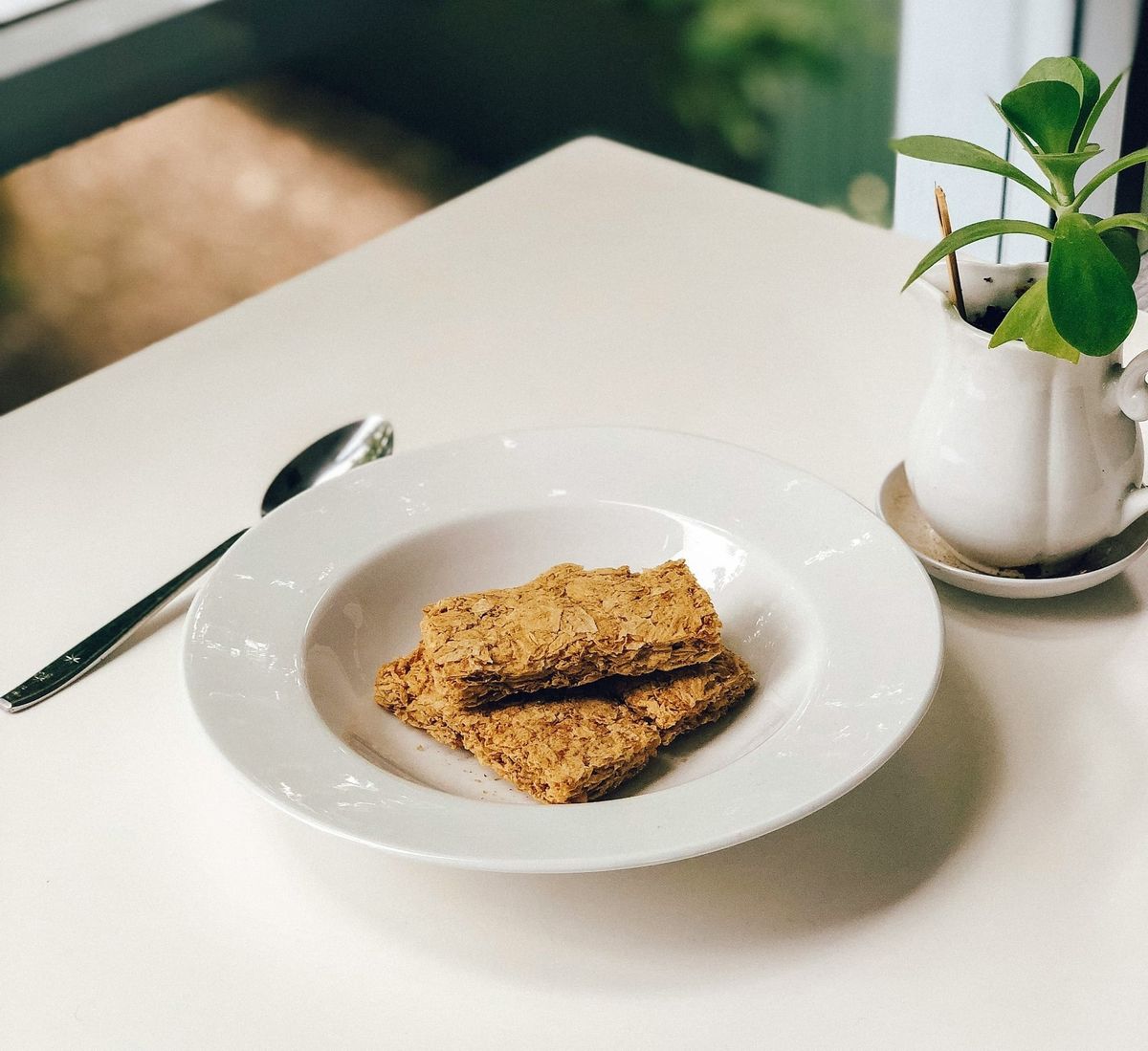
More New Zealanders will pour a bowl of Weet-Bix tomorrow than will reach for any other cereal — wholegrain, low in sugar, the breakfast your mother trusted. In a companion piece I followed where the wheat comes from and who profits from it: largely Australian grain, milled by a church-owned company that pays no tax on the result.
This one is simpler, and more personal. I turned the box over, and then I kept going — to work out what's actually in it. What an independent lab found, what the factory does to the grain, why the vitamins are sprayed back on, and the one thing you're never given the chance to refuse.
What's in the multi-grain
Start with what an independent lab found. The community-funded campaign No More Glyphosate NZ has now tested Weet-Bix twice, through Hill Laboratories.
The first round put four varieties through. Three came back with no detectable glyphosate. The fourth — the Australian-made Multi-Grain — came in at 0.56 mg/kg, above New Zealand's maximum residue limit for glyphosate in wheat products of 0.1 mg/kg, though below Australia's far more permissive limit of 5 mg/kg. The second round widened the net to six products and found two of the Australian-made lines positive, including one result of 3.9 mg/kg in the Gluten-Free variety, with Multi-Grain that time at 0.198. Original Weet-Bix came back clean both times.
Two things matter here, and neither is "Weet-Bix is poison." The first is that the variants lighting up are the Australian-made ones — which loops straight back to where the wheat comes from (the wheat in Weet-Bix is largely Australian, as I traced in the companion piece), because pre-harvest glyphosate spraying of wheat is more common in Australian dryland cropping than here. The second is the variability itself: the Gluten-Free line was clean in the first round and at 3.9 in the second. That tells you a single test is a snapshot, not a verdict — glyphosate rides on the grain batch. It also means you should read "not detected" carefully: it means none was found above the lab's reporting limit, not that there's none there. (I've dug into what these everyday residues might be doing to the gut microbiome elsewhere.)
And the regulatory backdrop makes the timing pointed. In 2025 New Zealand proposed lifting the glyphosate limit for wheat, barley and oats from 0.1 mg/kg all the way to 10 mg/kg — a hundredfold jump — then, after more than 3,100 submissions, reversed and kept the limit at 0.1, tightening the permitted use because pre-harvest spraying is no longer common practice among New Zealand growers. (I told that whole story separately — see "The year New Zealand nearly raised its glyphosate limit.") Which lands the Weet-Bix results squarely: the variants that breached the limit are the Australian-made ones — produced where that pre-harvest practice is still routine, then sold into the country that had just fought to keep the lower bar.
The pyramid just flipped
In January 2026 the United States released new dietary guidelines, and for the first time in a generation the food pyramid was turned upside down. The old pyramid put grains at the broad base — the low-fat, eat-more-cereal orthodoxy that, for thirty years, made a bowl of wheat the sensible breakfast. The new one inverts it: protein, dairy and healthy fats move to the top alongside vegetables, whole grains shrink to the bottom, and for the first time the guidance explicitly tells people to avoid ultra-processed packaged foods and to put protein in every meal.
Two honest notes. This is American, not New Zealand — our own guidelines haven't moved, and the new US advice is genuinely contested, praised for its focus on real food but criticised by nutrition scientists for leaning hard on red meat and full-fat dairy. But as a signal of where mainstream thinking is heading, it reframes the question this whole piece is circling. If the official picture of a healthy diet now puts protein up top and processed grains down the bottom, where does a bowl of cereal sit?
To be fair to it: Weet-Bix is genuinely one of the better cereals — low in sugar, 97% wholegrain, a decent hit of fibre. The grain isn't the villain. What the new thinking questions is the shape of the meal: a breakfast that is overwhelmingly processed carbohydrate, and not much else, against one built on protein and fat that keeps you full and your blood sugar steady. Wheat-biscuit cereals tend to score poorly on satiety — which is the science behind being hungry again by ten.
What they add, and why
Read the panel and you'll see added niacin, thiamin, riboflavin, folate and iron. You reasonably wonder why a company would pay to add anything without a return. It would — but not the return you'd guess.
For breakfast cereal, this fortification is voluntary — Sanitarium chooses to. It isn't a processing aid; it doesn't help the dough or the run. The cost is also trivial: these are added at milligram-to-microgram levels, a fraction of a cent a serving. So the real benefit is twofold. One is marketing: "high in iron and B vitamins for energy" is a powerful claim that costs almost nothing to earn. The other is restoration — and this is the part that should make you look twice. Turning wheat into a shelf-stable toasted biscuit means high-heat cooking, extrusion and toasting, and that processing destroys the heat-sensitive vitamins the wheat went in with. The heat-stable ones can go in the base mix; the fragile ones are sprayed back onto the biscuit after it comes out of the oven. The wheat carries B vitamins in; the heat strips them out; they're sprayed back on at the end so the box can still make the claim. The fortification list isn't a bonus. It's a receipt for what the process removed.
Then there's the form they come back in, which isn't the form they left in. The iron isn't dissolved into the food — it's food-grade elemental iron powder, the same magnetic metal particles people pull out of crushed cereal with a fridge magnet. It's not dangerous and it's not "filings" in any sinister sense, but it is, literally, finely-ground industrial iron — chosen because it's cheap and doesn't change the colour or taste, not because your body absorbs it well. It doesn't: electrolytic iron is reckoned about half as available as the gold-standard fortificant, and reduced-iron powder can be far worse. So the "high in iron" claim quietly overstates what you actually take up.
The folate is synthetic too. Folic acid is the manufactured, fully-oxidised form; the folate in a leaf of spinach or an egg enters your body already in usable form, while folic acid has to be converted by an enzyme before your cells can use it — and the gut can only process so much at a time before unconverted folic acid starts circulating in the blood. Most people manage a normal serving fine. But a meaningful share of people carry a gene variant that slows how well they use folate, and folic acid fortification, however cheap and well-meant, lands the same dose on everyone: pregnant women who genuinely need it, and men and post-menopausal women who don't, and people with hereditary iron overload — common in those of European descent — who actively shouldn't be adding more iron to anything.
None of which means fortification is a scandal. Folic acid added to bread has cut neural-tube defects in babies across more than eighty countries; that's a real public-health win, and the most solid caution is narrower — that high folic acid intake can mask the blood signs of B12 deficiency. The broader worries are unsettled. The point isn't that the additives are poison. It's that they're synthetic stand-ins, chosen for cost and shelf-life over how well your body uses them, applied uniformly whether you need them or not.
There is no plain Weet-Bix
Which brings me to the thing I can't get past. When New Zealand made folic acid mandatory in bread flour, it deliberately exempted organic bread — in the regulator's own words, to give a choice to consumers who don't want to consume folic acid. The state built an opt-out.
There is no opt-out for Weet-Bix. Sanitarium fortifies every variety; there is no plain version, no "just the wheat" box on the shelf. The only way to decline the synthetic folic acid, the elemental iron powder and the rest is to not buy it. A food eaten by a large slice of the country, reformulated by a manufacturer's choice and a government mandate, with no version that simply leaves it as what it appears to be.
And the breakfast that was on the bench the whole time
So here's where I landed, after all of it. Everything in this piece — the chemical that turns up in the multi-grain, the vitamins sprayed back on because the factory took them out, in forms your body half-uses, that you can't refuse — and, before you even reach the bowl, the Australian wheat and the tax-free church from the companion piece.
And the alternative was sitting on the kitchen bench the entire time. Two eggs and a slice of real sourdough.
We've been sold the idea that this is the indulgent option — the fussy, expensive, slightly-precious organic breakfast — and the bowl of cereal is the simple, sensible, affordable one. After a fortnight inside the Weet-Bix box, I think it's exactly the other way round. The eggs carry their iron, their B12, their protein and fat in the form your body actually evolved to use — nothing sprayed on, because nothing was stripped out. The sourdough's slow fermentation makes its minerals more available, not less. There's no Australian wheat to trace, no residue question you can't answer, no tax structure, and nothing to opt out of — because there's nothing hidden to opt out of in the first place.
The complicated, reconstructed, opaque breakfast turned out to be the cheap convenient one. The plain, honest, nothing-to-declare breakfast turned out to be two eggs and a piece of bread you could have made yourself.
That's the part that actually shocked me.
If you want to make the swap: here's where to find good eggs in New Zealand, and where to get real flour for sourdough.
Sources for the key figures in this piece: glyphosate testing from No More Glyphosate NZ / Hill Laboratories; the 2025 glyphosate MRL proposal and October 2025 reversal from New Zealand Food Safety (MPI) and Food Safety News; the US dietary guidelines of January 2026; fortification rules from New Zealand Food Safety (MPI) and Food Standards Australia New Zealand; iron and folate science from peer-reviewed nutrition literature.