Grow, Feed, Certify? Royalburn and the Word Nobody Owns Yet
On the Crown Terrace, Nadia Lim and Carlos Bagrie's Royalburn Station has redefined "good food" for a whole region — regenerative, spray-free, organic. But with NZ's organic law not in force until 2028, what does that word actually guarantee a shopper today?
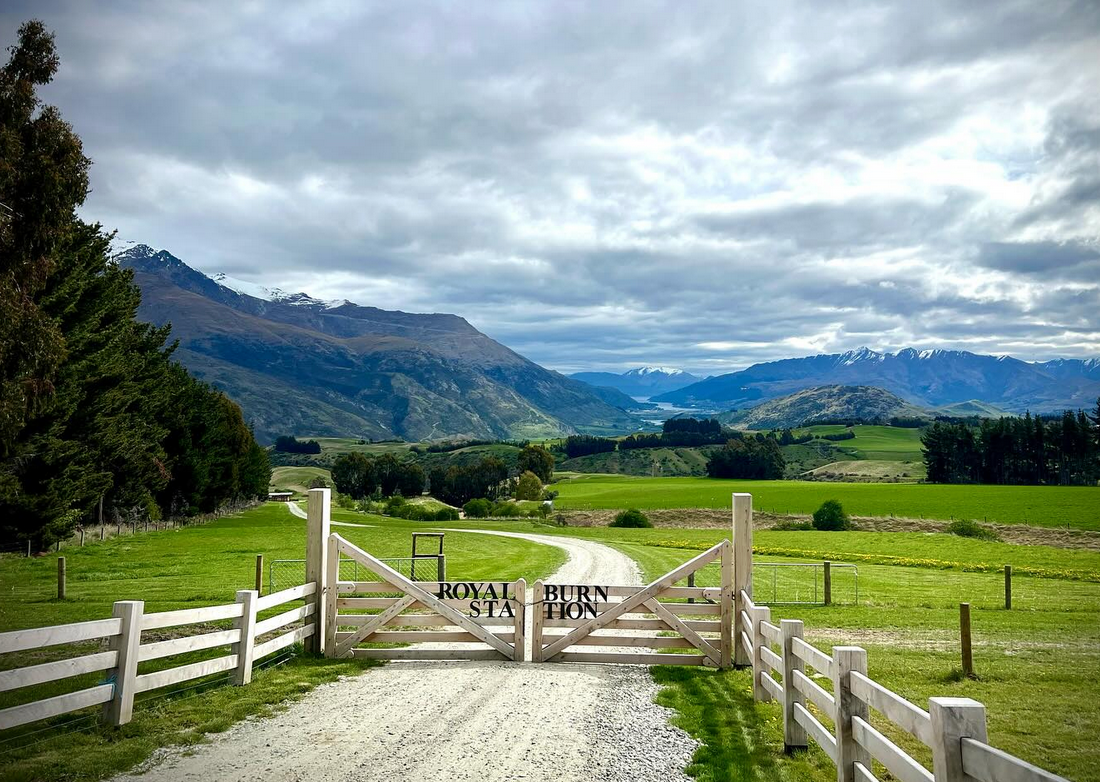
On the Crown Terrace, more than 600 metres above the Whakatipu Basin, sits one of the most photographed farms in New Zealand. Royalburn Station is 1,200 acres of high-country arable and livestock country, founded in 1887 by an Irish migrant named William McKibbon to grow wheat and barley for gold miners. Today it grows something more valuable than barley: a story about what good food is supposed to look like.
That story is everywhere in Queenstown. It is in the Royalburn Farm Shop in Arrowtown, in the deli counters and chilled vege room at McKibbon's of Royalburn on Robins Road, and on the menus at Amisfield, Rata, and half the serious kitchens in the district. It is regenerative. It is paddock-to-plate. It is spray-free. It is, in the words used to describe the farm's two-hectare market garden, organic.
It is also, as far as the public record shows, none of those last things in the one sense that is about to carry the force of law.
The question under the signage
Walk into McKibbon's and the language does a lot of quiet work. Ethically farmed. Locally sourced. Sustainable. The produce is genuinely good and the provenance is genuinely close. But stand in front of the Royalburn produce and ask a narrow, awkward question — who certified this as organic, and to what standard? — and the answer is harder to find than the marketing.
Royalburn's owners describe the farm in their own materials as running a "2ha organic market garden," with cereal and sunflower crops grown "spray-free," soil regenerated through livestock cycling, fish-hydrolysate fertiliser, and on-farm compost. These are the vocabulary of regenerative agriculture, and many of the practices are real and well-documented. What does not appear anywhere in the farm's public-facing materials, its retail stores, or the considerable media coverage it has attracted is a certification mark from BioGro or AsureQuality — the two bodies that, until now, have defined what "organic" legally means in this country.
That absence is not an accusation. Plenty of excellent farms grow without certification, and certification is expensive, slow, and imperfect. The point is narrower and more interesting: Royalburn uses the word organic to describe part of its operation, and right now, in New Zealand, that is entirely lawful — because the word is not yet protected.
The people are the certification
This works because of who is saying it.
Nadia Lim and Carlos Bagrie are not anonymous lifestyle farmers. Lim co-founded My Food Bag, won MasterChef New Zealand, and built a media presence that her own materials put in the hundreds of millions of viewers globally. Bagrie is a fifth-generation Wakatipu farmer who took on the station with her in 2019. Together they have run three seasons of Nadia's Farm, the television series that turned Royalburn's lambing paddocks and shearing sheds into appointment viewing. In the 2025 New Year Honours, both were made Officers of the New Zealand Order of Merit.
When a brand carries that much accumulated trust, the ordinary scaffolding of food claims becomes optional. You do not need a third-party stamp to vouch for your soil when millions of people have watched you kneel in it on television. The audience extends the trust directly to the people, and the people extend it to the produce. Certification is, in effect, replaced by celebrity — and it is a smoother, warmer, more persuasive instrument than any auditor's logo.
That is the phenomenon worth examining. Not whether Royalburn is a good farm — by most measures it plainly is — but what happens to a region's understanding of "good food" when its most trusted food figures define the category without the rules the rest of the sector has to follow.
What the words actually mean — and don't
Here is where the distinctions stop being pedantic.
Spray-free means no synthetic sprays were applied. It is a claim about a practice, it is unaudited, and it has no agreed legal definition. A grower can say it in good faith and a grower can say it loosely, and from the outside the two are indistinguishable.
Regenerative describes an aim — building soil carbon, improving biodiversity, closing nutrient loops. It is a genuinely valuable direction of travel, and Royalburn's livestock-driven soil cycling and fish-hydrolysate trials are credible examples of it. But "regenerative" is a philosophy, not a standard. There is no single New Zealand register you can check, no minimum threshold a farm must clear before using the word.
Certified organic is the only one of the three that means something a stranger can verify. Under the standards that have governed the term to date, BioGro certification requires a minimum of three years of documented compliance, spray diaries, fertiliser logs, annual audits, and approval of every label before it is printed. You cannot use the logo until you have earned it. The word, in its certified sense, is a promise backed by paperwork and a body willing to withdraw it.
Royalburn's market garden may well be run to organic principles. The issue is that "spray-free regenerative organic-principles produce" and "certified organic produce" are sold to shoppers in the same breath, under the same glow, and only one of them has been checked by anyone other than the people selling it.
The word is about to get an owner
This is the part that turns a semantic quibble into a live story.
In April 2023, the Organic Products and Production Act became law. Its purpose is blunt: to make "organic" mean something specific and enforceable. Once the regime is fully in force, any business that labels or advertises a product as organic will have to comply with a government-recognised national standard, be an approved operator, and submit to oversight. The Ministry for Primary Industries becomes the backstop certifier. The goal, in the sector's own words, is to lift consumer confidence and give businesses certainty about what the word is allowed to mean.
The machinery is now in place. The Organic Standards Regulations 2025 and the Organic Products and Production Regulations 2025 came into force in late 2025 — but with a three-year transition before compliance becomes mandatory. So the date to circle is around 2028, when meeting the national standard stops being optional.
Until then, New Zealand is living in the gap. "Organic" is a word with a law now written for it but not yet enforced — a regulated term in waiting. A two-hectare market garden can be described as organic today with no certification and no breach, and the same description may need to be earned, audited and approved before that transition closes.
Royalburn is not breaking any rule. It is simply operating, like much of the premium food economy, inside a window that is quietly closing.
Credit where it is due
It would be easy, and wrong, to file Royalburn under greenwashing. The farm does several things that the certified-organic sector should envy.
Its on-farm abattoir and butchery make it one of only a handful of New Zealand farms able to process its own animals on site — a genuine piece of food-sovereignty infrastructure at a time when the country's small-scale processing capacity has been hollowing out for decades. Its NZ Food Award for lamb was won on the plate, not the press release. Swifty, the beer Bagrie developed with Garage Project from surplus barley, is a real circular-economy idea executed at national scale rather than gestured at. The pasture-raised laying flock, the compost loops, the seed crops exported to Europe — these are the marks of a working farm thinking hard about waste and provenance.
None of that requires a certification logo to be true. And none of it makes the looser use of "organic" disappear. Both things hold at once, which is precisely why Royalburn is the right case study rather than a soft target: it is impressive and uncertified, and it asks us to sit with the discomfort of holding both.
What it costs the growers who paid
The real stakes are not at Royalburn. They are at the farms you have never seen on television.
Somewhere in Central Otago is a grower who spent three years and real money converting to certified organic — keeping the spray diaries, passing the audits, earning the logo — and who cannot command a fraction of Royalburn's attention or shelf presence. When the most trusted food brand in the country can summon the warmth of "organic" without the cost of certification, the careful, audited grower is quietly undercut. Not by a cheaper product, but by a louder story.
That is the question this whole region's food scene leaves you with. When trust this large gets to define "good food" on its own terms, what is the incentive for anyone smaller to pay for the version that has actually been checked?
There is one answer in Queenstown that took the harder road — a single certified-organic grocer, supplied from the far side of the island, that has quietly carried the verified version of the word the whole time. That is where this story goes next.
This piece is based entirely on publicly available materials and media coverage. Where it describes the absence of organic certification, it reflects what could be found in the public record at the time of writing; it is not a claim that any certification does or does not exist beyond what is publicly stated.