Folic Acid, Bread, and Flour in New Zealand
The rule isn't about who buys the flour. It's about what the flour is for. High grade and breadmaking flour must be fortified, standard grade doesn't have to be, and the ingredients panel is the only way to know which bag you're holding.
If you bake at home or mill your own flour, the folic acid question comes down to one thing, and it is not the one I assumed.
It is not about whether the flour is sold to a bakery or to you. It is about what the flour is for.
What the rule actually says
Since 14 August 2023, all non-organic wheat flour suitable for breadmaking, produced or sold in New Zealand, must be fortified with folic acid. That comes from Standard 2.1.1 of the Australia New Zealand Food Standards Code, and the required level is 2 to 3 mg per kg of flour.
Suitable for breadmaking is the operative phrase. Not sold to bakeries. Not used commercially. Suitable for breadmaking.
So does supermarket flour have folic acid in it?
Some of it does and some of it does not, and the front of the bag is what decides.
In scope, must be fortified:
- High grade and strong flour
- Any flour labelled or sold as suitable for breadmaking
- Breadmaking premixes and bread machine mixes
Not in scope:
- Standard grade flour sold for biscuits, cakes, slices and pastry
- Organic wheat flour, which is explicitly exempt
- Flour from other grains with no wheat in it, such as rice, corn or rye
- Whole grain sold for milling at home
That last one matters if you mill. Wheat berries, whole grain wheat and whole dressed wheat are grain, not flour, and nothing is added at any stage.
How to tell, standing in the aisle
Fortified flour has to declare it. If folic acid is in there, the ingredients panel says so, usually as "Vitamin (Folic Acid)" or listed as folate.
So the panel is the test. If the ingredients read only "wheat flour" and nothing else, no folic acid has been added to that bag.
That gives you a quick check that takes about four seconds and does not require trusting the front of the pack.
What about the bread itself
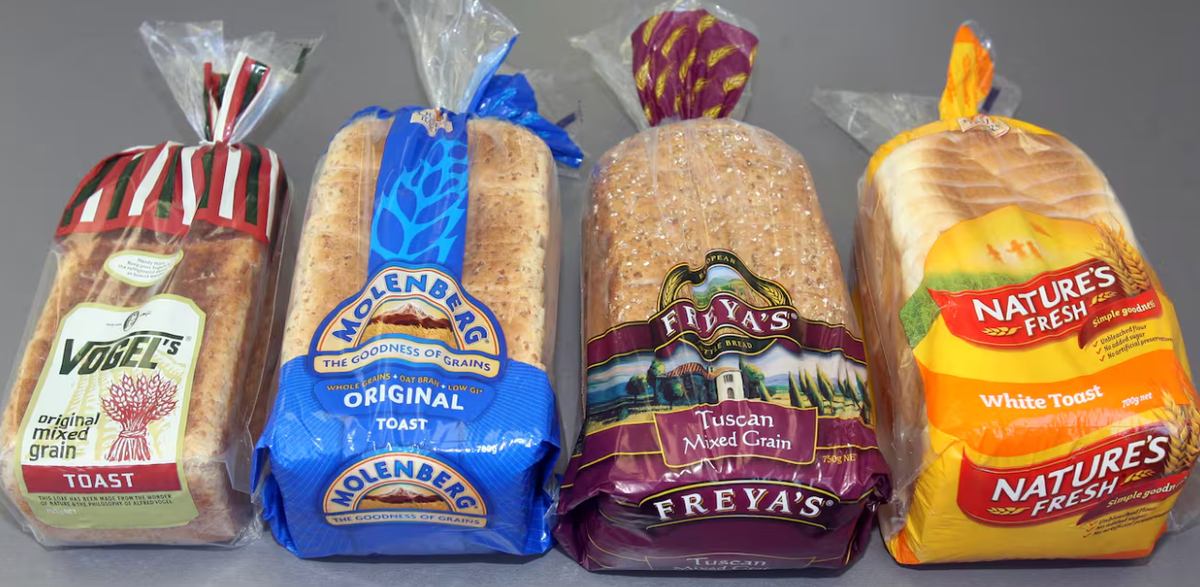
The same logic carries through. If the flour had to be fortified, the bread made from it contains folic acid.
Under FSANZ, that covers plain, fancy and sweet breads, rolls and buns, bagels, focaccia, English muffins, and flat breads made with yeast. Organic bread is exempt. So is bread made entirely from non-wheat flours.
The flatbread question is about leavening, not shape. A yeast-leavened pita or naan is made from breadmaking flour and is in scope. An unleavened tortilla, roti or chapati is not.
The gap nobody mentions
Unpackaged bread does not have to carry an ingredients list at all. That includes loaves baked and sold at the point of sale, which is most of what sits in a supermarket in-store bakery or a local bakery window.
You are entitled to ask, and the information is meant to be available on request. But the label that makes this checkable on a packaged loaf simply is not there on an unwrapped one.
The short version
- Commercial bread: fortified, unless organic or non-wheat
- High grade and breadmaking flour, including retail bags: fortified
- Standard grade flour for cakes and biscuits: not required to be
- Organic flour and organic bread: exempt
- Grain for home milling: never fortified
- Unpackaged bakery bread: no ingredients label required
If you want to avoid it, milling your own or buying certified organic flour are the two reliable routes. Everything else means reading the panel every time.