The Best Way to Understand the Price of Organic Food? Try Growing a Cauliflower.
A grower's best customers were the ones who'd tried to grow a cauliflower themselves. New Zealand dug for victory in 1943, gave it up for the greengrocer, and is quietly digging again. A packet of seed costs about $4. The time is the real price.

Brendan Hoare closed the last Vote Organic webinar with a story about a grower he'd been remembering at the Biological Husbandry Unit's 50th. The grower's best customers were the ones who had tried to grow a cauliflower themselves. After that, his cauliflowers looked cheap.
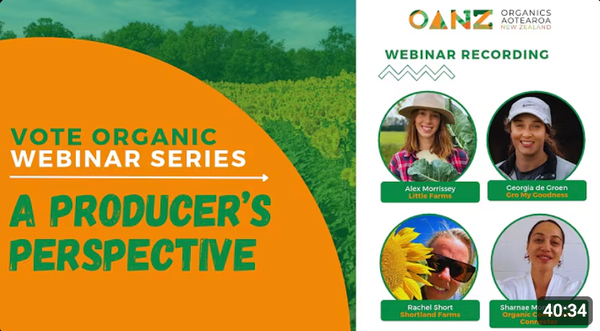
Alex Morrissey, who founded the Wairarapa organic vege box business Little Farms, agreed from experience. Through her social media and workshops, she said, people are much keener to start their own garden than to switch their whole grocery shop to organic. Then she said the line I keep coming back to: growing food has become cool.
Both of them are onto something, and there are numbers behind it.
More of us are digging than anyone notices
In August 2026 Ipsos asked 3,000 New Zealanders where their food comes from, for the New Zealand Food Network's Hunger Monitor. About 36% said they regularly get food by growing their own. Middle-income households were the keenest, at 40%. Households with enough to eat were more likely to grow than households going without, 40% against 28%.
That's roughly one in three adults with something growing that ends up on the plate. Nobody posts a photo of a silverbeet plant, so you'd never guess.
Every time vegetable prices spike, the seed companies feel it first. In June 2022, with a cabbage at $7 and a capsicum at $5, Kings Seeds told RNZ that customers who used to buy five packets were buying 10 or 20. Egmont Seed Company, which packs seed for other brands, said its April sales were up nearly three-fold on the year before, and put that mainly down to the cost of living and a warm autumn.
Yes, New Zealand dug for victory
Victory gardens are usually filed under America and Britain, but New Zealand ran its own campaign. During the Second World War, Te Ara records, vegetables ran short because market gardeners and home gardeners had gone into the armed forces, and the commercial gardens left were sending much of their produce to the services. In 1939 the country's market gardens covered 3,158 hectares and supplied only a small share of what households ate.
The government launched "Dig for Victory" in the winter of 1943. Lawns were dug up, children grew vegetables in school grounds, and the Auckland and Wellington city councils handed over public land for allotments. Composting was pushed hard through the 1940s and became normal practice for home gardeners.
The war left something else behind. In 1941 the Humic Compost Club started in Auckland, and when wartime shipping cut off fertiliser imports, the club got a serious push. It became the Soil & Health Association, which today owns the BioGro logo on certified organic food. That's the 1941 gardening club that owns New Zealand's organic logo, born in the same war that dug up the lawns.
Then the war ended, and so, mostly, did the digging. Te Ara puts the decline down to pesticides and artificial fertilisers, which let market gardeners and orchardists grow more, so buying vegetables became cheaper and quicker than growing them. By 1956, 62.4% of households had a garden, but only 29% grew vegetables.
Hold that 29% up against the Hunger Monitor's 36% and today's growers look like they have overtaken the post-war ones. The two surveys measured different things, households in 1956 and individual adults in 2026, so treat it as a nudge rather than a trend line. It's still a nice nudge.
The chemistry that made bought vegetables cheap is the same chemistry organic growers farm without. That's the whole price argument in one sentence.
What a cauliflower actually costs
Stats NZ tracks the supermarket price of cauliflower every month. Through 2025 it sat between $3.49 and $5.18 a kilo, and in June 2026 it was $3.86. The highest in the series was $8.35 a kilo in March 2018.
At that price, somebody else has done months of work. A cauliflower needs raising, planting out, feeding, watering and protecting from caterpillars until it heads up, and it gives you one head. Grow one and the shop price stops looking like a price and starts looking like a favour. That was Hoare's grower's point.
Organic growers do the same work without the shortcuts that made post-war vegetables cheap, so much of the gap on the shelf is the cost of that work. Georgia from Gro My Goodness Market Garden put a practical spin on it in the same webinar: her customers find her salad bags last longer, so the money goes further than cheap supermarket lettuce.
The seed is almost free
Seed is the cheap part. Kings Seeds, which describes itself as New Zealand's largest supplier of certified organic seed, sells a certified organic iceberg lettuce at 750 seeds for $4, and organic Tuscan black kale at 250 seeds for $4. Back in 2022 Kings' general manager Charlotte Connoley told RNZ a $3.95 packet of cabbage seed holds 100 to 300 seeds, which she reckoned works out at about 3 cents a cabbage.
And after the first packet, some of it is free. Let a plant run to seed and you can save it for next season, with one catch. According to the UK organic charity Garden Organic, seed from open-pollinated varieties generally comes true, while seed saved from F1 hybrids won't reproduce the parent plant. Peas and French beans are the easy ones because they rarely cross. Brassicas and squash cross readily, so your saved cauliflower seed may surprise you. Check the packet for "F1" before you plan a seed dynasty.
So the real price is time
This is where it gets honest. The Hunger Monitor asked everyone why their household doesn't get more food by growing, gathering, hunting or fishing. Lack of time came up for 42% of people. Lack of knowledge or skills came next at 32%, and cost at 26%.
A small garden asks for less than most people think. Colin McCrate and Brad Halm, two former vege-box growers from Seattle who wrote the book Grow More Food, reckon a 100 to 200 square foot bed, roughly 9 to 19 square metres, needs 30 to 60 minutes of upkeep a week. Double the space and it's one to two hours.
Half an hour a week is a long lunch, or one fewer episode of something you weren't enjoying anyway. It's a different kind of time from the hours spent working out what to buy and where to find it, which is the cost you can't put on special. Garden time is spent outside, by choice, and it comes back as food.
No backyard is no excuse either. Lettuce, herbs and a tomato plant all grow happily in a pot of soil on a deck or balcony, and a pot moves house with you.
What you get for the time
The best evidence for what gardening does to people comes from a University of Colorado trial published in The Lancet Planetary Health in January 2023. Researchers took 291 adults who had never gardened and gave half of them a community garden plot, seeds, seedlings and a beginners' course, while the other half waited a year.
By autumn the gardeners were eating about 1.4 grams more fibre a day than the waiting group, roughly a 7% increase. They were doing about 42 more minutes of physical activity a week, from two or three visits to the garden. Their stress and anxiety dropped more, and the most stressed people at the start improved the most.
It was the first proper randomised trial of its kind, and it found the effects in beginners, in their first season.
The wider research points the same way. A 2024 review in the journal Systematic Reviews pulled together 40 earlier reviews and linked gardening with better wellbeing, mental health and quality of life, including lower depression, anxiety and stress.
Children get something out of it too. On the same webinar, Sharnae Morrell-Hopa, who works with schools and community gardens, described a garden game she helped build that runs in Roblox and in a real garden at the same time. When weeding loses its appeal, she bribes the kids with food.
Victory looks different now
In 1943 New Zealanders dug because the vegetables had gone to war. In 2026 the vegetables are all in the supermarket, and a third of us grow some anyway. Nobody's asking us to. That might be what Alex Morrissey means by cool.
The garden doesn't have to replace the shop. Start with one thing you already buy. A packet of fresh herbs at the supermarket averaged $5.16 in June 2026, more than a $4 packet of organic seed. Then try the lettuce for your sandwiches, or a couple of tomato plants over summer.
A spray-free patch at home isn't certified organic, but it's the same idea, and it teaches you what's in the price. Grow one cauliflower, lose half of them to white butterflies, and the organic one at the market will look cheap.
Before you go
If you want more like this in your inbox, sign up free.
If this was useful and you'd like to chip in once, leave a tip.