What Organic Beef Avoids
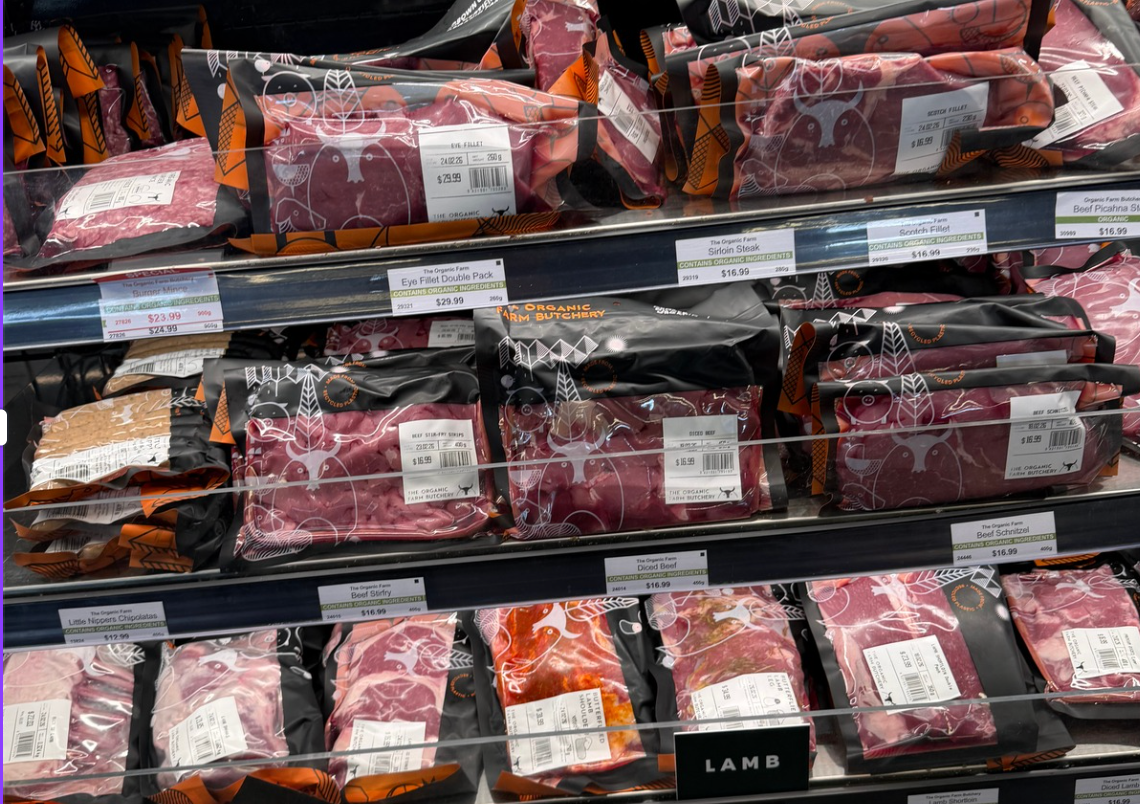
Certified organic beef avoids routine antibiotics, growth hormones, synthetic pesticides, herbicides, fungicides and GMO feeds. Animals are raised on organic pasture without conventional grain finishing. What remains are only the environmental residues already present in soil and water.
(And what it still cannot escape)
Certified organic systems are designed to remove categories of inputs entirely, not merely keep them under limits.
Instead of “how much residue is acceptable”, the philosophy becomes “which interventions should not happen at all”.
Below is a practical breakdown.
1. Veterinary Medicines
Organic cattle still get sick.
They are not denied treatment. Welfare always overrides certification.
The difference is what happens after treatment.
Avoided (routine use not allowed)
- Preventative antibiotics
- Growth promotant hormones (estradiol, trenbolone, zeranol, progesterone)
- Routine parasite drenches on schedule
- Ionophore feed additives (monensin)
- Long-acting production enhancers
Allowed only when necessary (animal then removed from organic programme)
- Antibiotics for illness
- Some synthetic anti-inflammatories
In organic systems, medication becomes a last resort rather than a management tool.
If used, the animal typically cannot be sold as organic afterward.
Replacements typically used
- Rotational grazing to break parasite cycles
- Lower stocking density
- Mineral balancing
- Genetic resilience
- Herbal drenches (depending on farm philosophy)
2. Pasture Chemicals
This is one of the biggest differences.
Not permitted
- Glyphosate
- Synthetic herbicides
- Synthetic pesticides
- Synthetic fungicides
- Treated seed coatings
- Nitrogen fertiliser (urea)
Instead farmers rely on ecological pressure rather than chemical suppression.
Common organic pasture strategies
- Diverse species pasture
- Mechanical topping
- Biological competition
- Soil biology management
- Compost and manure fertility
The goal shifts from controlling weeds to changing the conditions that favour them.
3. Feed Inputs
Organic cattle must eat organic feed.
Avoided
- Grain finished on conventional feed
- Imported feedlots
- Palm kernel expeller (PKE)
- GMO crops
- Crop desiccants
Feed sourcing is actually one of the hardest parts of maintaining certification.
4. Environmental Contaminants
(The part nobody can opt out of)
Even organic animals live on planet Earth, not inside a glass dome.
They still encounter:
Naturally occurring or historical residues
- Heavy metals in soil
- Persistent legacy pesticides (dieldrin, aldrin)
- Airborne contamination
- Water catchment contamination
- Microplastics (emerging research area)
Organic farming prevents new inputs but cannot erase history already embedded in ecosystems.
The Real Difference
Conventional farming asks:
Did we stay below the safe threshold?
Organic farming asks:
Did we avoid the input entirely?
Both produce edible food.
They answer different questions about risk.
Why This Matters
Food safety is binary: safe or unsafe.
Food exposure is cumulative: layers over time.
Organic systems aim to reduce lifetime exposure rather than prove absence of acute harm.
That distinction explains why two steaks can both pass testing, yet come from fundamentally different management philosophies.
A Useful Way To Think About It
Conventional beef:
Managed animal inside a managed system.
Organic beef:
Managed animal inside a managed ecosystem.
Neither is wild nature.
One intervenes directly in the animal.
The other intervenes mostly in the environment.