
Olliff Farm — Pasture Eggs, Wainui
Olliff Farm runs micro-flocks of 300–450 Brown Shaver hens in solar-powered moveable coops, rotated across a family dairy farm in Wainui. At 450 birds per hectare — under a fifth of the free-range legal ceiling — they're one of NZ's most awarded pasture egg producers. Not certified organic.
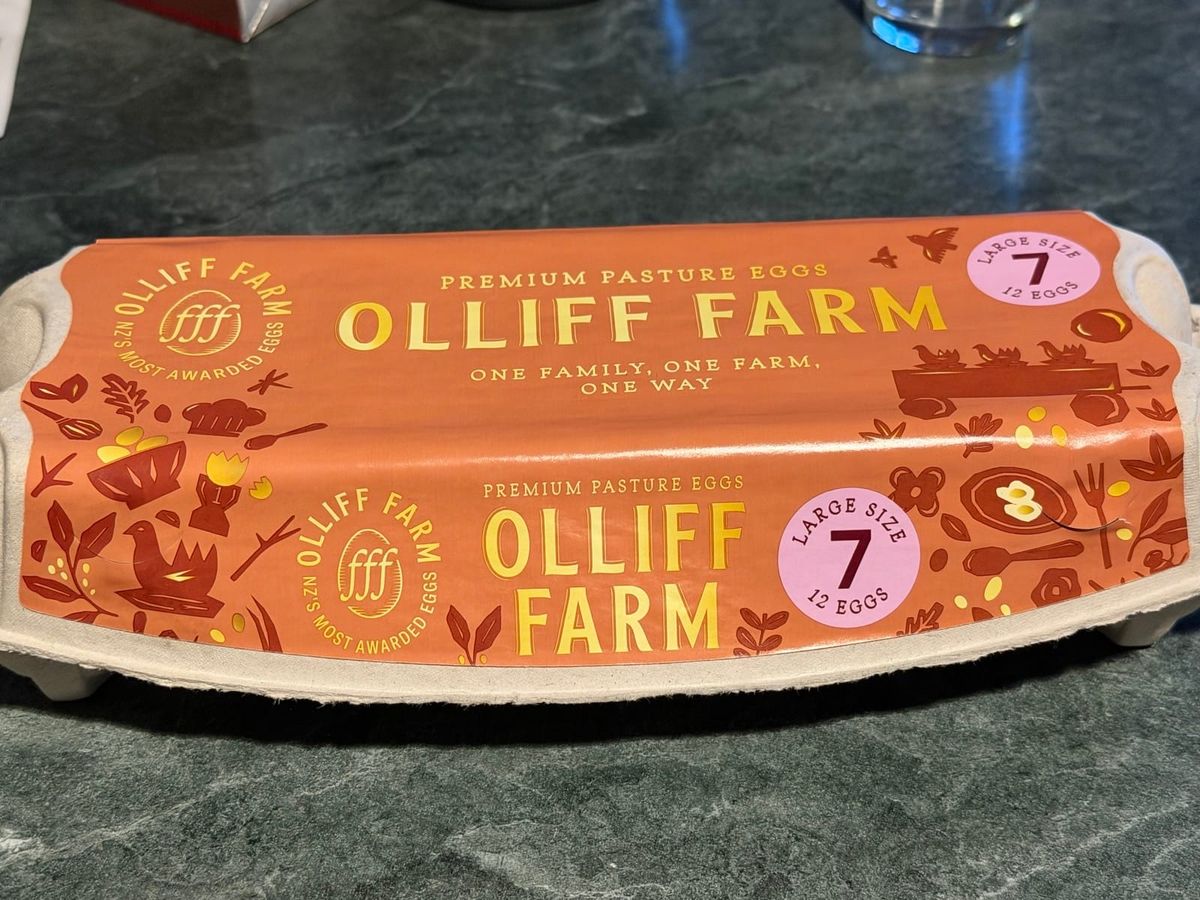
Wainui, North Auckland · No organic certification · 450 hens per hectare
Dean Olliff's family has farmed the land at 438 Waitoki Road since 1945. The egg business is more recent. Deonne and Dean moved back to the countryside in 2013 to raise their three kids — Beau, Archer and Darla — and started selling eggs in 2016. The flock sits on a small parcel carved out of the larger family dairy operation, and the relationship between the two is central to how the system works.
Dean grew up on the dairy side and brought that thinking into egg farming. The hens follow the cows. The cows graze the paddock down, manure goes onto the grass, and a few days later the chicken coops move in. The hens scratch through the cow pats for insects, spread that manure as they go, and add their own. Then they move on. The land gets fertilised twice over without a bag of synthetic anything. It's pasture rotation borrowed from regenerative grazing thinking, and applied to laying hens in a way very few New Zealand egg producers attempt.
The stocking density tells you the rest.
What 450 birds per hectare actually means
New Zealand's free range standard allows up to 2,500 hens per hectare. The SPCA's recommended ceiling is 2,000. Olliff sit at 450 — under a fifth of what's legally permitted to be called free range.
The mechanism is a fleet of solar-powered, purpose-built moveable coops. Each coop houses a "micro-flock" of 300 to 450 birds. The coops shift every few days onto fresh ground. The floors are mesh, so manure passes straight through to the paddock — no build-up inside, no birds standing in their own waste, no need for the chemical interventions that come with stationary high-density sheds.
This is the model Joel Salatin made famous at Polyface Farm in Virginia: chickens following ruminants on rotation, with the land getting better rather than worse over time. The Olliffs developed their version from scratch. Deonne has described it in interviews as a system the couple had to build themselves because nothing locally existed. The whole flock is Brown Shaver, the same workhorse breed used across most of New Zealand's commercial layer industry. The difference isn't the bird. It's everything around it.
The four-day freshness rule
Eggs are collected by hand every day, inspected for hairline cracks, graded, and stamped with the farm's triple-f logo. The Olliffs operate a self-imposed rule: nothing older than four days from being laid leaves the farm. Every carton carries a "laid on" date rather than a "best before" date — so you can see exactly how old the eggs you're buying actually are.
For context, the legal best-before on a New Zealand egg is up to 35 days from packing, and supermarket eggs can sit in a distribution chain for weeks before they hit the shelf. Four days is in a different league.
The certification question
This is where the framing matters, and it's worth being direct: Olliff Farm is not certified organic. There's no BioGro, AsureQuality, or Demeter mark on the carton.
That means the feed isn't certified organic. New Zealand has no domestic certified organic poultry feed supply at meaningful scale, which is a structural problem the entire sector runs into. Even the country's certified organic egg producers source feed in ways worth scrutinising closely. Olliff don't claim organic status. They claim pasture. That's an honest position.
What they do offer, that almost no certified organic operation matches, is stocking density. Most certifiers allow well above 450 birds per hectare. So readers face a real trade-off here: a carton with no organic mark but radically more space per bird, versus a certified organic carton from a denser operation. There's no universally right answer to that — it depends on which signal matters more to you. The OFT eggs hub is built to help you think it through rather than make the call for you.
What's clear is that "pasture egg" itself is an unregulated marketing term in New Zealand. There's no statutory standard, no audit, no official threshold. Olliff are operating well inside what the term should mean. Many products using it on the shelf are not.
The trajectory
The eggs first landed in Auckland restaurants — Clooney, Daily Bread, and others — before Covid lockdowns in 2020 cut that channel overnight. The Olliffs pivoted hard into retail. They picked up Sustainability Runners-Up at the 2019 Outstanding NZ Food Producer Awards, then in 2021 took gold in the eggs category at the same awards plus the People's Choice for the whole event. The FRESH category at the 2021 Artisan Awards followed. Country Calendar filmed an episode at the farm in March 2022.
More recently, chef Michael Meredith partnered with Olliff Farm for the Miele Homegrown sustainability film series, sourcing their eggs for his Mr Morris restaurant. That partnership is a useful third-party signal — Meredith doesn't lend his name lightly.
How to buy them
Direct from the farm. Click and collect through ollifffarm.co.nz, pickup at 438 Waitoki Road, Wainui, seven days a week between 9am and 6pm. There's no farm gate stall or honesty box — the order goes through the website first.
Auckland retail. The stockist network isn't published on Olliff's own website (the retail and stockist pages are empty placeholders) but coverage across trade press, Dish Magazine and direct retailer listings places them at:
Central: Grey Lynn Butchers (531 Great North Road). Cheltenham Milk Bar (North Shore).
East Auckland: Naturally Organic, Glen Innes (150 Apirana Avenue).
North Shore: Naturally Organic, Albany (23/100 Don McKinnon Drive).
North Auckland and Silverdale: PAK'nSAVE Silverdale, plus the Olliff Farm shop itself.
Matakana, Omaha, Snells: Warkworth Butchery, Matakana Butchery, Matakana Smokehouse, Sculptureum Retail, The Superette at Omaha Beach.
Remuera: Four Square Remuera.
Wider: Select New World stores carry them, though which stores varies. Worth asking before a special trip.
Farmers markets. Olliff don't sell at farmers markets. The model is click-and-collect from the farm plus wholesale to retail and restaurants. The four-day freshness rule and the small flock size make markets a poor fit for their distribution.
Wholesale. Cafés and restaurants order through Upstock (upstock.app/wholesalers/olliff-farm).
What I don't know
The total flock size isn't published anywhere recent. A 2019 Good Magazine piece put the count at around 1,800 birds. With the post-Covid growth into retail, that's likely higher now, but the farm doesn't say.
The feed source is also not disclosed publicly. Given there's no domestic certified organic poultry feed supply, the feed will almost certainly be conventional — but the specifics matter and aren't on the website. Whether the grain is GMO-free, where it comes from, whether it includes imported soy (the issue that runs through almost every New Zealand poultry operation), all unknowns.
The stockist list above is pieced together from press coverage between 2023 and 2025. Small retailers come and go. Supermarket lines in particular get reshuffled. The most reliable channel for a definitive list is asking Olliff directly through their contact form.
What's beyond doubt is the farming model. 450 birds per hectare, moveable coops on rotation behind a dairy herd, hand-collected within four days. For an uncertified pasture operation, this is the higher end of what New Zealand currently offers.
ollifffarm.co.nz · @olliff_farm · 438 Waitoki Road, Wainui
This article is part of OFT's eggs series. The full guide to New Zealand's better egg producers — sorted by how they farm, with regional buying tips — lives at Eggs in New Zealand.
