Water Solutions
Water quality isn’t just about cleanliness; it’s about chemical load, treatment methods and what’s added or removed. Solutions range from source protection and filtration to community action. Better water starts with understanding contaminants, infrastructure and real choices.
How to choose drinking water that suits your body, home, and values
Once you understand what’s in town water and why, the next question is simple:
What’s the most sensible way for me to drink water at home?
There is no perfect answer — only trade-offs. This page outlines the main options people use, what each does well, and where the compromises are.
The goal is not optimisation for its own sake, but comfort, taste, and practicality.
First principle: there is no “perfect” water
All water sources involve trade-offs between:
- purity
- mineral content
- cost
- convenience
- environmental impact
- personal tolerance
The right solution is the one that fits your context, not someone else’s philosophy.
Option 1: Filtered town water (the baseline choice)
For most households, this is the highest return on effort.
What it does well
- Removes chlorine (taste and smell)
- Improves palatability immediately
- Inexpensive and simple
- Low maintenance
What it doesn’t do
- Does not remove fluoride
- Does not remove dissolved salts or heavy metals (unless specifically designed to)
Who this suits
- Most people
- Anyone who dislikes chlorine taste
- Families wanting a low-cost improvement
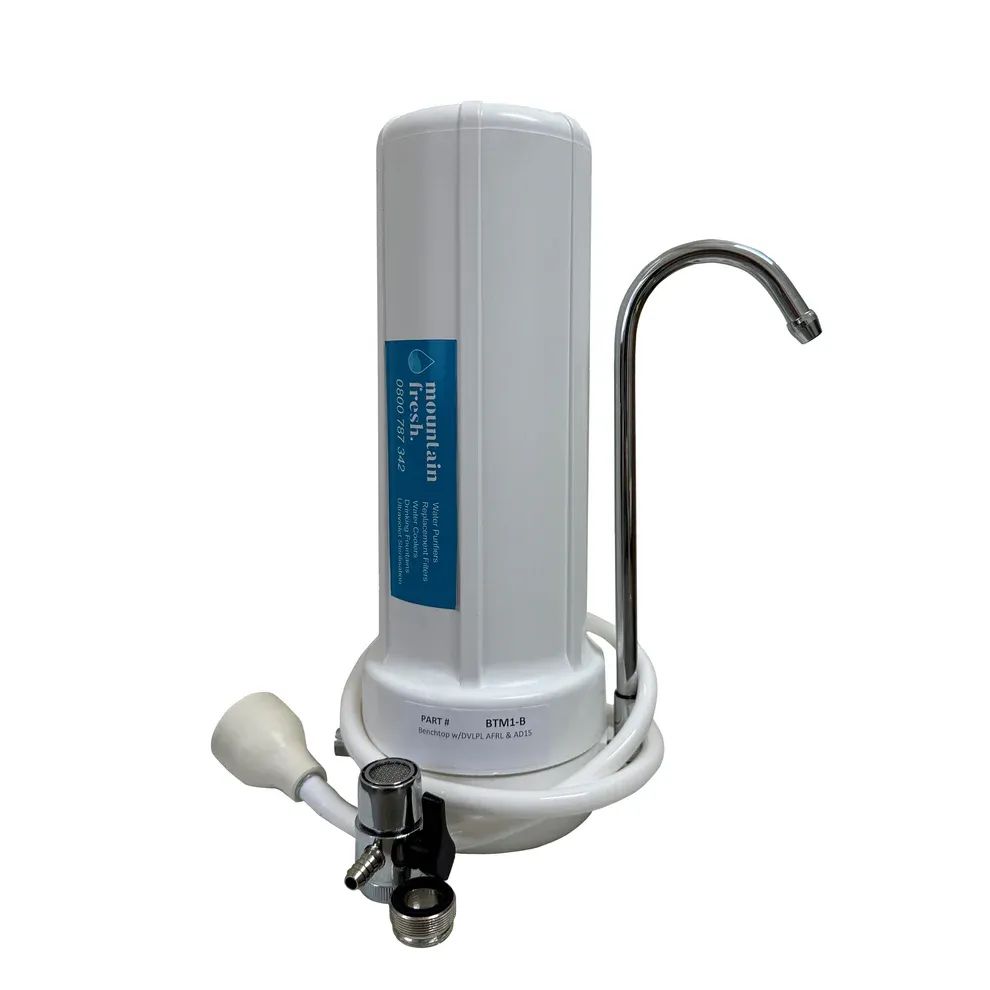
If you do nothing else, filtering drinking water with activated carbon gets you most of the benefit with the least complexity.
Option 2: Reverse Osmosis (RO)
RO systems push water through a semi-permeable membrane, removing almost everything.
What it does well
- Removes fluoride, chlorine, heavy metals, nitrates, and many contaminants
- Produces very “clean” water
Trade-offs
- Removes beneficial minerals as well
- Requires remineralisation for taste and balance
- Produces wastewater
- Higher upfront and ongoing cost
Who this suits
- People who want maximum removal
- Households with specific contamination concerns
- Those willing to manage remineralisation intentionally
RO is about control, not simplicity.
Option 3: Distilled water
Distillation involves boiling water and condensing the steam.
What it does well
- Extremely pure
- Removes almost all contaminants
Trade-offs
- Flat taste without minerals
- Energy intensive
- Not ideal as a sole long-term drinking water unless remineralised
Who this suits
- Short-term or specific uses
- People who deliberately remineralise
- Situations where purity matters more than convenience
Distilled water works best when used intentionally, not by default.
Option 4: Spring water
Spring water can be excellent — or disappointing — depending on the source.
What to look for
- Clear source transparency
- Mineral analysis available
- Bottling location close to source
- Storage and plastic considerations
Trade-offs
- Cost adds up quickly
- Plastic use
- Quality varies widely between brands
Spring water can be a good option if you trust the source and accept the cost.
Option 5: Bore / well water (rural homes)
Private water sources shift responsibility from council to individual.
Potential benefits
- No chlorine or fluoride by default
- Often excellent taste
- Full control over treatment
Responsibilities
- Regular testing
- Managing microbes, metals, and nitrates
- Filtration or treatment if needed
Bore water can be fantastic — but it requires active stewardship.
Whole-house vs point-of-use filtration
Point-of-use (drinking tap only)
- Cheapest
- Easiest
- Covers most needs
Whole-house filtration
- Removes chlorine from all taps
- Improves showers, skin, hair, laundry
- Higher cost and maintenance
Whole-house systems are a comfort upgrade, not a necessity.
A simple decision guide
- If you value simplicity:
Carbon-filtered town water - If you value taste above all:
Carbon filtration or good spring water - If you want maximum removal:
RO (with remineralisation) - If you’re rural:
Tested bore water + targeted filtration - If you’re sensitive (skin, gut, airways):
Filter drinking water first, then consider shower filtration
You don’t need to solve everything at once.
A grounded approach
Public water systems keep people safe.
Personal water choices are about refinement, not rejection.
Start small:
- improve taste
- reduce unnecessary exposure
- adjust only if you feel a benefit
Water should support daily life, not become a source of stress.