The Wattie’s Closures Reveal a Hidden Link Between Your KiwiSaver and Your Food
The proposed Wattie’s factory closures reveal something deeper about New Zealand’s food system. From KiwiSaver investments to global food corporations, the decisions shaping where our food is made may be closer to home than we realise.
 1News Reporters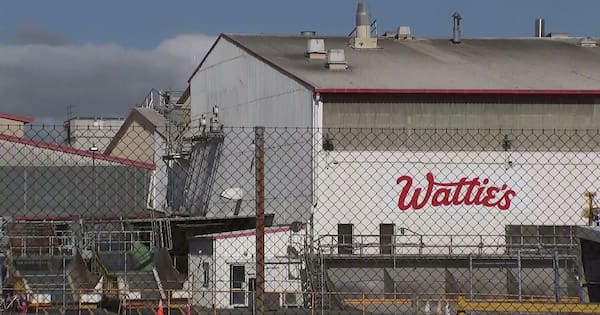
How global investment decisions can shape the food system in New Zealand
For many New Zealanders, Wattie’s is woven into everyday life.
Baked beans on toast after school.
Spaghetti on toast at university.
Tomato sauce on a pie from the local dairy.
For nearly a century, the company has been part of the country’s food landscape.
Which is why the announcement on March 11, 2026 caught attention across New Zealand.
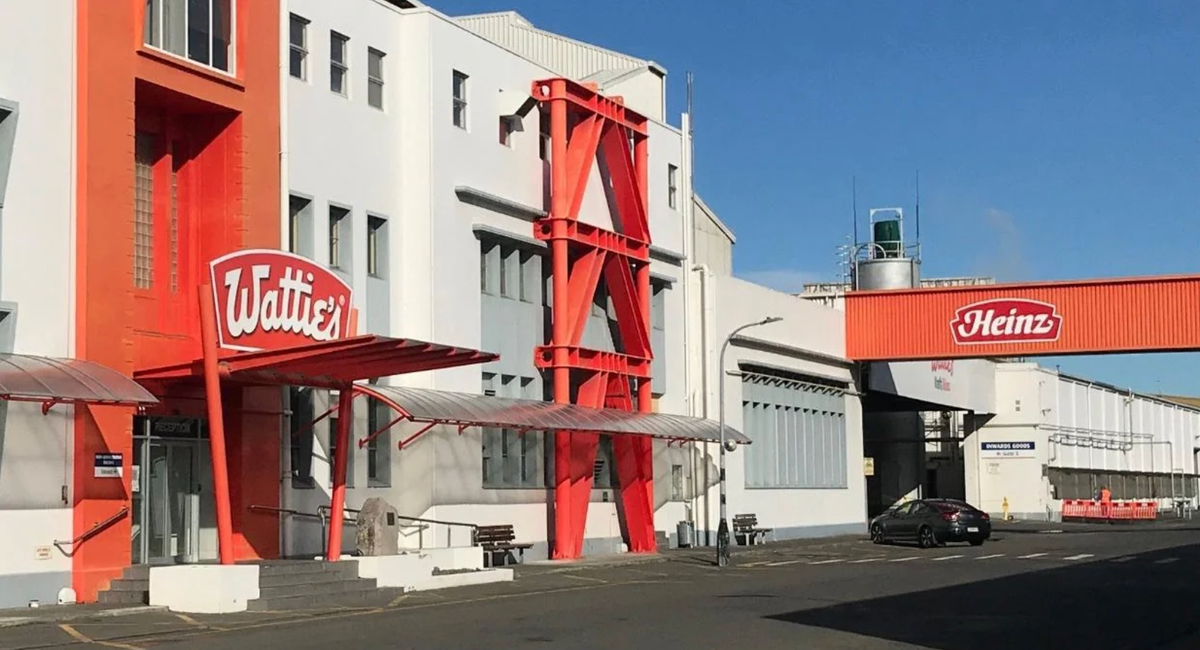
Heinz Wattie’s has proposed closing manufacturing facilities in Auckland, Christchurch, and Dunedin, affecting around 350 roles across those sites.
At first glance it looks like another corporate restructuring story.
But look a little deeper and it reveals something much larger about the system behind the food on our supermarket shelves.
It raises a question we rarely stop to ask:
How much control does New Zealand still have over the food it eats?
A Connection Most People Don’t See
Every month, millions of New Zealanders contribute money into KiwiSaver, trusting that their retirement savings are being invested wisely.
Those savings don’t sit in a bank account. They are invested in global financial markets.
Much of that money ends up in large investment funds, which in turn hold shares in multinational companies.
Those companies make decisions about where food is produced, where factories operate, and which supply chains survive.
In ways most of us rarely think about, our retirement savings can become part of the system shaping the food we eat.
The Proposed Changes
Heinz Wattie’s says the proposed closures reflect rising costs, global competition, and challenging industry conditions.
If implemented, the changes would end New Zealand production of several familiar product categories, including:
- frozen vegetables
- Gregg’s coffee
- dips sold under brands such as Mediterranean, Just Hummus, and Good Taste Company
Some of these products may disappear from supermarket shelves entirely.
Others may continue to be sold here, but manufactured overseas instead of in New Zealand.
Wattie’s main processing plants in Hawke’s Bay, particularly those handling tomatoes and fruit, are expected to remain.
But the announcement signals something significant: parts of New Zealand’s food processing capacity are quietly shrinking.
The Farmers Behind the Factory
While the headlines focus on factory closures and job losses, another group sits quietly at the centre of this story: farmers.
For decades, vegetable growers across Canterbury have planted crops specifically for Wattie’s frozen vegetable processing.
Peas.
Sweetcorn.
Mixed vegetables destined for supermarket freezers across the country.
Reports suggest around 220 growers have supplied crops into that processing system.
These are farms where planting decisions are made months in advance. Seeds are ordered. Fields prepared. Harvest schedules organised around factory delivery windows.
When a processing plant closes, those carefully built supply chains can disappear almost overnight.
For growers, that can mean losing a reliable buyer and scrambling to find alternatives.
From the outside, industrial food systems can look stable and permanent.
For the people who grow the food, they often feel much more fragile.
A Brand That Is No Longer Local
Although Wattie’s remains one of the most recognisable food brands in New Zealand, it has not been locally owned for decades.
Wattie’s was founded in Hastings in 1934 by Sir James Wattie, growing into one of the country’s most successful food manufacturers.
In 1992, the company was purchased by the American food giant H.J. Heinz in one of the largest corporate acquisitions in New Zealand at the time.
More than twenty years later, in 2015, Heinz merged with Kraft Foods Group to create The Kraft Heinz Company, one of the largest food companies in the world.
That merger was orchestrated by two powerful investment groups:
- Berkshire Hathaway, the investment company led by Warren Buffett
- 3G Capital, a private investment firm founded by Brazilian billionaire investors Jorge Paulo Lemann, Carlos Alberto Sicupira, and Marcel Herrmann Telles
Today Kraft Heinz operates as a global corporation with products sold in dozens of countries.
Decisions about manufacturing locations are increasingly made from a global perspective, where production is concentrated in fewer, larger factories serving multiple markets.
Who Owns Kraft Heinz Today
Like most large publicly traded companies, Kraft Heinz is owned by a mix of major institutional investors.
The largest shareholders include:
- Berkshire Hathaway – about 27.5%
- Vanguard Group – about 8.6%
- BlackRock – about 7.6%
- State Street – about 3.8%
These investment firms manage money on behalf of pension funds, retirement accounts, and institutional investors around the world.
In other words, decisions affecting a factory in Christchurch or a grower in Canterbury are ultimately connected to a global financial system that spans many countries.
Why Global Food Companies Consolidate
From the perspective of a multinational corporation, the logic behind consolidation is straightforward.
Over the past several decades, food manufacturers have increasingly centralised production into large regional factories serving multiple countries.
Products that travel easily — frozen vegetables, sauces, dips, and packaged foods — can be produced wherever costs are lowest and logistics are most efficient.
Efficiency becomes the guiding principle.
But efficiency has a trade-off.
The more centralised the system becomes, the less connected it is to the places where the food is grown.
What Happens When Processing Disappears
When a country loses food processing capacity, something more than jobs disappears.
It loses infrastructure.
Processing plants anchor entire regional ecosystems, supporting:
- farmers
- seasonal workers
- trucking companies
- packaging suppliers
- agricultural contractors
- regional economies
Remove the plant, and the surrounding network often begins to unravel.
And once those systems disappear, rebuilding them later can be extremely difficult.
The Hidden Web Behind Supermarket Food
The modern supermarket makes food appear simple.
A bag of frozen peas.
A jar of tomato sauce.
A familiar label.
But behind each product is a complex web connecting farms, factories, contracts, trucks, workers, and distribution networks.
Most of that web is invisible.
Until one piece of it breaks.
When a factory closes, food that once travelled a few hours from farm to processor may suddenly travel thousands of kilometres instead.
Or disappear altogether.
Two Different Food Systems
There are essentially two ways food moves through a country.
Industrial supply chain
Farm → Factory → Distribution centre → Supermarket → You
Local food network
Farm → Market / Farm shop / Local processor → You
Both systems can feed people.
But the distance between grower and eater is very different.
A Question Worth Asking
New Zealand is one of the world’s great food-producing countries.
We export meat, dairy, fruit, vegetables, and grain to markets around the globe.
But moments like this raise a deeper question.
Should a country that grows so much food rely on distant factories to process it?
Maybe the bigger question is not what Wattie’s will do next.
Maybe the real question is:
What kind of food system does New Zealand want to build for the future?
Looking Closer at Our Food System
Understanding where food comes from has become surprisingly difficult.
Food now passes through long supply chains, multiple companies, and global manufacturing systems before it reaches our kitchens.
One of the goals of Organic Food Together is to help make that system easier to see.
To explore:
- organic farms
- local growers
- farmers’ markets
- small producers
- the networks connecting them
Because once you begin looking more closely at food, something becomes clear.
The shortest path between farm and table is often the most resilient.
 Tim Cronshaw