The Hidden Antibiotics in Our Chemical World
A 2025 Nature Microbiology study tested over 1,000 pesticides and industrial chemicals against human gut bacteria. About 16% slowed or stopped microbial growth, acting like weak antibiotics. The modern chemical environment may be quietly reshaping the microbiome.
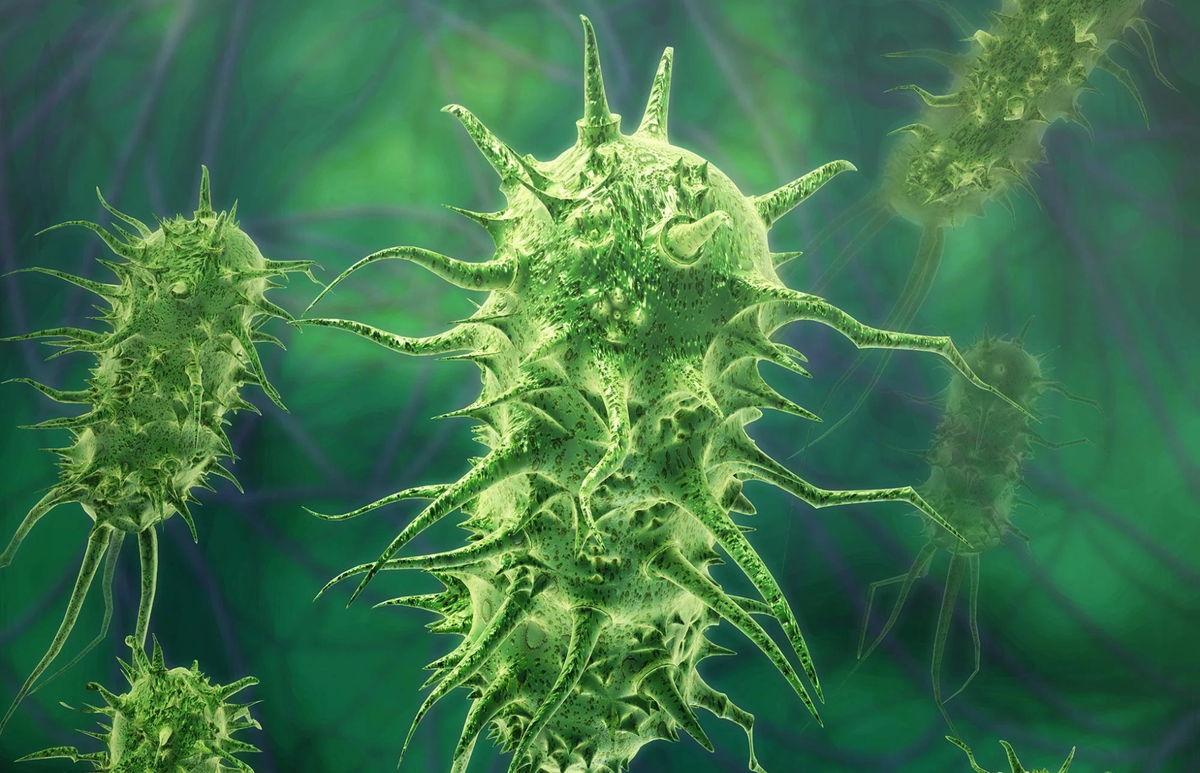
A new study published in Nature Microbiology asked an unusual question.
Not whether pesticides kill insects.
But whether the chemicals we encounter every day — in food, water, plastics, electronics, and dust — might also harm the beneficial bacteria living inside our gut.
The international research team screened 1,076 industrial and agricultural chemicals against 22 representative species of human gut microbes in laboratory cultures.
What they found was unexpected.
Roughly 16% of the chemicals inhibited the growth of at least one gut bacterium.
That might sound modest. But when thousands of synthetic chemicals circulate through modern food systems and environments, even a small percentage becomes biologically meaningful.
In effect, many everyday pollutants behave like weak, unintended antibiotics.
Not the kind prescribed by doctors.
But ones drifting quietly through the environment and interacting with the microbial ecosystems inside us.
Why Gut Bacteria Matter
The gut microbiome is far more than a digestive aid.
It is a complex ecosystem of trillions of microbes that forms a fundamental part of human biology.
Gut microbes help:
• break down dietary fibers into short-chain fatty acids that nourish intestinal cells
• synthesize vitamins such as B vitamins and vitamin K
• regulate metabolism and inflammation
• train and balance the immune system
• maintain the intestinal barrier
• keep harmful pathogens in check
• communicate with the brain through the gut-brain axis
Disrupting this ecosystem — often called dysbiosis — can ripple outward through many aspects of health.
Researchers increasingly link microbiome imbalance to inflammatory bowel disease, metabolic disorders, immune dysfunction, and other chronic conditions.
What the Study Actually Did
The researchers assembled a large chemical library that included:
• 829 pesticides and related compounds
• 119 pesticide breakdown products
• 48 industrial chemicals, including flame retardants and plastic additives
• several other environmental contaminants
Each compound was tested against gut bacteria at a concentration of 20 micromolar, a level chosen because it reflects concentrations that can plausibly occur in environmental or biological exposure scenarios.
Bacterial growth was measured over roughly 24 hours in oxygen-free conditions designed to mimic the gut environment.
If growth dropped by more than 20%, the chemical was classified as inhibitory.
When chemicals showed strong activity, the team ran deeper experiments:
• testing dose–response effects
• observing impacts within synthetic microbial communities
• performing genetic screens to identify bacterial resistance mechanisms
• training a machine-learning model to predict which chemical structures are most likely to affect gut microbes
The Results
Out of 1,076 chemicals tested, 168 inhibited at least one gut bacterium, producing 588 unique chemical–bacteria interactions.
Almost all of these effects had never been documented before.
Some compounds stood out for their broad impact.
For example:
• Tetrabromobisphenol A (TBBPA), a common flame retardant used in electronics and furniture, inhibited 19 of the 22 bacterial species tested.
• Closantel, a veterinary antiparasitic drug used in livestock, showed similarly broad activity.
• Several PFAS-related compounds and bisphenol variants also affected gut microbes.
Fungicides and industrial chemicals turned out to be the most active category.
Nearly 30% of them disrupted bacterial growth.
When the researchers tested chemicals within small synthetic gut communities, they observed shifts in which species dominated — sometimes favoring resistant microbes while suppressing others.
A Chemical Environment Acting Like Low-Dose Antibiotics
We know that antibiotics can dramatically reshape the microbiome.
This study suggests that environmental chemicals may exert similar pressure, but far more gradually.
Instead of a strong antibiotic course lasting a week, the exposure could be:
small
persistent
and repeated daily for decades.
That kind of long-term ecological pressure could subtly reshape microbial communities over time.
Not necessarily by wiping bacteria out entirely, but by favoring some species while suppressing others.
The Resistance Connection
The researchers also found that many bacteria resisted chemical toxicity using efflux pumps — molecular systems that push harmful compounds out of the cell.
These same systems are commonly involved in antibiotic resistance.
That raises an important possibility.
If environmental pollutants act like weak antibiotics, they could unintentionally select for microbes with stronger resistance mechanisms.
Evolution responds to pressure, not intention.
Important Caveats
The authors are careful to highlight the limits of the research.
All experiments were conducted in vitro, meaning in laboratory cultures rather than inside living humans.
Real human microbiomes are vastly more complex.
They include hundreds or thousands of microbial species interacting with digestion, immune responses, diet, mucus layers, and countless other variables.
The study also tested primarily one concentration, so it cannot fully capture real-world exposure levels or dose responses.
In other words, the findings demonstrate a biological possibility, not proof of human disease.
But they reveal a mechanism that had largely gone unexamined.
A Larger Pattern Emerging
Modern toxicology traditionally focuses on whether chemicals damage organs such as the liver, kidneys, or brain.
Yet humans are not just human cells.
We are also microbial ecosystems.
If gut bacteria are affected by chemicals at levels below those that harm human tissues, the microbiome may be one of the earliest and most sensitive indicators of chemical exposure.
Current safety testing rarely considers this possibility.
But interest in microbiome-aware toxicology is growing.
What Can Individuals Do?
Avoiding modern chemistry entirely is impossible.
But direction matters.
Practical steps that may help reduce exposure include:
• choosing organic or lower-spray produce where feasible
• using effective water filtration for pesticides or PFAS if appropriate
• minimizing food contact with plastics, especially when heating
• reducing indoor dust buildup through ventilation and HEPA filtration
• favoring whole foods over ultra-processed products
These changes do not eliminate exposure.
But over time they may shift the balance toward a healthier microbial environment.
A Quiet Shift in How We Think About Health
For much of modern medicine, the human body was treated as a single organism.
We now understand that we are something more complex.
A partnership between human cells and microbial companions.
Health depends on the stability of that partnership.
Studies like this suggest the chemical world we have built may be influencing that balance in ways we are only beginning to measure.
Not through dramatic poisonings.
But through slow ecological pressure.
And in biology, slow forces repeated day after day often shape outcomes more powerfully than sudden events.
It does not mean panic.
But it does suggest something worth paying attention to.
The chemistry of the modern world may be quietly shaping one of the most important ecosystems inside our bodies.
And we are only just beginning to understand how.
Source
"Industrial and agricultural chemicals exhibit antimicrobial activity against human gut bacteria in vitro"
Nature Microbiology (2025)
https://doi.org/10.1038/s41564-025-02182-6