The Biggest Little Farm (2018) – Review
A visually stunning, long-game portrait of regenerative farming, The Biggest Little Farm trades quick fixes for ecological patience. It’s less a critique of industrial agriculture than a case study in resilience, showing how biodiversity, time, and stubborn optimism can slowly rebuild broken land.
Some documentaries try to expose a broken system.
This one tries to rebuild one.
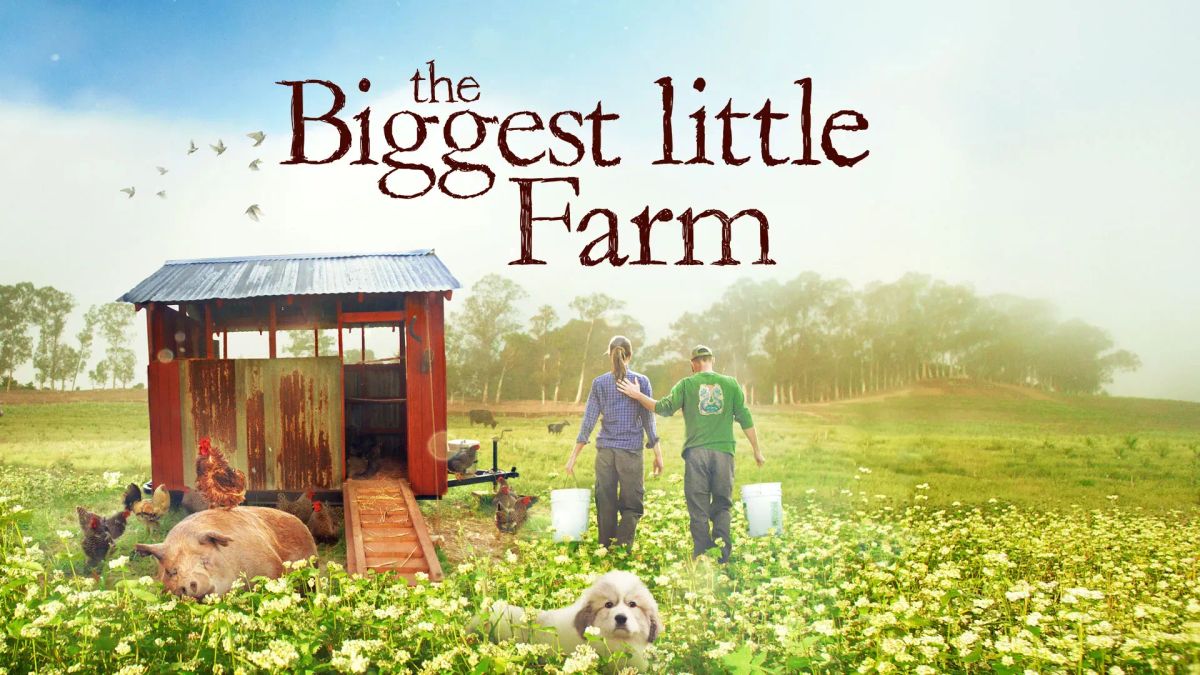
The Biggest Little Farm follows John and Molly Chester as they attempt to regenerate 200 acres of depleted land in California, transforming it into what became Apricot Lane Farms. Over eight years, they move from optimism to collapse to something resembling ecological balance.
This isn’t a takedown of industrial agriculture. It’s a long-form case study in what happens when you stop fighting nature and start designing with it.
What It Gets Right
Systems Over Shortcuts
There are no miracle inputs. No magic amendments. No silver-bullet fixes.
The farm improves because diversity compounds. Ducks manage snails. Cover crops rebuild soil. Predators regulate prey. Complexity becomes stability.
The cinematography reinforces this thesis. Time-lapses, soil close-ups, wildlife movement, seasonal shifts. The visuals don’t just decorate the story, they argue for it.
Time as a Character
Eight years is long enough to fail repeatedly.
Crop losses. Animal deaths. Drought. Financial strain.
When stability finally emerges, it feels earned. There’s no montage shortcut. The slow build is the point.
Ecological Literacy for Normal Humans
You don’t need to know the science of soil microbiology to understand what’s happening. The film translates regenerative principles into lived experience. It makes ecology emotional without dumbing it down.
Where It Pulls Its Punches
Heavy Narration
John Chester guides the audience throughout. It provides clarity, but it leaves little space for interpretation. The emotional arc feels curated.
The Polish
Hardship is shown, but rarely in its ugliest form. The edit remains hopeful. The light is golden. The score swells at the right moments.
It’s inspirational by design.
Missing Systemic Context
The film doesn’t deeply examine:
- Financial viability without significant backing
- Whether this model scales beyond boutique acreage
- Policy structures that favor industrial monoculture
It’s a memoir of one farm, not a blueprint for reform.
The Quiet Thesis
Industrial agriculture optimizes for yield.
Regenerative agriculture optimizes for resilience.
Those are different metrics.
In stable conditions, yield wins.
In volatile conditions, resilience may matter more.
The film never states this outright. It shows it.
2026 Update
Apricot Lane Farms continues under new stewardship. After 14 years, John and Molly have stepped away from daily operations, handing the 234-acre certified organic and biodynamic farm to a dedicated team. They’ve shifted toward a smaller, more personal regenerative homesteading project in Oregon.
A follow-up docu-series covering the farm’s later years is slated for release in 2026.
The story didn’t end with the film. It evolved.
Final Take
If you’re looking for a hard-edged critique of the global food system, this isn’t it.
If you want to see what long-term ecological thinking looks like in practice, with all the setbacks and slow gains, it delivers.
It’s hopeful without being naïve.
Curated without being dishonest.
Optimistic without pretending it was easy.
A story about soil.
A story about patience.
A story about choosing the long game.
And in a world that optimizes for the quarter, that alone feels quietly radical.