RFK Jr., Joe Rogan, and the Glyphosate Reality Check
Glyphosate sits at the centre of modern agriculture. A recent Joe Rogan conversation with RFK Jr. revealed a deeper reality: food systems are built on chemical, economic, and global supply dependencies. Changing direction is possible — but systems rarely change overnight.
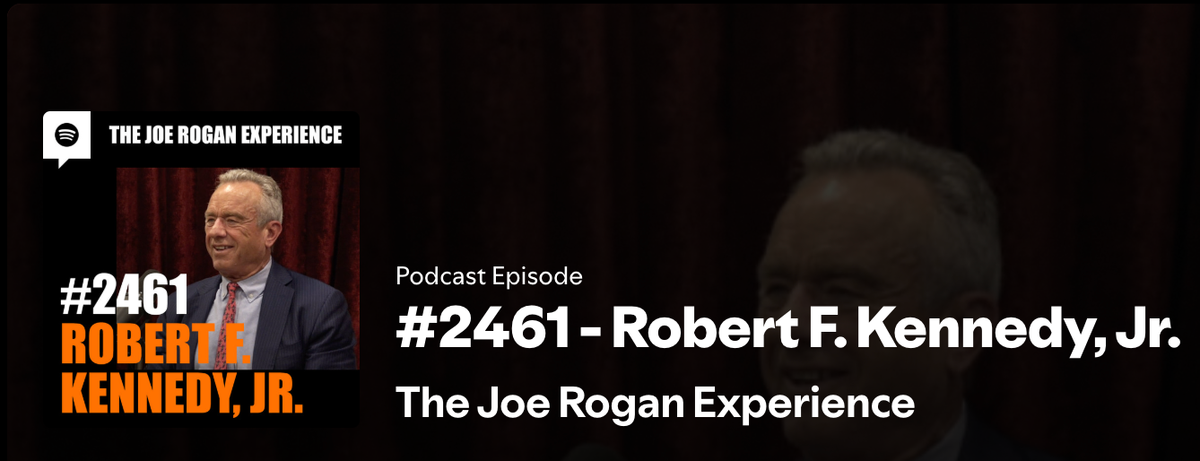
A recent episode of The Joe Rogan Experience featuring Robert F. Kennedy Jr. landed at an interesting moment in the global food conversation.
RFK Jr. is no longer speaking as an environmental lawyer on the outside of government.
He is now the sitting U.S. Secretary of Health and Human Services.
And when glyphosate came up during the discussion, the conversation revealed something deeper than the usual “for or against” arguments that dominate the topic.
It exposed how tightly modern agriculture has become tied to a single chemical system. (start podcast at 01:51:25)
The Immediate Trigger
The conversation circled around a recent executive order from Donald Trump aimed at increasing domestic production of glyphosate.
The order uses the Defense Production Act to encourage U.S. manufacturing of agricultural chemicals and reduce reliance on foreign suppliers.
For many people familiar with RFK Jr.’s long history of environmental litigation, this seemed contradictory. He has spent decades challenging companies over glyphosate exposure.
Yet in the podcast he explained why the system cannot simply abandon it overnight.
His response was measured.
“It’s not a good thing to have in your food… it’s not something I was particularly happy with.”
But he also acknowledged the reality of the system that now exists.
“If you ban glyphosate overnight… it would destroy the American food system.”
The point was not that glyphosate is harmless.
The point was that the agricultural system built around it is enormous.
And systems take time to change.
The Scale of Dependence
Glyphosate is deeply embedded in modern commodity agriculture.
In the United States it is used in the production of roughly:
- 97% of corn
- 98% of soybeans
Much of this comes from genetically engineered crops designed to tolerate glyphosate applications.
Instead of targeted weed control, farming shifted toward large-scale spraying across entire fields.
Glyphosate is also sometimes used as a pre-harvest desiccant in crops such as wheat, helping plants dry evenly before harvest.
Over time the entire agricultural model adjusted around this chemical tool.
Removing glyphosate is not simply removing a product.
It means redesigning a farming system.
A Hidden Layer: The Global Chemical Supply Chain
Another point raised in the discussion was where glyphosate actually comes from.
China now holds the majority of global glyphosate manufacturing capacity.
Much of the world’s production for the active ingredient takes place in Chinese chemical plants. Western companies often formulate and distribute the finished herbicide products, but the base chemical frequently originates in these manufacturing networks.
This introduces a second layer of dependency.
Modern agriculture is not only dependent on glyphosate itself.
It is dependent on a global chemical supply chain concentrated in one part of the world.
Disruptions to that supply — whether through geopolitical tensions, trade restrictions, or energy shocks — could ripple through food production.
Part of the rationale behind the U.S. executive order discussed in the podcast was to rebuild domestic chemical manufacturing so the country is less dependent on overseas suppliers.
This issue is not limited to the United States.
New Zealand agriculture operates within the same global chemical supply networks. Herbicides used in pasture renewal, horticulture, vineyards, and cropping systems are largely imported, and many of those supply chains ultimately trace back to international manufacturing hubs.
In that sense the glyphosate discussion is not only about toxicology.
It is also about resilience.
Health Concerns Remain Part of the Conversation
RFK did not spend long debating the scientific literature in this episode.
But he referenced concerns that have followed glyphosate for years.
These include:
- Non-Hodgkin’s lymphoma, which became the focus of major court cases against Monsanto/Bayer
- Possible disruption to soil and gut microbiomes
- Associations researchers have explored involving liver health, kidney stress, and endocrine systems
Glyphosate is designed to disrupt a metabolic pathway used by plants and certain microorganisms. That has led some scientists to question what broader effects it might have within ecosystems and human biology.
The scientific debate is ongoing.
But even researchers who consider glyphosate relatively safe often acknowledge that heavy chemical dependence in agriculture raises broader questions.
Why Transition Is Hard
Modern agriculture is a network of technologies that reinforce each other.
Seeds, herbicides, farm equipment, crop insurance, commodity markets, and global trade all evolved together.
Changing one part of that system requires adjusting the rest.
If glyphosate disappeared tomorrow, farmers would face:
- lower yields in some crops
- increased labour and mechanical weed control
- rising production costs
- potential food price spikes
That does not mean change is impossible.
It means change has to be managed.
The Direction of Travel
RFK described a gradual transition rather than a sudden ban.
Possible pathways include:
- regenerative farming practices that rebuild soil health
- organic agriculture where chemical herbicides are avoided
- mechanical weed control technologies
- laser weeders and precision tools
- targeted drone systems that reduce blanket spraying
These approaches already exist.
The challenge is scaling them across entire agricultural systems.
That takes time, investment, and farmer support.
The Bigger Lesson
The glyphosate debate often becomes polarised.
One side treats it as harmless.
The other treats it as catastrophic.
Reality is usually more complicated.
Three things can be true at once:
Glyphosate has become deeply embedded in modern agriculture.
Reducing chemical exposure is a reasonable goal.
Sudden disruption to food production carries real risks.
The more interesting question is not whether glyphosate should disappear tomorrow.
It is whether we are building farming systems that need less of it over time.
A Quiet Direction
The broader theme behind Organic Food Together has always been simple.
Not purity.
Not panic.
Direction.
Small shifts that compound over decades.
Healthier soil.
More resilient farms.
Food systems that rely less on fragile global inputs.
Glyphosate is only one piece of that story.
But understanding how the system works is the first step toward improving it.