Organic Butter in NZ: Tracing Organic Times from Brand to Butter
Organic butter in New Zealand comes from cows on certified organic farms, where pasture-based feeding and strict standards shape milk quality. From farm to churn, organic certification ensures grazing practices, animal welfare and processing methods meet organic rules.
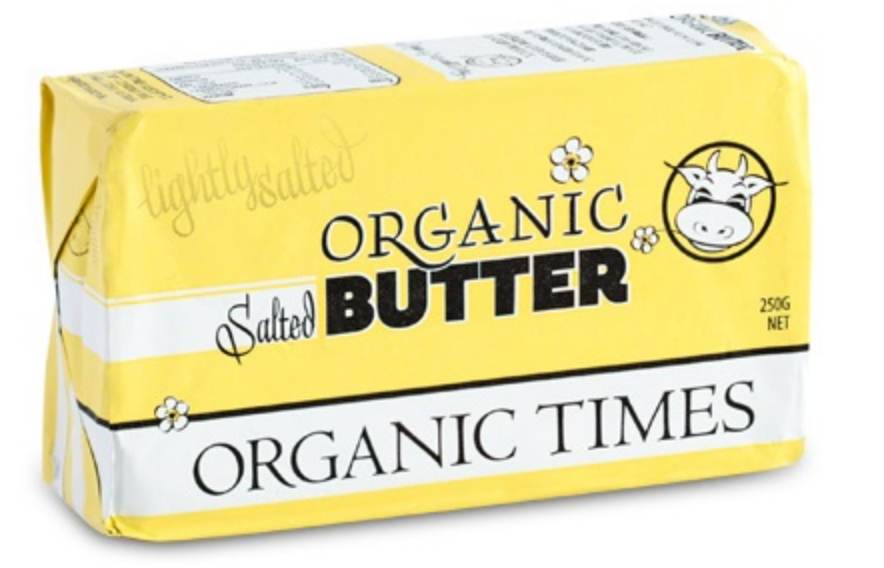
As I’ve been working through organic staples, butter felt like a good one to understand properly. It’s simple, widely used, and surprisingly opaque once you start asking basic questions about where it comes from.
One brand I see consistently in New Zealand is Organic Times butter. I buy it regularly, but I wanted to understand who actually makes it and where the milk comes from.
Here’s what I’ve learned so far.
Brand vs Production: Clearing Up the Confusion
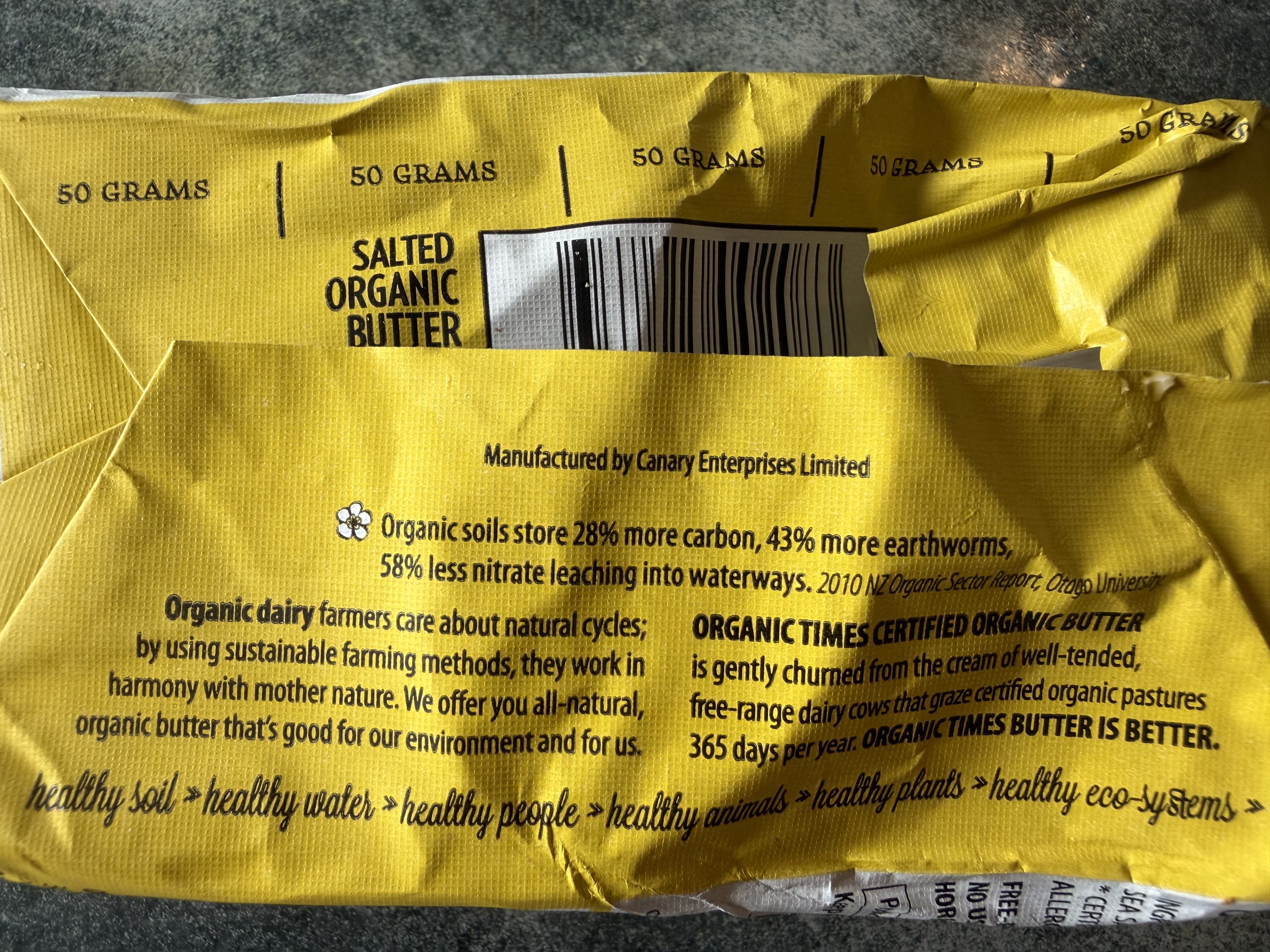
Organic Times is an Australian brand. Their Australian address is printed clearly on the wrapper, which can initially make it feel like the butter might be imported.
However, the same wrapper also clearly states:
Produced in New Zealand
That turns out to be accurate.
The butter sold in NZ under the Organic Times brand is made in New Zealand, not imported. The brand is Australian, but the production is local.
For me, that distinction matters more than brand nationality.
Who Actually Makes the Butter?
Digging deeper led me to Canary Foods, a New Zealand dairy manufacturer. Their site and product history line up with the type of butter being produced for Organic Times under contract.
Canary Foods was subsequently acquired by Westland Milk Products, a long-established New Zealand dairy processor.
So the most accurate current picture looks like this:
- Organic Times = consumer brand (Australian-owned)
- Butter = produced in New Zealand
- Manufacturing = via Canary Foods operations
- Parent processor = Westland Milk Products
Who Owns Westland?
Westland Milk Products itself was fully acquired in 2019 by Yili Group, a large global dairy company headquartered in China.
That means the ownership chain now looks like:
Organic Times (brand)
→ Produced in New Zealand
→ Canary Foods / Westland Milk Products (manufacturer)
→ Yili Group (parent company)
This doesn’t change where the butter is made or where the milk comes from, but it does matter for people who care about ownership structures and scale.
What This Means in Practical Terms
For someone standing in a shop deciding whether to buy this butter, here’s the grounded takeaway:
- It is certified organic
- It is produced in New Zealand
- It uses NZ-sourced milk
- It is not a small single-farm product
- It is a contract-manufactured butter under a large dairy processor
I’m comfortable with that trade-off. I’d always prefer more transparency around specific farms, but in the context of organic dairy at scale, this sits in a reasonable middle ground.
Availability and Real-World Pricing
One reason Organic Times works for me is that it’s easy to find and relatively affordable for organic butter.
Places I regularly see it stocked:
- Common Sense Organics (Mt Eden) – usually my go-to, currently around $10.99
- Farro – often stocked, but sometimes $2 more for the same butter
- Naturally Organic (Albany) – good range, but a longer drive, so more occasional
- Woolworths Online – shows as stocked, though availability varies by location
Prices fluctuate enough that it’s worth shopping around if you use butter regularly.
My Current View
Organic Times butter isn’t pretending to be something it isn’t.
It’s:
- organic
- made in New Zealand
- widely available
- reasonably priced (if you shop carefully)
It’s not a boutique, fully transparent, farm-named butter. But as an everyday organic butter, it does the job well while remaining accessible.
I’m happy using it while continuing to learn more about organic dairy, and I’ll update this note if I find clearer information about milk sourcing or alternative NZ organic butter producers.
Sources and Further Reading
- Canary Foods – Our Story: https://canaryfoods.co.nz/our-story/
- Organic Times (AU) – Grass-Fed Butter article: https://www.organictimes.com.au/blog/grass-fed-butter-is-best-spread-the-word/
Ownership note:
Inner Mongolia Yili Industrial Group Co., Ltd. is publicly listed on the Shanghai Stock Exchange. Global asset managers BlackRock and The Vanguard Group hold small passive stakes (each well under 1%). The company’s largest shareholders are primarily Chinese state-linked entities and domestic institutional investors, with no single foreign asset manager holding a controlling interest.