James Edward "Jim" Kebbell (13 March 1938 – 13 January 2026): A Life of Colour, Vigour, Service, and Common Sense
Jim Kebbell (1938–2026) journeyed from sheep farm to Vatican corridors to founding Commonsense Organics. A former priest turned activist and organic pioneer, he helped shape NZ’s standards, retail, and food ethics. A life rooted in fairness, soil, and service.
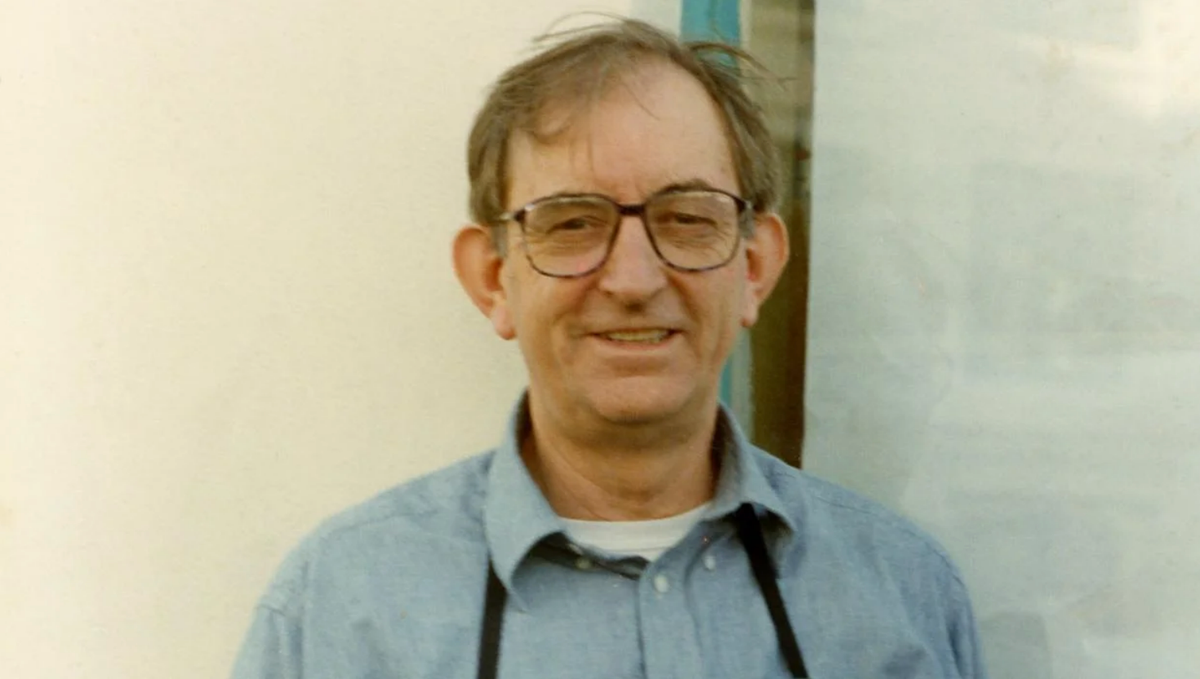
Jim Kebbell lived a life that spanned continents, vocations, and revolutions — from the paddocks of a conventional sheep farm in rural New Zealand to the corridors of the Vatican, the waves of Cook Strait, the streets of activist Wellington, and finally the soil of one of the country’s pioneering organic farms and the aisles of a groundbreaking retail chain. He died peacefully at his Island Bay home in Wellington on 13 January 2026, aged 87, surrounded by his beloved wife Marion, family, and friends. Tributes described him as a tōtara that had fallen — a towering, enduring figure in New Zealand’s organic and ethical business movements — yet one whose warmth, humour, integrity, and unshakeable belief in fairness touched thousands.
His story is not just a biography of one remarkable man; it is a window into New Zealand’s social, environmental, and economic evolution from the post-war years through the environmental awakening of the 1970s, the neoliberal shifts of the 1980s–90s, and into today’s climate and food-sovereignty debates. It illustrates how personal transformation, rooted in values of justice and harmony with nature, can scale into institutional and cultural change.

thepost.co.nzJim Kebbell: From Vatican insider to organic grocer | The Post
Roots on the Land: Early Life in Ashhurst (1938–1950s)
Born the third of five children to Sophie and Cecil Kebbell, Jim grew up on a traditional sheep farm outside Ashhurst in the Manawatū. This was a “different New Zealand” — pre-industrial-agriculture boom, where farming was practical and chemical-free by default, but conventional in mindset. The land shaped him deeply: respect for nature’s power, the rhythms of seasons, and the dignity of honest work. Yet childhood was not idyllic; one early trauma was a plane crash that left lasting impressions of fragility and resilience (as recalled by close friend Michael Field).
Conventional farming initially made him sceptical of “organics” when he first encountered the movement — he reportedly called it “a load of nonsense.” That scepticism would later fuel one of his greatest contributions: a conversion born not of ideology alone but of evidence about chemical impacts on soil, food chains, and corporate control of seeds (notably Shell Oil’s patents).
Education and early adulthood took him far from the farm. He trained for the Catholic priesthood, a path that reflected the era’s strong Irish-Catholic influences in rural New Zealand and a personal search for meaning, service, and intellectual depth.
A Higher Calling and Global Adventures: Priesthood, Vatican, and Formative Travels (1950s–1960s)
Jim’s priestly formation led him to Cambridge (likely theological studies) and then to Rome, where he served on the staff of Pope John XXIII during a pivotal time in Church history — the lead-up to Vatican II, with its emphasis on social justice, openness, and engagement with the modern world. Coming from Ashhurst, Rome “impressed him at first,” as one obituary noted, but doctrinal and political concerns eventually prompted him to leave the active priesthood.
This was no quiet exit. He returned to New Zealand as a student chaplain during the Vietnam War era, a time of intense protest and social ferment. He became a Labour Party organiser in the First-Past-the-Post era, when progressive clergy and ministers often aligned with social-democratic causes. His global experiences — Vatican intrigue, intellectual rigour, exposure to worldwide poverty and injustice — equipped him with articulate conviction, a raconteur’s skill, and a lifelong sense of the sacred in both people and the natural world.
He also spent time in Samoa, moving in high circles (including cabinet rooms) while deepening his understanding of community, culture, and post-colonial realities. Sailing became a passion; Cook Strait crossings and ocean voyages reinforced his awe at nature’s power and the need to work with rather than against it. These years forged the “larger-than-life persona” noted by friends — funny, resourceful, kind, and unafraid of difficult conversations.
Activism and Community Building: Halfway Houses, Open Homes, and Social Justice (1970s–1980s)
Back in Wellington, Jim and Marion (whom he married after leaving the priesthood) threw themselves into practical service. In the 1970s–80s they ran legendary inner-city “open homes” and halfway houses at places like Allenby Terrace for marginalised young people — “the pushed outs” — offering stability, work, and dignity. One RNZ interview recalled that they entered organics partly for political reasons: providing meaningful work and accommodation for those lacking stable families.
In 1973, with Marion, he opened Wellington’s first Trade Aid shop — an early fair-trade initiative — though their initial retail efforts were comically idealistic: a hard-to-find second-floor location, ideological shouting matches with neighbouring Trotskyists and Marxists, and accusatory posters about global inequality. These experiences taught hard lessons about bridging values with accessibility.

nzherald.co.nzCommon Property: Te Horo organic farm seeks successors after 50 years - NZ Herald
The Organic Awakening: Common Property and the Birth of Standards (1975 onward)
In 1975 a group of like-minded people, including Jim, Marion, and influenced strongly by Marion’s mother Frances Wood, purchased land at Te Horo (north of Wellington) and established Common Property — a collective organic farm and intentional community. It became one of New Zealand’s first BioGro-certified operations. Many foundational organic standards for Aotearoa were literally drafted on the kitchen table there.
Jim’s shift from sceptic to champion was decisive once he grasped the corporate capture of seeds and the environmental damage of industrial agriculture. Common Property supplied vegetables to the collective and beyond, but supermarkets rejected the “imperfect-looking” produce — a pivotal moment. Rather than compromise, Jim and Marion decided to take the produce directly to people.
Jim chaired BioGro for many years, helped found the Organic Traders Association, and played a key role in establishing Organics Aotearoa New Zealand (OANZ). He remained actively involved in managing the farm right up until his final weeks — a 50-year journey of organic growing.
Retail Revolution: Founding and Growing Commonsense Organics (1991–2026)
On 7 November 1991, the first Commonsense store opened on Wakefield Street in Wellington, initially to sell Common Property produce and “mainstream” organics. Early days were rocky: Jim’s enthusiastic but unorthodox selling style — hollering “Don’t touch those! I’ve just put them there!” when customers disturbed perfect produce stacks — meant slow sales at first. Marion’s budget-conscious Christmas party story (Jim ordering affogato for 20 and blowing the budget) captured his generous spirit overriding practicality.
He eventually mastered retail by focusing on attraction, education, and values: beautiful stores, living wages for staff, fair pay for growers, and sovereignty over the food we eat. Commonsense grew to multiple stores across Wellington and one in Auckland’s Mt Eden — an independent success story in an era of supermarket dominance. The business embodied the principle “We live by our values, not by theirs” — a mantra still used for decision-making.
Partnership and Family: The Heart of It All
None of this would have been possible without Marion Wood, his co-founder, business partner, and “adored” wife of decades. They were honoured together as Members of the New Zealand Order of Merit (MNZM) in the 2021 New Year Honours for services to sustainable business and the community. Their children — daughter Lucy (a lawyer who contributed to branding) and son Dominic — grew up immersed in the values of the farm and stores. Jim was, above all, a devoted husband, father, and “Grandad.”


Friends and family remember his kindness, patience, articulate wit, love of life, and belief in the ultimate goodness of people. He was a pasta maker, sailor, storyteller, and investor in others’ well-being. His sense of the sacred — honed by sailing, farming, and early priesthood — underpinned everything: respect the elements, work in harmony with nature, protect land and waterways because the economy is always a subset of the environment.
Recognition, Later Years, and Passing
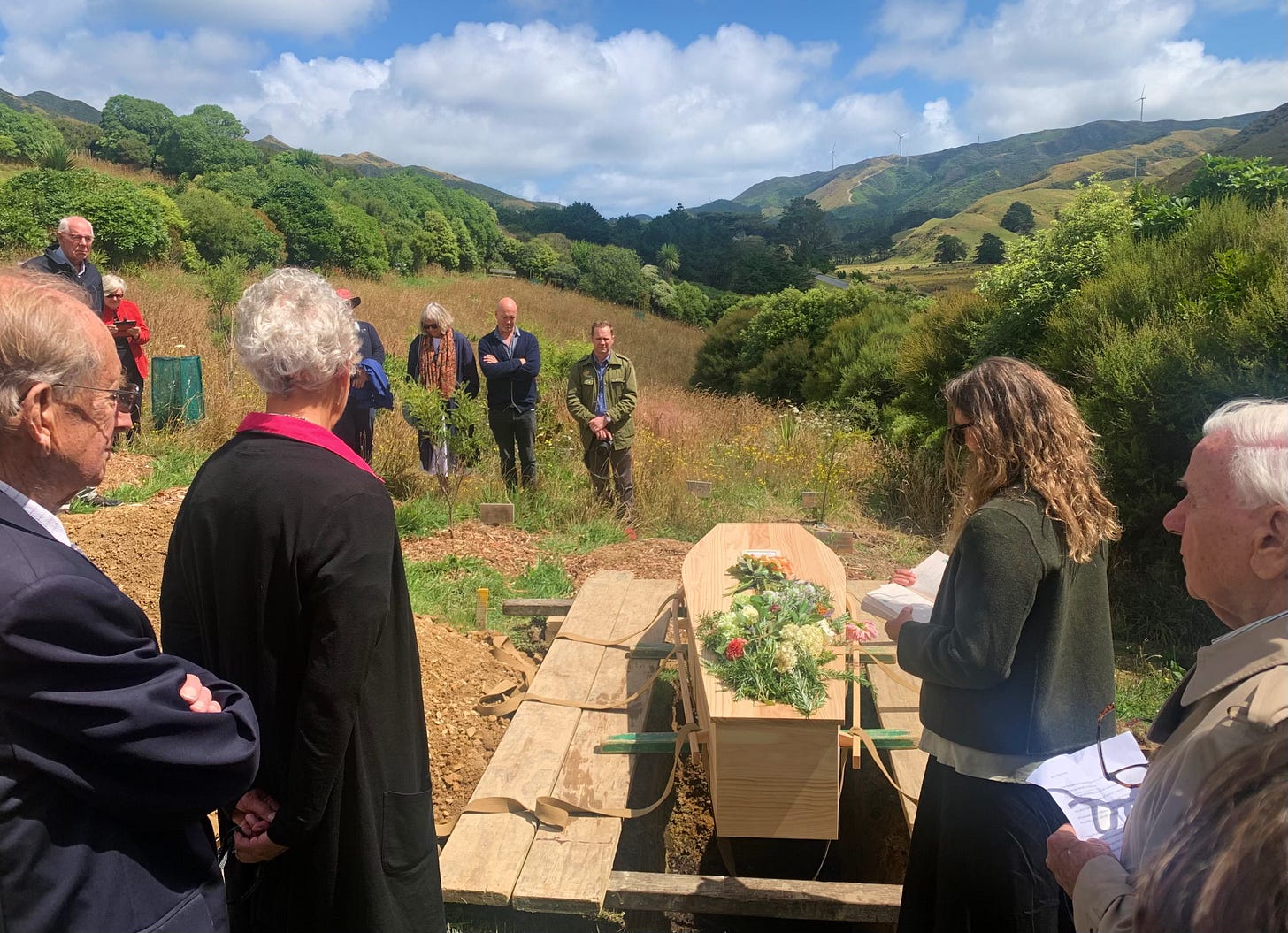
Until his death, Jim served on the Commonsense board and managed Common Property. The 2016 video commemorating 25 years of Commonsense captures him reflecting on the movement’s social and political dimensions. His funeral on 17 January 2026 at St Francis de Sales Church in Island Bay was followed by a natural burial at Mākara Cemetery — fitting for a man who championed living (and dying) in harmony with the land.
michaelf27.substack.comLife Fully Lived: Farewelling Jim Kebbell
Legacy and Implications: What Would Jim Do?
Jim Kebbell helped lay the foundations of New Zealand’s organic sector — standards, certification, retailing infrastructure, and public awareness. Commonsense demonstrated that ethical business could thrive without compromising values. In an age of industrial agriculture’s externalities, climate crisis, and food-system fragility, his emphasis on local sovereignty, fair grower remuneration, land protection, and community remains profoundly relevant.
Nuances abound: he was never dogmatic; his journey from sceptic to pioneer shows openness to evidence. Early retail “failures” became strengths through learning. The open homes and collective farm highlight how social justice and environmentalism were inseparable for him.
Edge cases he navigated — dishonest actors (“live by our values”), imperfect produce, tight cashflow, scaling ideals without losing soul — offer timeless lessons for ethical entrepreneurs today.
His challenge to those who followed, as the Commonsense tribute put it: “Our challenge now is to try and live up to the example he set.” In a world needing more common sense rooted in fairness, respect for nature, and belief in people’s goodness, Jim Kebbell’s life stands as both inspiration and practical blueprint.
A tōtara has fallen, but the forest he helped grow — healthier soil, fairer systems, stronger communities — continues to thrive. James Edward Kebbell: elder, leader, father, grandfather, husband, friend, organic champion, and above all a man who lived fully in service to a better world. Arohanui.