Food Secure North Canterbury: Real Local Food Connection in Action
Food Secure North Canterbury is a grounded local food resource that helps make the regional food system more visible, practical, and connected. With an interactive map, community projects, and practical programmes, it offers a useful example of local food connection in action.
If you care about real food, shorter supply chains, and stronger local food communities in New Zealand, Food Secure North Canterbury is worth a look, especially if you are in or near the Waimakariri and Hurunui districts.
This is not a glossy national food website or a heavily curated editorial platform. It is something more grounded than that: a grassroots, district-focused resource built to help make the local food system more visible, more practical, and easier to participate in.
That is what gives it value.
At its core, Food Secure North Canterbury is about connection. It brings together people, projects, places, and practical tools that help link local communities with growers, gardens, food initiatives, cooking, composting, and community food support.
What stands out
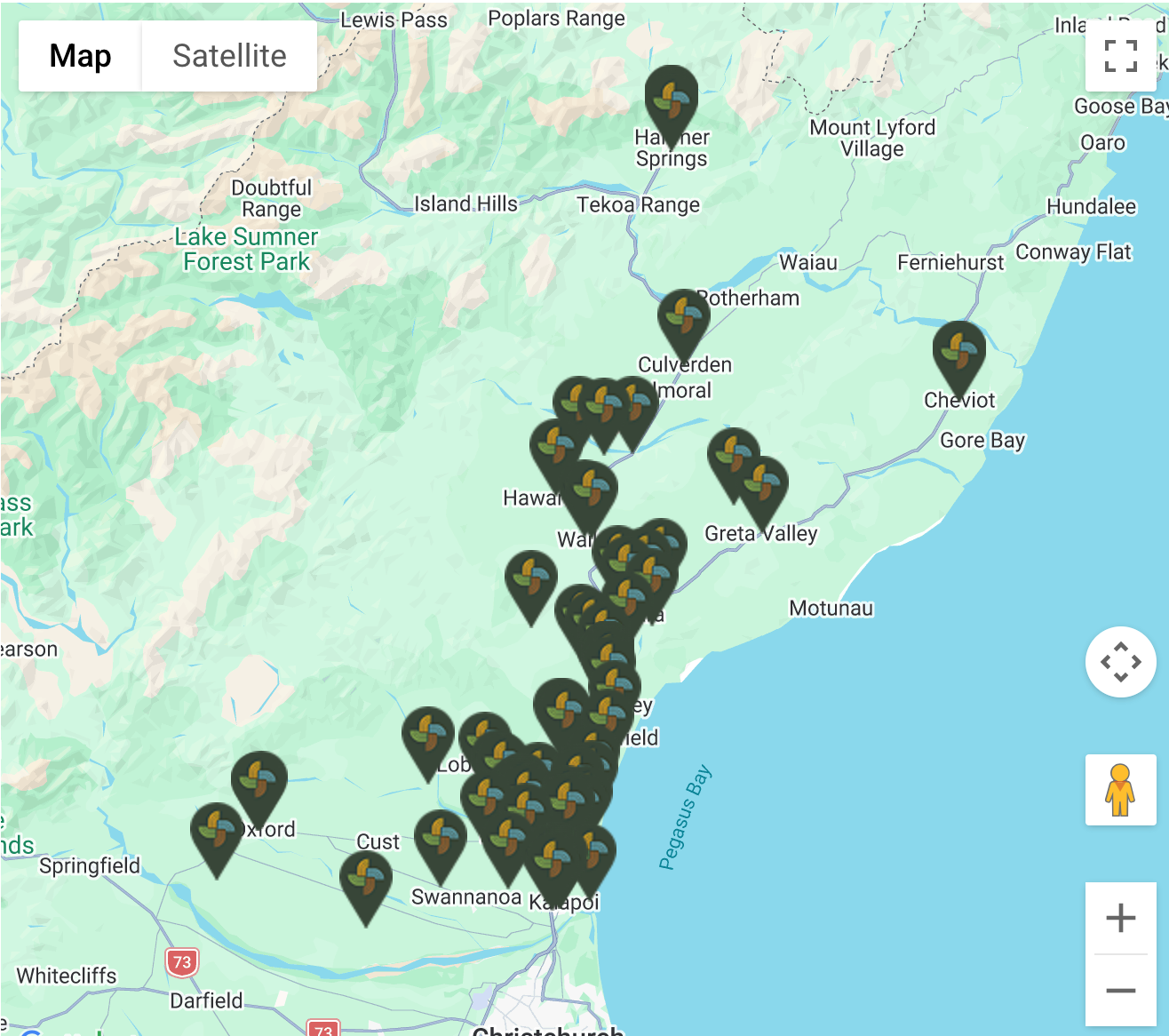
The strongest feature is the Find Our Food System map.
This is the practical heart of the site. Rather than just talking about local food in theory, the map helps people explore and locate parts of the food network around them. It gives the site genuine usefulness and turns the idea of “support local” into something more concrete.
The site also does a good job of showing that food is about more than simply buying products. It connects food to:
- growing
- learning
- cooking
- reducing waste
- sharing surplus
- supporting local producers
- getting involved in community projects
That wider view makes the site feel more like a local food hub than a simple directory.
Another strong element is the Food Citizen Programme, which encourages people to take practical steps toward becoming more engaged with food in their local area. It pushes gently toward action rather than just awareness, which is one of the site’s strengths.
There is also a strong community feel running through the whole project. Gardens, workshops, food sharing, community initiatives, local collaboration, and practical education all help make it feel warm, human, and rooted in place.
Why this kind of site matters
One of the most useful things about Food Secure North Canterbury is that it helps make the local food system feel visible.
That matters more than it might seem.
For many people, the food system feels distant, industrial, or abstract. A site like this brings it closer to home. It shows that local food is not just a concept. It is made up of real people, real places, and real networks that can be supported, joined, and strengthened.
That is where the site is most successful.
It gives people a way to see that local food resilience is not just a big idea. It can also be something practical, regional, and community-led.
Real-food threads running through the site
Although the site is broader than any one food philosophy, it contains plenty that will resonate with people interested in lower-input growing, local food, and more connected food systems.
There are strong threads of:
- no-dig growing
- composting
- community gardens
- food forests
- local growers and markets
- food rescue
- surplus produce sharing
- practical food education
These are not presented as abstract ideals. They show up through real examples, local projects, and practical steps people can actually follow.
That gives the site substance.
A few natural limitations
Like many community-led projects, the site feels more practical than polished. In some ways that works in its favour, because it feels genuine and useful rather than over-produced.
Some parts of the site are more programme-based than tightly curated, and some value only really appears once you start exploring. The interactive map, for example, is one of the strongest tools on the site, but it rewards clicking around rather than giving you everything neatly summarised upfront.
It is also best understood as a regional resource, not a national guide. That is not a weakness so much as a matter of scope.
Final thoughts
Food Secure North Canterbury is a solid and worthwhile local food website.
Its strength is not slick branding or sharp editorial polish. Its strength is that it helps people connect with food in a more local, practical, and community-rooted way. It makes the food system around them easier to see, easier to engage with, and a little less invisible.
For anyone interested in real food, stronger local networks, and practical examples of community food resilience in New Zealand, it is a useful and encouraging resource.
What is a food forest?
Food forests are part of the wider local food network highlighted by Food Secure North Canterbury. They are shared edible spaces designed a bit like natural forest systems, using layers of fruit trees, shrubs, herbs, groundcovers, and other useful plants to produce food over time. On the Food Secure North Canterbury website, food forests are treated as practical community assets: places where people can learn, volunteer, and connect more directly with local food production. They sit alongside community gardens, composting, food rescue, and local growers as part of a more visible and connected regional food system.