Why Does Organic Need a Label?
Organic food standards protect more than just ingredients. Certified organic means clear rules about farming, inputs and verification. A label gives shoppers confidence the product truly meets those standards, rather than vague marketing claims.
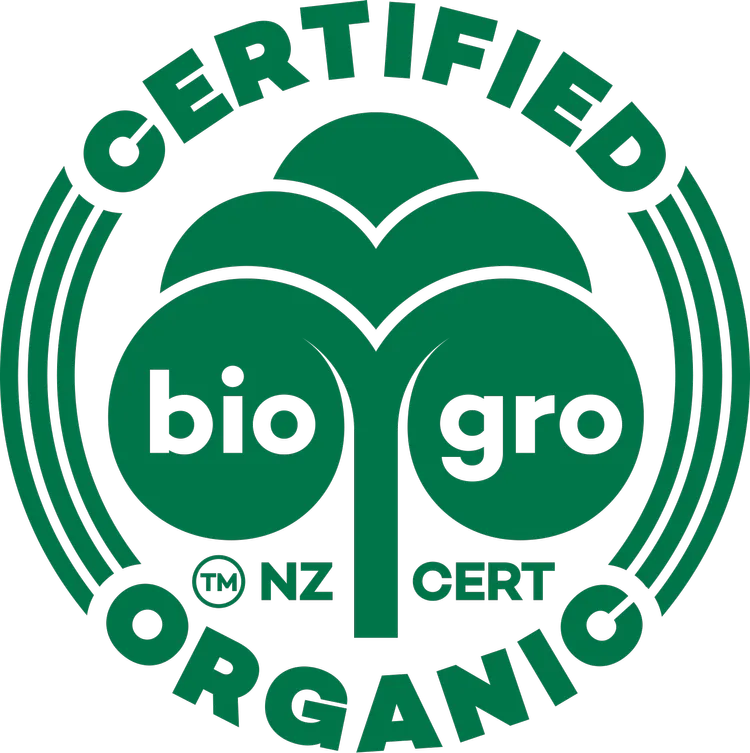
When we see an organic label, it feels like a special claim is being made about the food.
But the label actually tells us more about the food system than the food itself.
Modern food labelling works from a baseline assumption:
standard agricultural practice does not need to be described.
If a farmer grows food using approved fertilisers, herbicides, fungicides, seed treatments or post-harvest sprays, nothing has to be listed on the packaging. These inputs are considered normal within regulation, so they remain invisible to the shopper.
However, if a farmer grows food without those inputs, they must prove it through certification.
So the organic label doesn’t exist because something extra was added.
It exists because something common was deliberately avoided.
What “Normal” Actually Means
The baseline of modern agriculture typically allows the use of:
- synthetic fertiliser programs
- herbicides
- fungicides
- seed treatments
- post-harvest sprays
- growth regulators
- routine veterinary medicines in livestock systems
Because these are regulated and approved, they are treated as acceptable by default and do not require disclosure.
Organic breaks from that baseline.
So the label really means:
this product deviates from standard agriculture
not
this product was specially enhanced
Why Only One System Has to Prove Itself
Food labelling law historically protects against false claims, not undisclosed processes.
You must prove statements such as:
- gluten free
- halal
- grass fed
- organic
You do not have to list:
- pesticides used
- antibiotics used
- storage treatments used
The assumption is simple:
approved inputs are considered safe enough that consumers do not need to be informed about each one individually.
So disclosure only becomes mandatory when a farmer chooses to avoid them.
The Information Imbalance
To a shopper, a labelled product and an unlabelled product appear different.
But technically the difference is this:
One farming system is fully declared.
The other is undisclosed because it follows the default.
Organic certification therefore functions less like a marketing badge and more like a production ingredient list — a documented explanation of how the food was grown.
Why Inputs Aren’t Listed Instead
There are practical reasons the system evolved this way:
- A crop can receive many different treatments across a season
- Those treatments vary year to year
- Listing them invites interpretation regulators prefer to avoid
So rather than disclose every input, the system verifies the absence of certain categories of inputs.
A Different Way to Read the Label
Seen this way, organic food isn’t claiming superiority.
It is simply the only food where the growing process is routinely made visible to the person eating it.
The label does not add information to food.
It restores information that industrialisation removed.
Organic isn’t a purity claim.
It is a transparency claim.
Why This Matters in Practice
Once people realise most food doesn’t describe how it was produced, their behaviour often changes.
They start asking questions:
Where was this grown?
How long ago was it harvested?
Who produced it?
That curiosity is what drives farmers markets, community gardens, farm boxes and direct-from-grower buying. These systems aren’t only about nutrients or ideology. They restore visibility and relationship to food production.
Organic certification became one formal way to rebuild that visibility at scale. Local and direct food networks do the same thing socially, through trust instead of paperwork.
Both exist for the same reason:
people want to understand what they are repeatedly putting into their bodies.
In that sense, organic isn’t a separate category of food.
It is part of a broader shift back toward transparent food systems.