Why did I go organic?
Choosing organic changed how I think about food, farming and health. I wanted food grown without synthetic chemicals, with soil care, animal welfare and real seasonal cycles. Organic wasn’t a trend — it was reconnecting with where food comes from and how it’s made.
I didn’t wake up one morning and decide to “go organic”.
There wasn’t a plan.
There wasn’t a belief system.
There were just a series of small irritations that kept stacking up until I couldn’t ignore them anymore.
At certain times of the year, I really started to hate the smell of our tap water.
Not a dramatic reaction — just a quiet, persistent this doesn’t feel right.
So I added a chlorine filter. The taste improved immediately.
Then I added a fluoride filter.
Fluoride is one of those things that sits in an uncomfortable place. If you question it, you’re often lumped in with conspiracy theorists. But if you actually slow down and follow the arguments — without drama — there are some genuinely unresolved questions.
Fluoride works topically on teeth.
You’re warned on toothpaste tubes not to swallow it.
Yet we add it to drinking water.
How does something swallowed know to go to your teeth?
What does it do to bones over decades?
What about the pineal gland?
What about long-term accumulation?
I don’t claim to have answers. What bothered me was that most people — myself included — had never really asked the questions. We just accepted it because we were told it was good for us.
That was my first crack in the surface:
how much of what I consume is there because it’s good — and how much because it’s convenient?
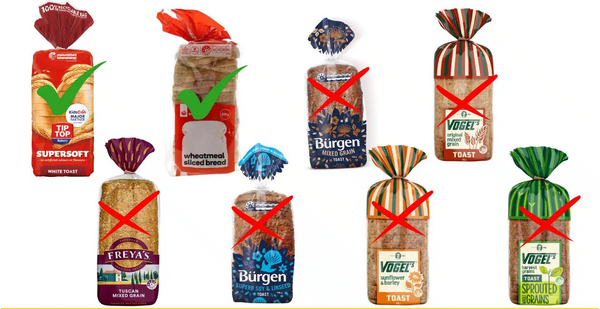
The thing that really tipped me was the government mandating folic acid in all bread.
This wasn’t about bread — it was about principle.
Folic acid fortification is aimed at pregnant women, yet it applies to everyone. Roughly half the population receives no benefit from it, and there’s credible discussion suggesting a large percentage of people may not metabolise synthetic folic acid well at all.
What bothered me wasn’t just that it was mandated — it was that there seemed to be very little discussion about long-term accumulation or side effects for the rest of the population.
It felt like medication of the masses, by default.So I asked a simple question:
If I don’t want folic-acid-fortified bread, what are my options?
That question turned out to be surprisingly hard to answer.
I tried Wild Wheat. Then discovered — quietly updated on the paper bags — that folic acid was being added.
I tried Daily Bread. They use organic and spray-free ingredients where possible, which is great, but also vague. I had to assume folic acid was present some of the time.
I found organic bread at GoodFor in Grey Lynn. It was excellent — but supply was intermittent, and the price was spendy.
Eventually it became clear:
If I really wanted to control what was in my bread, I had to make it myself.
So I started making sourdough at home.
Organic flour.
Filtered water.
Celtic salt.
A starter.
That was it.
No additives. No fortification. No mystery ingredients.
Once I was doing that, everything else followed naturally.
To make organic bread, I needed organic flour — so I started sourcing that.
Once I was thinking about flour, I started thinking about glyphosate.That opened another rabbit hole.
There’s growing discussion around whether glyphosate exposure contributes to what many people experience as “gluten intolerance”. I’ve heard countless people say they can eat bread and pastries in Europe with no issue, but feel terrible eating bread back home.
Is it glyphosate?
Is it processing?
Is it additives?
Is it all of the above?
Again — I don’t pretend to know. What I do know is that supermarket bread contains a lot more than flour, water and salt.And once you start noticing that, you can’t un-notice it.
At a certain point my brain was overloaded.
Every food seemed to come with another warning, another article, another debate. I couldn’t optimise my way out of it.
So I stopped trying to be clever and went backwards instead.Back to basics.If I was making organic bread, maybe I should do the same elsewhere — where I could.Fruit and vegetables.
Meat.
Butter.
Nuts and seeds, herbs, spices.
What raised a new, very practical question:
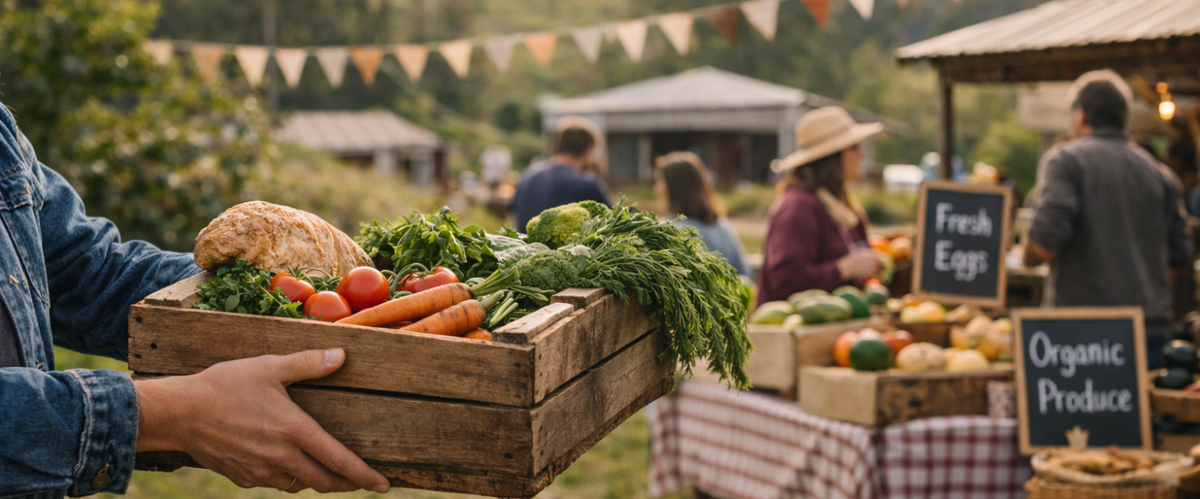
Where do I actually find this food — with decent quality, fair prices, and without turning shopping into a full-time job?
That question is still unfolding.And that’s really why this site exists.
This isn’t a declaration.
It’s not a rulebook.
It’s not advice.It’s just a record of how one person started asking questions — and decided to step slightly outside the default settings.
I’ll share more notes on:
learning to bake bread
sourcing organic ingredients
markets and shops I come back to
what feels worth worrying about — and what doesn’t
Slowly. When it makes sense.
For now, this is where it started.