Organic Milk in New Zealand
Organic milk in New Zealand comes from cows on certified organic farms with organic pastures and feed, no routine antibiotics, no synthetic pesticides or fertilisers, and strict standards. It’s a pasture-based system tied to seasonal cycles, not industrial nutrition factories.
How Much Exists and Where It Goes
New Zealand produces an enormous amount of milk each year — roughly 21–22 billion litres annually.
Organic milk is a very small part of that.
Estimates suggest around 100–130 million litres of organic milk are produced each year.
That works out to well under 1% of total national milk production.
So while organic dairy is visible in shops, it remains a niche farming system rather than a mainstream one.
There are roughly 100 organic dairy farms nationwide, managing about 30,000 cows across just under 22,000 hectares of certified organic dairy land.
Why Production Is Lower
Organic dairy farms operate under different constraints:
- no synthetic fertilisers
- no routine antibiotics
- pasture-based feeding
- slower stocking rates
Because of this, organic cows typically produce less milk per animal than conventional systems.
The goal is not maximum output, but a different balance between soil, pasture and animal health.
Where the Milk Goes
Most New Zealand milk — organic or not — is exported.
Organic dairy follows the same pattern.
Around 70–80% of organic milk leaves the country, usually processed into:
- milk powders
- infant formula
- butter
- cheese
Export markets include the US, Europe and parts of Asia where demand for certified products is strong.
So the bottles seen locally represent only a portion of what is produced.
Much of the organic dairy sector exists primarily as a premium export product.
Main Organic Dairy Processors
Large Export Processors
- Fonterra Organic — the largest processor, supplying global ingredient markets
- Pāmu (Landcorp) — state-owned farms producing export organic powders
- Open Country Dairy — South Island organic supply
These companies mainly produce ingredients rather than retail milk.
Organic Milk Available in New Zealand Shops
Smaller producers supply the domestic market and are the most visible to consumers.
Common brands you may encounter:
Supermarkets & health stores
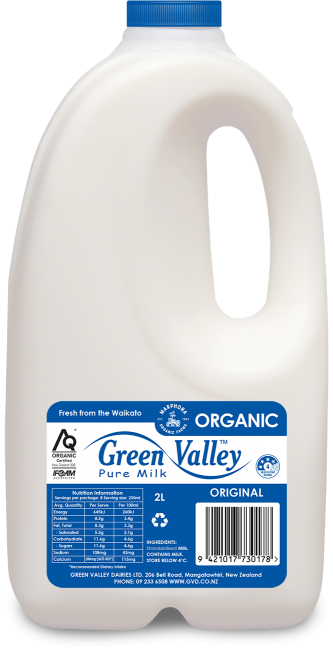
- Green Valley Dairies
- Jersey Girl Organics (A2 jersey milk)
- various BioGro certified house brands
Farm gate / speciality
- Three Oaks Organic (raw milk where legally available)
- local organic farm bottlings (regional availability varies)
Availability changes frequently because supply is limited and seasonal compared with conventional milk.
What Makes Organic Milk Different
Organic certification focuses on production method rather than altering the milk itself.
It regulates:
- pasture management
- fertiliser inputs
- animal treatment protocols
- chemical residue avoidance
The result is not a different type of milk nutritionally in a dramatic sense, but milk produced under a defined farming system.
A Small but Distinct Sector
Organic dairy in New Zealand is best understood as a high-value niche within a very large export industry.
It does not replace conventional dairy production.
Instead it operates alongside it, serving markets that prioritise traceability and production method.
For consumers, the main difference is not quantity or availability —
it is knowing how the milk was produced.