Organic Eggs in New Zealand
Organic eggs in New Zealand aren’t just a fancy version of regular eggs — they come from farming systems driven by pasture, weather and hen biology, not supermarket schedules. Certified organic means organic feed, genuine outdoor access, no synthetic inputs and seasonal rhythms, not constant output.
A practical guide to what they are, why they differ, and how to find them
Organic eggs are not simply a premium version of regular eggs.
They come from a different farming system altogether.
In New Zealand most eggs come from controlled indoor or large free-range operations designed for consistent daily output. Organic farms work differently. Production follows pasture, weather and hen biology rather than supermarket demand. Because of that, organic eggs behave less like a packaged staple and more like seasonal produce.
What Makes an Egg “Organic”
Certified organic eggs (BioGro, AsureQuality or equivalent) require:
- organic non-GMO feed
- no synthetic pesticides or fertilisers on the land
- no routine antibiotics
- genuine outdoor pasture access
- lower stocking densities
- soil and pasture management rules
The key distinction is that organic standards govern the entire farm ecosystem, not just the bird.
Free-range improves hen welfare.
Organic changes how the land is farmed.
What Conventional Eggs May Be Exposed To
New Zealand has strong food safety standards and residues in eggs are typically very low. The difference is not acute contamination, but cumulative exposure created by the production system.
Possible exposure pathways in conventional production include:
Feed production
- grain grown with herbicides and fungicides
- imported soy as protein source
- seed treatment and storage chemical residues
- synthetic amino acids added to optimise laying rate
Housing environment
- indoor litter treatments
- disinfectants between flocks
- ammonia-controlled indoor sheds
Veterinary treatments
- therapeutic antibiotics when illness occurs
- coccidiostats used to control parasites
- vaccines (used in all systems including organic)
Land management
- synthetic fertilisers
- pesticides used on feed crops
Important: growth hormones are not used in New Zealand poultry production.
Organic certification removes most of these inputs rather than relying on acceptable residue levels.
How They Differ From Conventional Eggs
| Type | What it optimises | How hens live |
|---|---|---|
| Colony/Barn | efficiency | indoor production |
| Free-range | welfare | outdoor access |
| Organic | ecology | pasture-integrated farming |
Organic eggs are therefore not only about the chicken’s life but the soil, insects, feed sources and nutrient cycles supporting it.
Are Organic Eggs Healthier?
They are not dramatically different foods, but they are directionally different.
Common differences found in pasture-based eggs:
Often higher:
- omega-3 fats
- carotenoids (darker yolks)
- some fat-soluble vitamins
Usually similar:
- protein
- calories
- cholesterol
Organic eggs are best understood as a lower-distortion version of the same food rather than a superfood. Small differences matter most for foods eaten frequently.
Why They Cost More
Organic eggs cost more because the farm produces less.
The price reflects:
- smaller flocks per hectare
- slower laying rates
- seasonal fluctuations
- organic feed costs
- land resting and rotation
- certification inspections
You are paying for farming complexity rather than processing efficiency.
Supply and Seasonality
Organic eggs regularly disappear from shelves.
This is normal.
Hens naturally lay less when:
- daylight hours shorten in winter
- they moult annually
- pasture quality drops
- drought or heavy rain affects insects and forage
Supermarket eggs are produced to remain constant.
Organic eggs follow biological rhythms.
They behave more like fruit than a packaged staple.
The Brands You’ll Commonly See in Auckland
Most organic eggs in New Zealand do not come from single large farms.
They come from networks of producers supplying distributors and shops.
Wholesome NZ
A nationwide packer and distributor working with multiple certified farms. Because supply is aggregated, these are often the most consistently available organic eggs in supermarkets.
Represents: organic at national retail scale
Frenz (BioEgg organic lines)
A cooperative-style network of smaller farms selling under one shared brand. Often found in organic and premium grocery stores.
Represents: small farms combined into retail supply
Zealand Farms (organic line)
A larger individual farming operation supplying both retail and food service. More consistent than boutique farms but still within organic/free-range systems.
Represents: integrated farm-to-market organic production
Durham Farms
Pasture-focused regenerative farming with strong soil and land management emphasis. Supply varies depending on pasture and flock cycles.
Represents: regenerative pasture farming
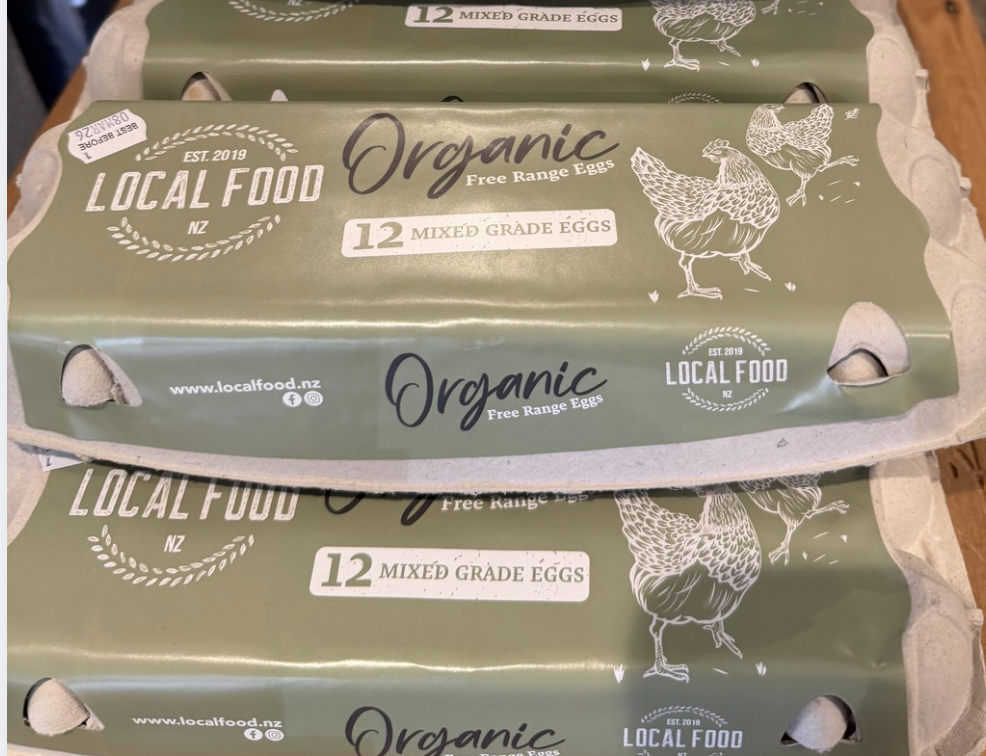
Local Food Organics
Distributor sourcing from smaller regional producers and supplying organic retailers. Availability varies week-to-week depending on which farms are laying strongly.
Represents: seasonal local supply
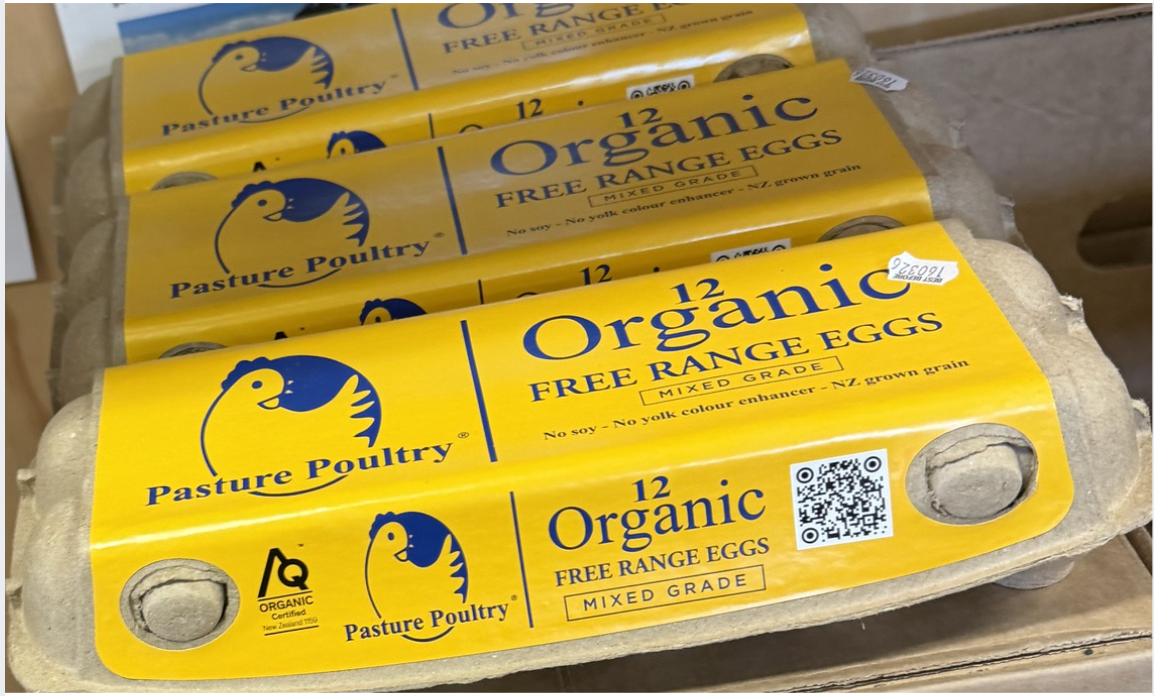
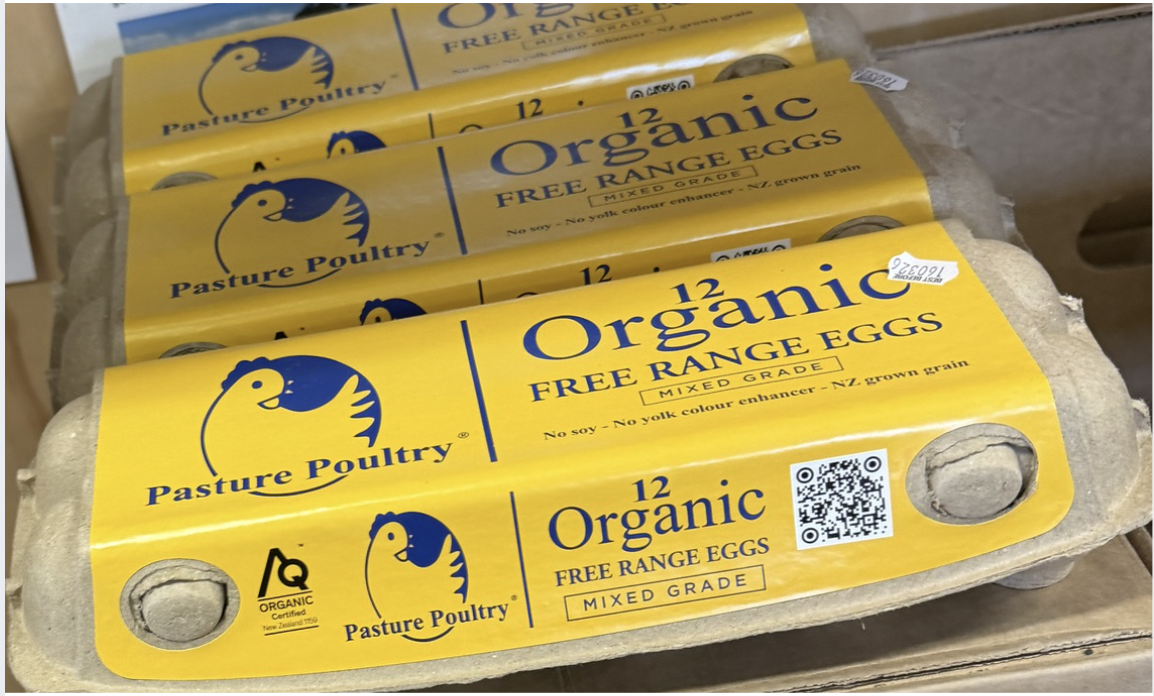
Pasture Poultry
A Hawke’s Bay organic producer raising hens outdoors on pasture where they forage insects and plants alongside organic grain. Production follows natural flock cycles, so availability can fluctuate.
Represents: true pasture-based organic farming
Other Small Pasture Farms
Very small rotational grazing farms supplying certain stores or deliveries. These often produce exceptional eggs but may appear irregularly depending on season and flock output.
Represents: agriculture first, retail second
Why Some Eggs Are Easy to Find and Others Aren’t
Consistent brands aggregate multiple farms.
Exceptional eggs usually come from a single flock.
Reliability and farm intimacy sit at opposite ends of the same spectrum.
Why People Choose Organic Eggs
People choose organic eggs for different reasons:
- supporting regenerative farming systems
- avoiding synthetic agricultural inputs
- animal welfare combined with ecological farming
- subtle nutritional improvements
- taste and cooking performance
- preference for seasonal food
The purchase supports a farming method, not just a product.
The Simple Summary
Conventional eggs maximise output.
Free-range eggs maximise welfare.
Organic eggs maximise ecosystem health.
The egg itself is only the visible part of that choice.