Organic Certification in New Zealand: What It Actually Means
Organic certification in New Zealand involves independent inspection and verification against strict standards for soil, inputs, animal welfare and farming practices. A certified label assures the product truly meets organic rules, not just marketing claims.
If you’ve ever stood in a shop staring at three different “organic” labels and wondered which one is more real… you’re not alone.
New Zealand doesn’t have one single organic authority.
Instead, it runs a regulated ecosystem made up of multiple certification bodies operating under national law.
That sounds messy.
It actually makes sense once you understand the roles.
Step 1: The Law (The Rulebook)
In 2023 New Zealand introduced the Organic Products Act.
For the first time, “organic” became a legally protected claim for products sold as organic in NZ and for export.
This law does NOT inspect farms itself.
Instead it does something smarter:
It approves organisations that are allowed to certify farms.
So the government writes the rules.
Certifiers enforce them.
Step 2: The Certifiers (The Inspectors)
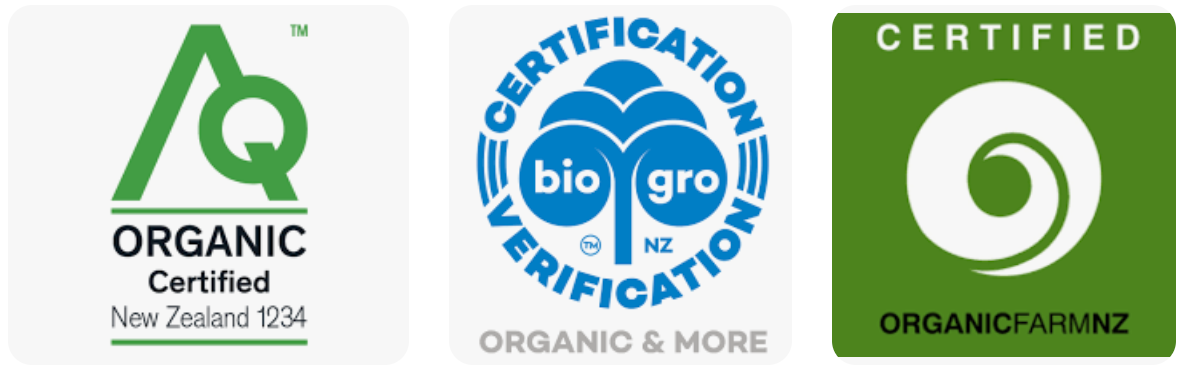
These are the names you’ll actually see on packaging.
BioGro
One of the oldest organic certifiers in NZ.
Often used by:
- established farms
- brands selling nationally
- export products
BioGro is widely recognised by consumers and retailers, so it carries strong brand trust.
AsureQuality
Government-owned company.
Often used for:
- export markets
- large producers
- companies needing official trade acceptance
If a product is going overseas, AsureQuality frequently handles the paperwork because it integrates tightly with MPI export systems.
Organic Farm NZ (OFNZ)
Designed for small growers.
Lower cost and more community-focused.
Works well for farmers markets and local food networks.
Instead of heavy bureaucracy, it uses a peer-review style system alongside inspections.
This keeps small regenerative farms viable instead of burying them in paperwork.
Demeter (Biodynamic)
A niche but important category.
Biodynamic goes beyond organic.
Think farm ecosystem management rather than just input restrictions.
Not common, but usually serious when you see it.
Why Multiple Certifiers Exist
Because farms are different.
A 2-hectare market garden and a 500-ton export apple operation cannot realistically use the same compliance process.
So NZ allows different certifiers to operate under the same law, each suited to different scales.
| Type of Producer | Likely Certifier |
|---|---|
| Small local grower | OFNZ |
| Established NZ brand | BioGro |
| Export producer | AsureQuality |
| Biodynamic farm | Demeter |
This isn’t a hierarchy of “better”.
It’s a system of fit-for-purpose auditing.
The Part Most People Don’t Know
Certifiers do not work for the government.
They are independent organisations approved by the government.
Farmers pay them for audits.
That creates a natural tension:
- certifiers must enforce rules
- farmers are paying customers
NZ manages this by auditing the certifiers themselves through MPI oversight.
So instead of inspecting every farm directly, the government inspects the inspectors.
It’s a layered trust system.
How Reliable Is NZ Organic?
In practice, NZ organic works well because:
• supply chains are short
• farms are physically accessible
• the industry is small
• exporters risk losing markets if caught cheating
The biggest risk in NZ organic is not local farms.
It’s imported ingredients.
A jar of NZ organic honey and a packet of imported organic spice operate under very different traceability realities.
What The Label Really Guarantees
Organic certification in New Zealand confirms:
• restricted synthetic agrichemicals
• soil management practices
• audited record keeping
• annual inspections
• traceability of inputs
It does NOT guarantee:
• zero residues at absolute laboratory limits
• identical standards across countries
• that every ingredient is locally produced
Organic is a farming system standard, not a purity test.
Practical Takeaway for Consumers
If you want the shortest trust chain:
- NZ grown + certified organic
- Named certifier on label
- Transparent producer
The more distance between farm and plate, the more paperwork replaces visibility.
Why This Matters
Organic isn’t just about avoiding sprays.
It’s about accountability.
New Zealand’s system works because it’s small enough to verify and structured enough to enforce — but like all systems, it relies on understanding what the label actually covers.
When consumers understand the structure, the label becomes meaningful instead of marketing.