Monavale Blueberries — Overview
Monavale Blueberries Ltd is one of Australasia’s biggest certified organic blueberry growers, spanning about 44 hectares near Cambridge, NZ. A multi-generation family farm, they grow 30-plus varieties and supply fresh, frozen and value-added berries nationwide and into supermarkets.
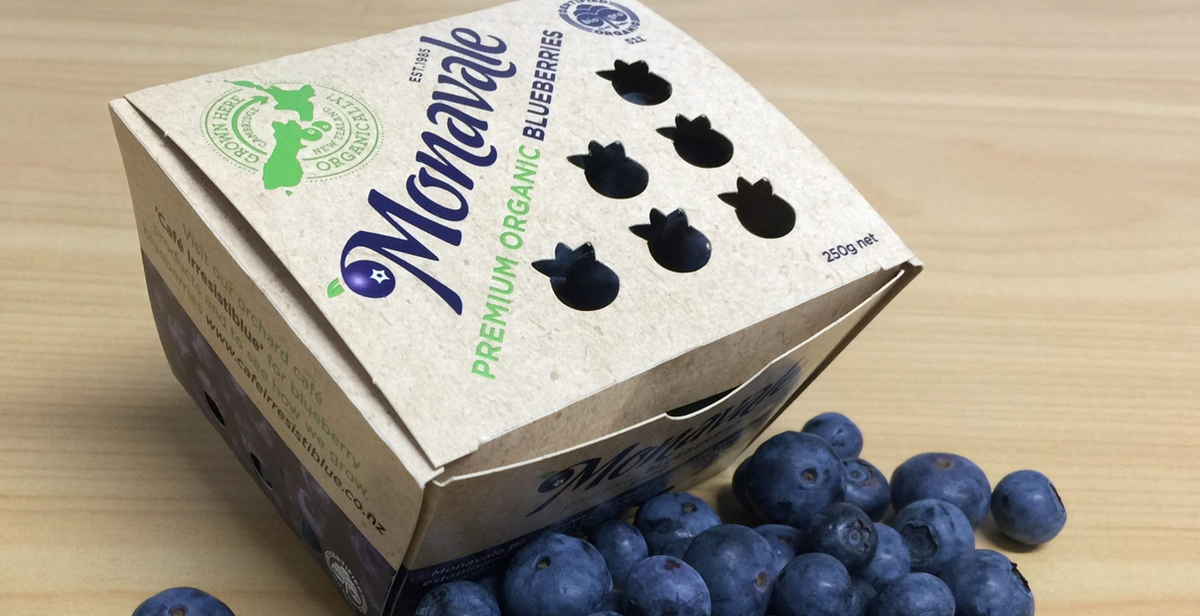
Monavale Blueberries Ltd
Monavale Road, Cambridge, Waikato, New Zealand
BioGro Licence: 511
Monavale Blueberries is widely regarded as the largest certified organic blueberry grower in New Zealand and one of the biggest organic blueberry orchards in Australasia.
Operating on the Moanatuatua peat plains near Cambridge, the orchard spans roughly 44 hectares (110+ acres) with more than 80,000 blueberry bushes across dozens of varieties selected for staggered ripening.
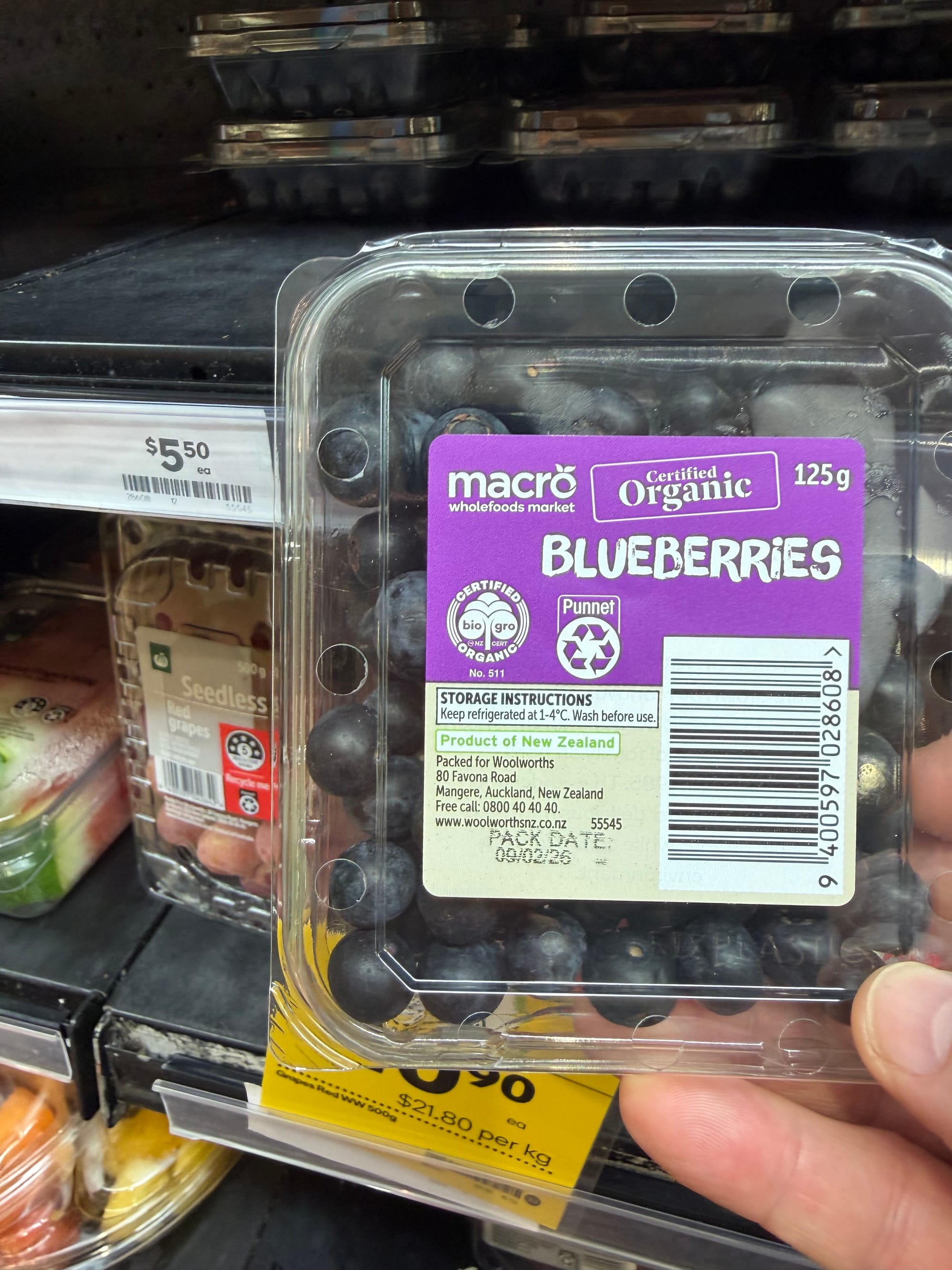
Their berries appear across the country through supermarkets and organic stores, including Woolworths’ Macro organic range, as well as direct farm sales and specialty retailers.
Unlike many large suppliers, Monavale remains a multi-generation family farm, not a corporate plantation that later adopted organic certification.
Origins
The farm began in 1980 when Dutch immigrants Paul and Mieke de Groot settled in Waikato.
After purchasing their first land in 1985, they trialled many crops:
• pipfruit
• vegetables
• boysenberries
• strawberries
• feijoas
Only blueberries truly thrived in the deep acidic peat soils.
By the early 1990s the family committed fully to blueberries and pursued full organic certification.
Over time they expanded neighbouring land and formally established Monavale Blueberries Limited in 2002.
Today the orchard is run by the second and third generation of the family.
Why the Location Matters
The Moanatuatua peat bog soils are naturally:
• acidic
• moisture retentive
• high organic matter
In other words, blueberries grow there the way they grow in the wild.
The farm works with the soil rather than forcing fertility through synthetic inputs.
The land could have been drained and converted to intensive dairy.
Instead it was preserved as a functioning ecosystem.
Scale Without Industrialisation
Monavale demonstrates something rare in modern food production:
large scale organic without becoming industrial
Typical large berry operations rely heavily on:
• synthetic fertilizers
• fungicides
• imported growing media
• tunnel production systems
Monavale instead manages soil biology and plant health through ecological methods:
• compost and humus building
• biodiversity support
• mechanical and manual weed control
• biological pest management
• no synthetic agrichemicals
Certification came in the early 1990s, long before organic premiums became fashionable.
Production
The orchard grows 30–40+ varieties of both highbush and rabbiteye blueberries.
Season: approximately October to April
Products include:
• fresh organic blueberries
• frozen organic blueberries (year-round supply)
• blueberry juice
• jams and powders
• blueberry wine (award winning)
They produce only blueberries commercially today, having abandoned other crops decades ago to specialise.
Where You Encounter Them
You may eat Monavale berries without knowing it.
They supply:
• Woolworths NZ (Macro organic brand)
• Foodstuffs stores (varies by season)
• organic retailers like Commonsense Organics
• farmers markets
• export markets
• direct orchard sales and pick-your-own
This is a good example of how supermarket organic works in practice:
The packaging shows a brand.
The farm behind it is often invisible.
But the certification and farming method remain identical.
What Makes Them Significant
Monavale is important not because it is small.
It is important because it proves something:
Organic farming is not limited to hobby scale.
And scale does not automatically require industrialisation.
They scaled by expanding land stewardship, not input intensity.
The Human Element
The farm employs:
• ~12 permanent staff
• 150–300 seasonal workers
It also operates an orchard café and visitor experience, keeping a direct relationship with eaters rather than existing only as a wholesale supplier.
Why This Matters in the Organic Conversation
In the organic debate there are usually two narratives:
1) Organic only works locally and small
2) Large organic becomes fake organic
Monavale sits in the uncomfortable middle:
Large enough to supply supermarkets
Old enough to predate organic marketing
Still family owned
Still ecosystem-based
It complicates the argument.
Takeaway
Monavale is not a boutique micro-farm, and it is not a faceless agribusiness.
It is a generational farm that expanded while keeping the same philosophy:
improve the soil and the plant follows
When you see organic blueberries in a supermarket freezer, you might be looking at imported industrial organics.
Or you might be looking at berries grown on preserved peatland by a family who started planting them before organic labels meant anything commercially.
The label doesn’t tell you which.
The farm does.