Folic Acid in Bread: What It Is, Why It Exists, and the Trade-Off
Synthetic folic acid is added to NZ bread and flour to prevent neural tube defects, but it isn’t the same as natural folates. The policy reduces deficiency risks, yet critics question blanket fortification and possible unintended metabolic effects.
Why this note exists
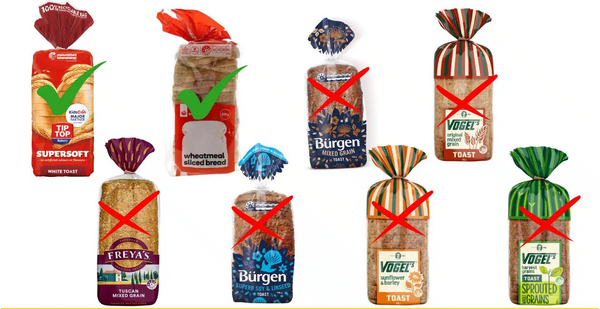
In August 2023, New Zealand began requiring folic acid to be added to most non-organic wheat flour used for breadmaking. This means that most people who eat conventional bread are now exposed to a small, ongoing amount of synthetic folic acid.
This note isn’t arguing for or against that decision.
Its purpose is to explain:
- what folate and folic acid are
- why governments care about them
- what evidence supports fortification
- what New Zealand expects to gain
- and what assumptions the policy rests on
The goal is clarity, not persuasion.
What folate and folic acid actually are
Folate is a B-vitamin (vitamin B9) found naturally in foods like leafy greens, legumes, and liver.
It is essential for:
- DNA synthesis and repair
- cell division
- red blood cell production
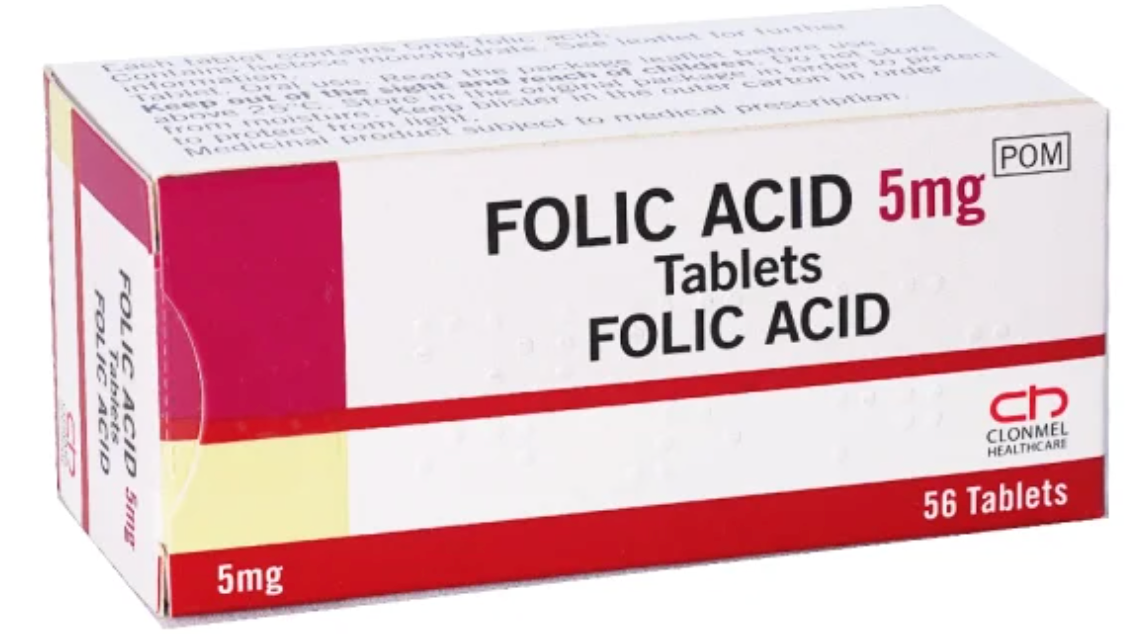
Folic acid is the synthetic form used in supplements and food fortification. It is not biologically active until the body converts it into active folate forms. Once converted, the body uses it the same way as natural folate.
The difference is not function, but the pathway required to get there.
What problem the policy is targeting
The policy targets Neural Tube Defects (NTDs).
NTD = Neural Tube Defect
These are serious developmental conditions (such as spina bifida and anencephaly) that occur very early in pregnancy, often before someone knows they are pregnant.
Adequate folate status during this narrow early window significantly reduces the risk of NTDs. Because many pregnancies are unplanned, relying solely on supplements has not been effective at a population level.
This is the core rationale for fortification.
Was this driven by the WHO?
No.
The World Health Organization (WHO), together with the Food and Agriculture Organization (FAO), did not mandate folic acid fortification. Instead, they:
- recognised NTDs as a major preventable health issue
- recommended adequate folate intake before and early in pregnancy
- published technical guidance for countries that choose to fortify foods
Each country made its own decision based on local evidence, feasibility, and cost–benefit analysis.
What happened in other countries?
Over 80 countries now mandate folic acid fortification of cereal grains. The most cited examples show consistent real-world reductions in NTDs:
- United States (1998): ~28–35% reduction
- Canada (1998): ~46% reduction
- Australia (2009): ~14% overall reduction, much larger in higher-risk groups
- Chile (2000): ~40% reduction
These are observed outcomes, not just theoretical models.
What New Zealand expects to gain
New Zealand government modelling estimates that mandatory fortification could:
- prevent ~162–240 NTDs over 30 years
- save $25–$47.4 million in combined health, education, and productivity costs over that period
Broken down:
- $0.83–$1.58 million per year
- $0.16–$0.30 per person, per year
- $4.69–$8.89 per person over 30 years
This is the estimated population-level economic benefit.
Who is exposed, and who benefits most?
The benefit of the policy is highly concentrated:
- it primarily protects a small number of pregnancies during a very early window
The exposure is broad:
- most people who eat conventional bread consume folic acid regularly, regardless of age, sex, or pregnancy status
Organic flour and non-wheat flours are exempt, which provides an opt-out — though not a universal or cost-neutral one.
This asymmetry is central to understanding the policy.
What the policy assumes
The policy rests on several assumptions:
- that low-dose, long-term exposure is safe for the general population
- that the benefits outweigh the risks at a population level
- that individual variability in metabolism does not materially change outcomes
- that fortification is preferable to targeted or opt-in approaches
Public health authorities consider these assumptions reasonable based on current evidence, while acknowledging that some long-term questions remain under active study.
Questions worth holding
Rather than answering everything, it’s worth naming the questions this policy raises:
- How do we balance population-level benefit with individual choice?
- How do we evaluate chronic low-dose exposure over decades?
- How often should policies like this be revisited?
- What level of uncertainty is acceptable in public health decisions?
These are not objections. They are part of responsible decision-making.
Closing
Mandatory folic acid fortification is a blunt but effective tool. It measurably reduces severe birth defects, at a very low per-person cost, by increasing baseline exposure across the population.
Understanding what that trade-off looks like — in numbers, not slogans — improves the quality of the conversation, regardless of where you land.
Further questions deserve their own space.